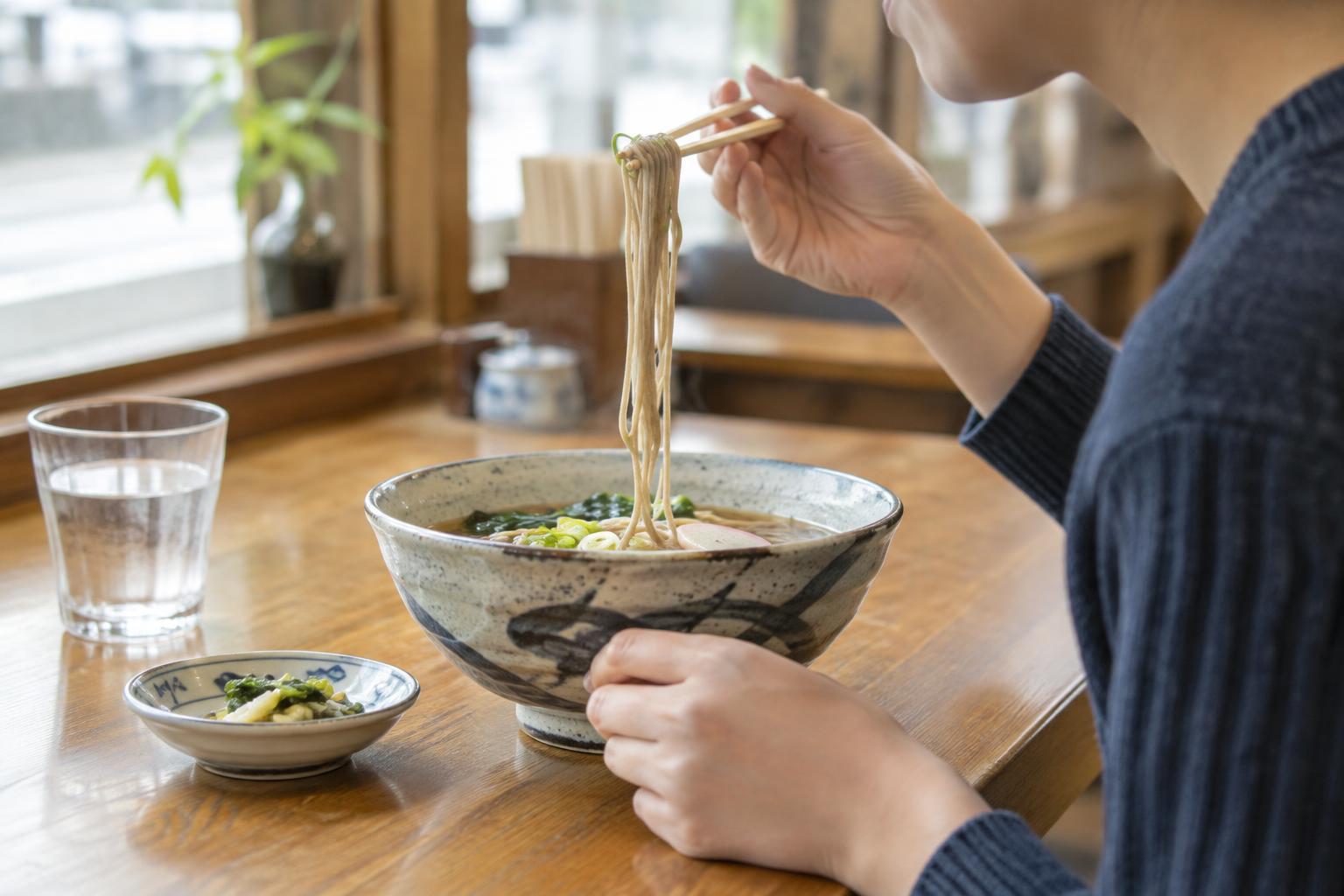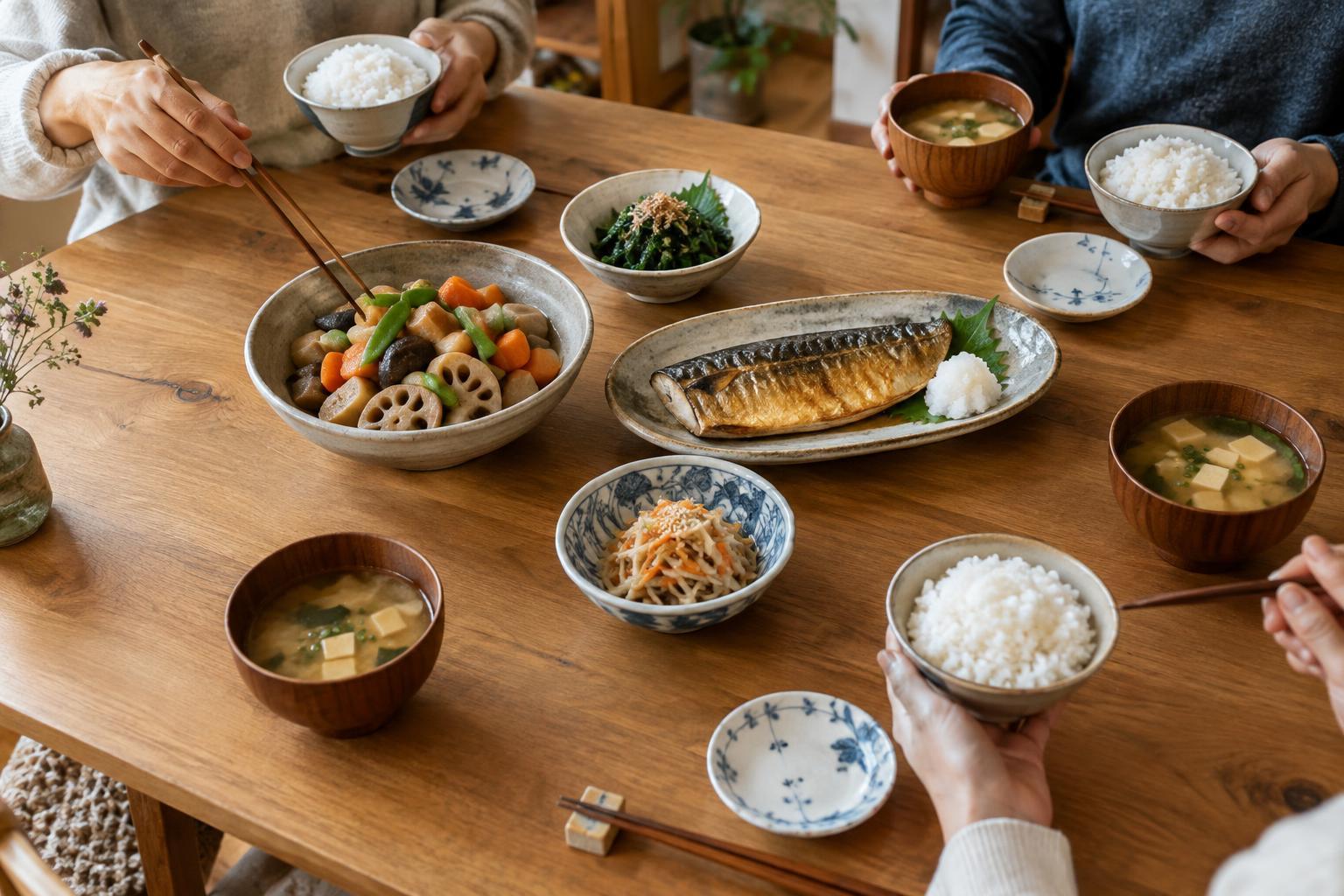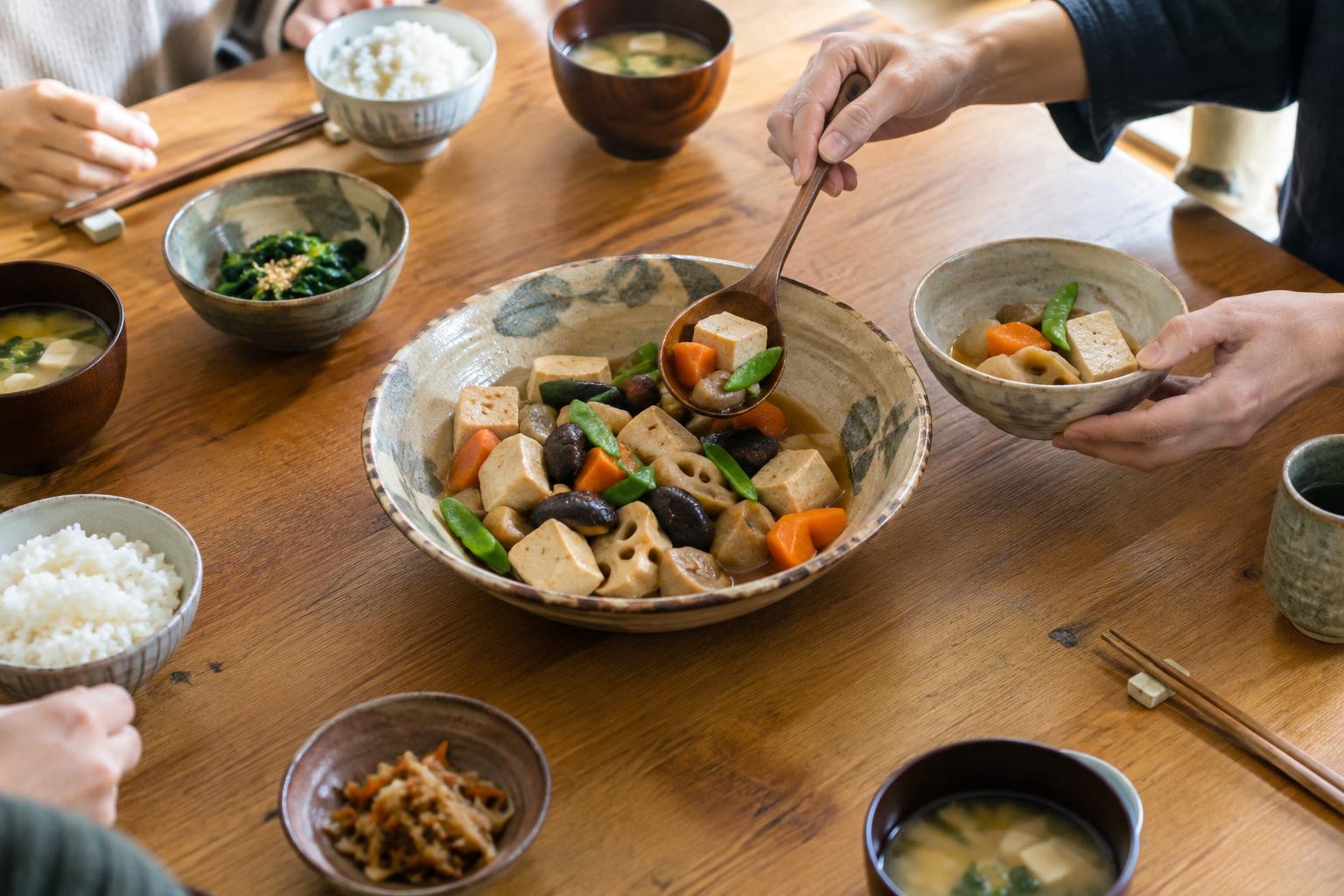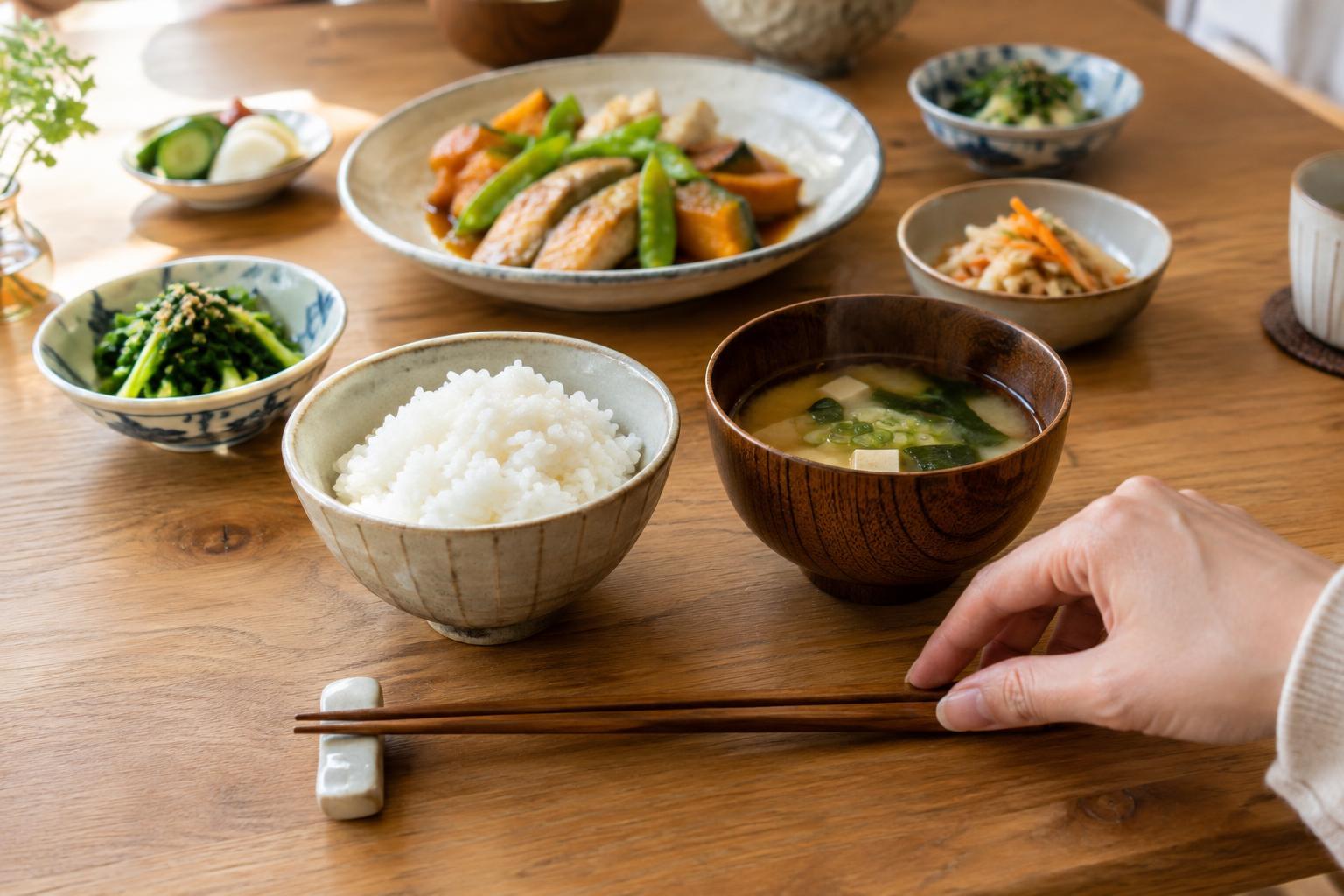
Start with a simple rule: chopsticks are for eating
You do not need perfect technique to eat comfortably at a Japanese table. A steady grip and consideration for the people sharing the meal matter more than looking practiced. Many common etiquette mistakes happen when chopsticks become a pointer, a tool for rearranging the table or something to hold while you talk.
Try to keep your movements deliberate. Take a bite, bring your chopsticks back over your own place setting and pause before reaching for another dish. Customs vary between households and settings, so watch what your host does when you are unsure. You can also ask a simple question; that is usually less awkward than struggling to guess.
Do not leave chopsticks standing in a bowl
Avoid planting chopsticks upright in rice, even for a moment while you reach for a drink. The image can recall a ritual associated with funerals, making it an uncomfortable sight during an ordinary meal. Set the chopsticks down instead.
If there is a chopstick rest, place the tips on it so they do not touch the table. If there is no rest, a paper chopstick sleeve may be folded into a small support, or the chopsticks can be laid neatly at your place setting. Follow the arrangement already on the table rather than balancing them across the top of a rice bowl. When you have finished eating, leave them together, not crossed or scattered.
Avoid passing food from chopsticks to chopsticks
Passing a morsel directly to someone else's chopsticks is another gesture to avoid: it can resemble a practice connected with funeral rites. If you want to share food, put it on a small plate first and let the other person pick it up from there. The same approach is useful when a bite is too hot or slippery to transfer neatly.
Shared platters call for a little extra care. Use serving chopsticks when they are provided. Otherwise, take a modest portion onto your own plate rather than eating directly over the communal dish. In a casual home, a host may have a preferred way to serve food; follow their lead. It is better to ask how to help yourself than to treat one rule as universal.
Keep pointing, hovering and searching to a minimum
It is tempting to gesture with chopsticks while telling a story or to point at the dish you want next. Put them down before you gesture. Likewise, try not to wave them over several plates while deciding what to take. Look first, choose a piece and then reach for it. These habits make a crowded table calmer and help everyone see which dish you are using.
Avoid digging through a serving dish to find a favorite piece. Take an accessible portion, or use the serving utensil to move food gently if that is necessary. Chopsticks are also a poor substitute for a skewer: if a piece is difficult to grasp, adjust your grip or use a spoon when one is available. There is no need to make a meal into a test of dexterity.
Handle small mishaps without making them a performance
Disposable wooden chopsticks sometimes have a rough edge. If they need separating, pull them apart calmly and keep the motion close to your place setting. Rubbing them together vigorously can suggest that the host or restaurant has supplied poor-quality utensils. If a splinter genuinely needs attention, deal with it discreetly rather than letting it spoil your meal.
Dropping food, fumbling a bite or forgetting where to set your chopsticks happens. Pause, tidy up if needed and continue. Good table manners are not a list of traps; they are a way to keep the meal pleasant for everyone. Remember the most useful alternatives: rest chopsticks when they are not in use, transfer shared food through a plate, and put them down when you want to gesture. Those few habits will carry you through many everyday meals.