Start by noticing how the table is set
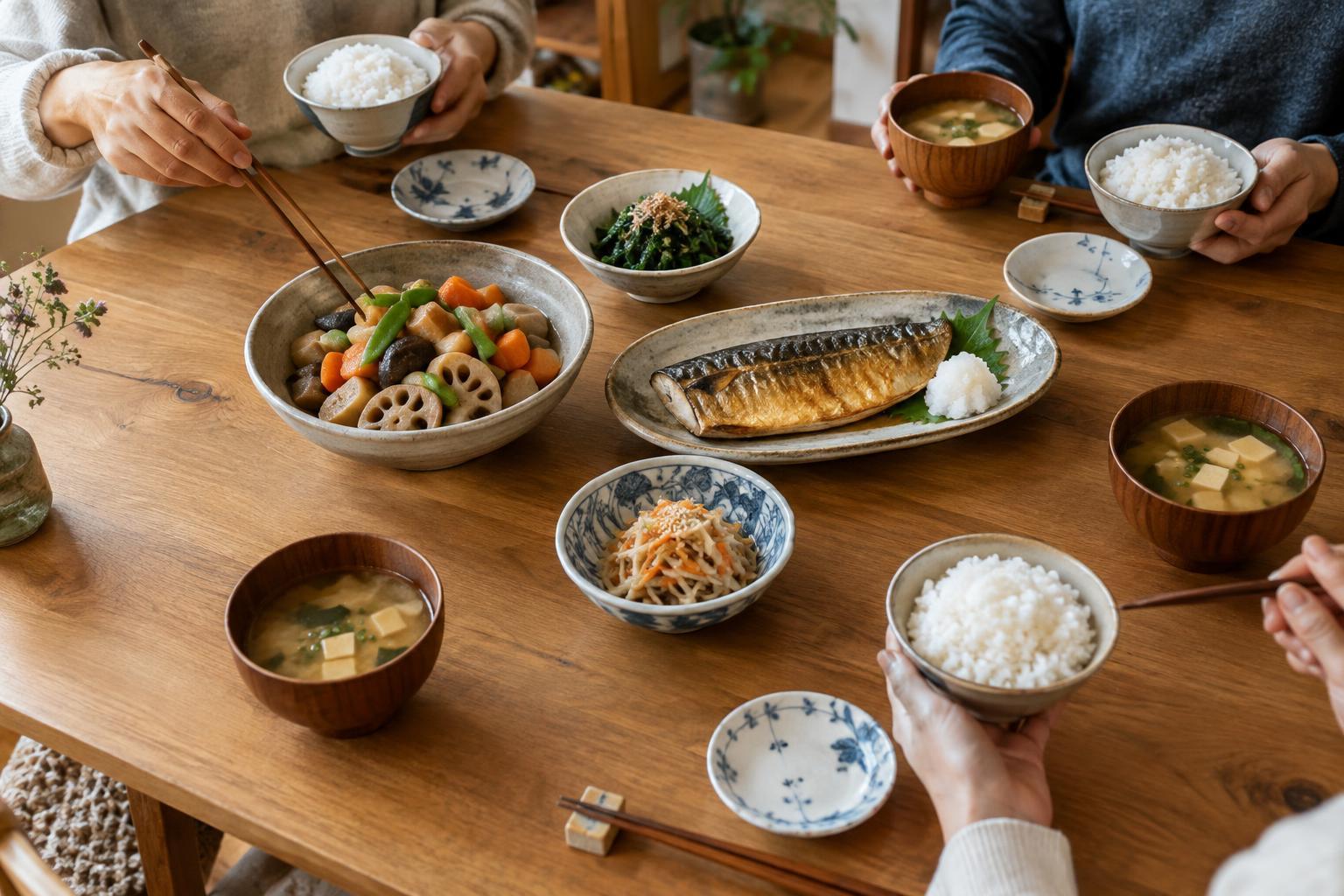
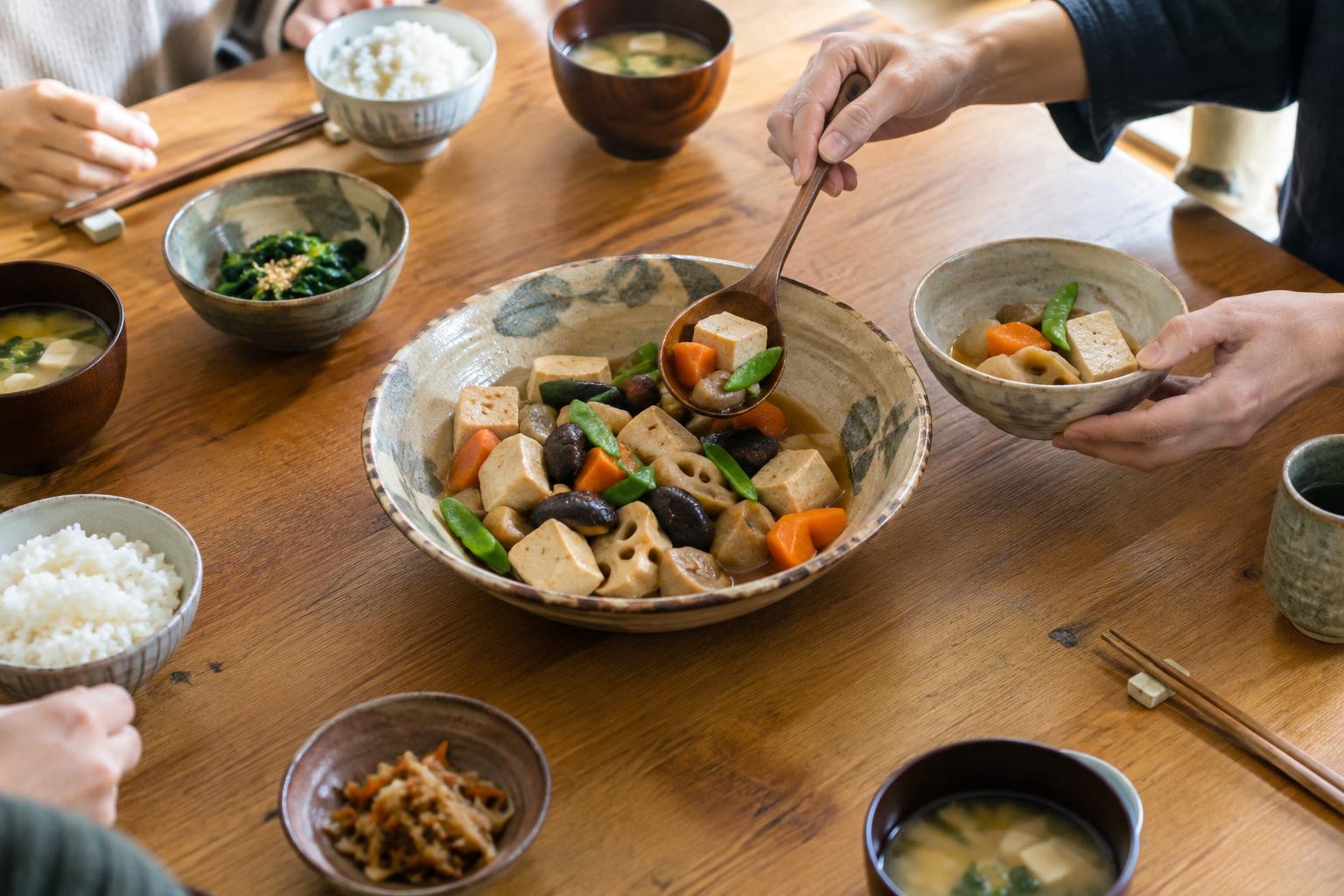
At a Japanese home meal, several dishes may sit within everyone’s reach: a plate of grilled vegetables, a bowl of simmered food, or a salad to accompany individual bowls of rice and soup. There is no single procedure for every household or occasion. Before serving yourself, take a moment to see whether the host is passing plates around, offering portions, or inviting everyone to help themselves.
If a dish is out of reach, ask for it to be passed rather than stretching across someone else’s place setting. A simple “May I have some of that?” is enough. When a host encourages you to take food, you need not wait for a formal signal. The aim is to join the meal comfortably while making it easy for others to do the same.
Use the utensil meant for the shared dish
Look for serving chopsticks, tongs, a spoon, or a small ladle beside the dish. Use that utensil to move food onto your own plate, then return it to the shared dish or its rest. This keeps personal chopsticks, which have touched your mouth, out of food everyone will eat. If a shared dish has its own sauce, try not to drip it across the table as you serve.
If no serving utensil is visible, do not assume that turning your personal chopsticks around is the expected solution. Some people do this, but preferences vary, and the ends held in your hand are not necessarily clean. It is more considerate to ask, “Is there a serving spoon?” or follow the host’s lead. At a relaxed family meal, people may have an established way of sharing; as a guest, a brief question is easier than guessing.
Take a portion that leaves room for others
A modest first serving works well, especially when several dishes are on offer. You can taste a little, see what else is being passed, and take more later if there is plenty. This matters most with a dish that has only a few pieces or an obvious mix of ingredients. Avoid collecting all the crisp pieces, the largest portion, or the last of a favorite ingredient while others have yet to serve themselves.
Try to transfer food without rearranging the whole platter in search of a particular bite. If you need to avoid an ingredient, you can ask what is in the dish or quietly skip it; there is no need to pick through the shared food. For a dish with broth or sauce, take what you can manage neatly on your own plate or in your bowl. Keeping the serving motion simple helps the meal continue at an easy pace.
Treat the final portion with care
The last piece can feel unexpectedly important when everyone can see it. You do not have to leave it untouched forever, but check whether someone else would like it before taking it. “Would anyone like the last piece?” gives others a chance to speak up without making the moment formal. If it is offered to you, accepting it is fine; so is declining.
In the same spirit, avoid putting food directly onto another person’s plate unless they have asked or that is how the host is serving. An offer is often kinder than an assumption: “Would you like some?” People may have different appetites or ingredients they prefer to avoid. At a family table, these exchanges may be quick and informal, while a guest may find it helpful to be a little more explicit.
Keep the atmosphere more important than the rules
Politeness around shared food is less about memorizing a sequence than about paying attention. Notice who has not had a chance to serve themselves, keep shared utensils with their dishes, and take an amount you can comfortably eat. If you are unsure whether a small bowl is for everyone or just one person, ask. A friendly question rarely disrupts a meal as much as reaching for the wrong dish might.
Hosts also shape how comfortable sharing feels. If you are serving a Japanese-inspired meal at home, place an obvious utensil with each communal dish and set out small plates or bowls where they are useful. You can invite guests to help themselves and mention if a dish contains an ingredient they may want to know about. Clear, simple cues let everyone focus on the food and conversation rather than on etiquette.