A meal can be both individual and shared
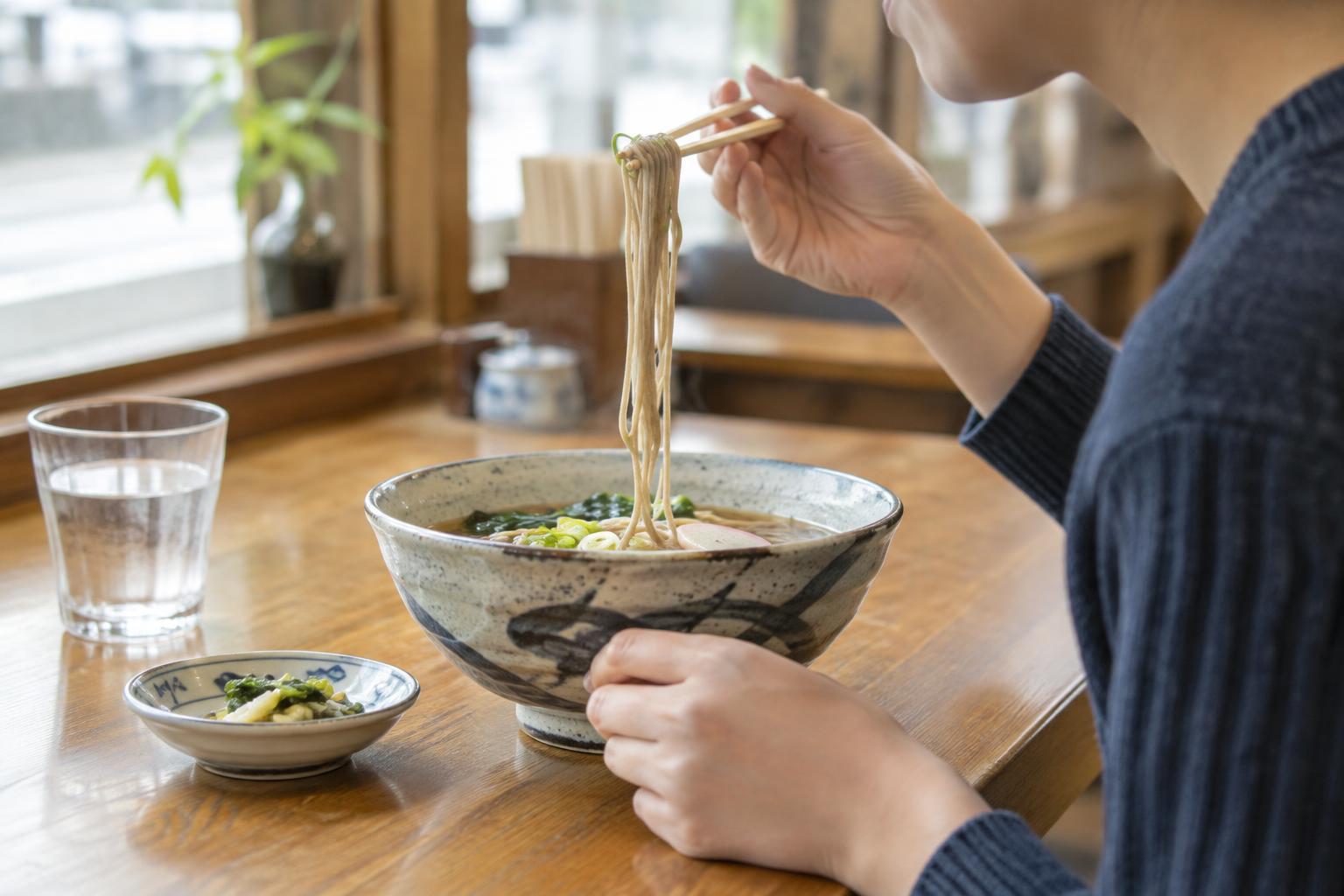
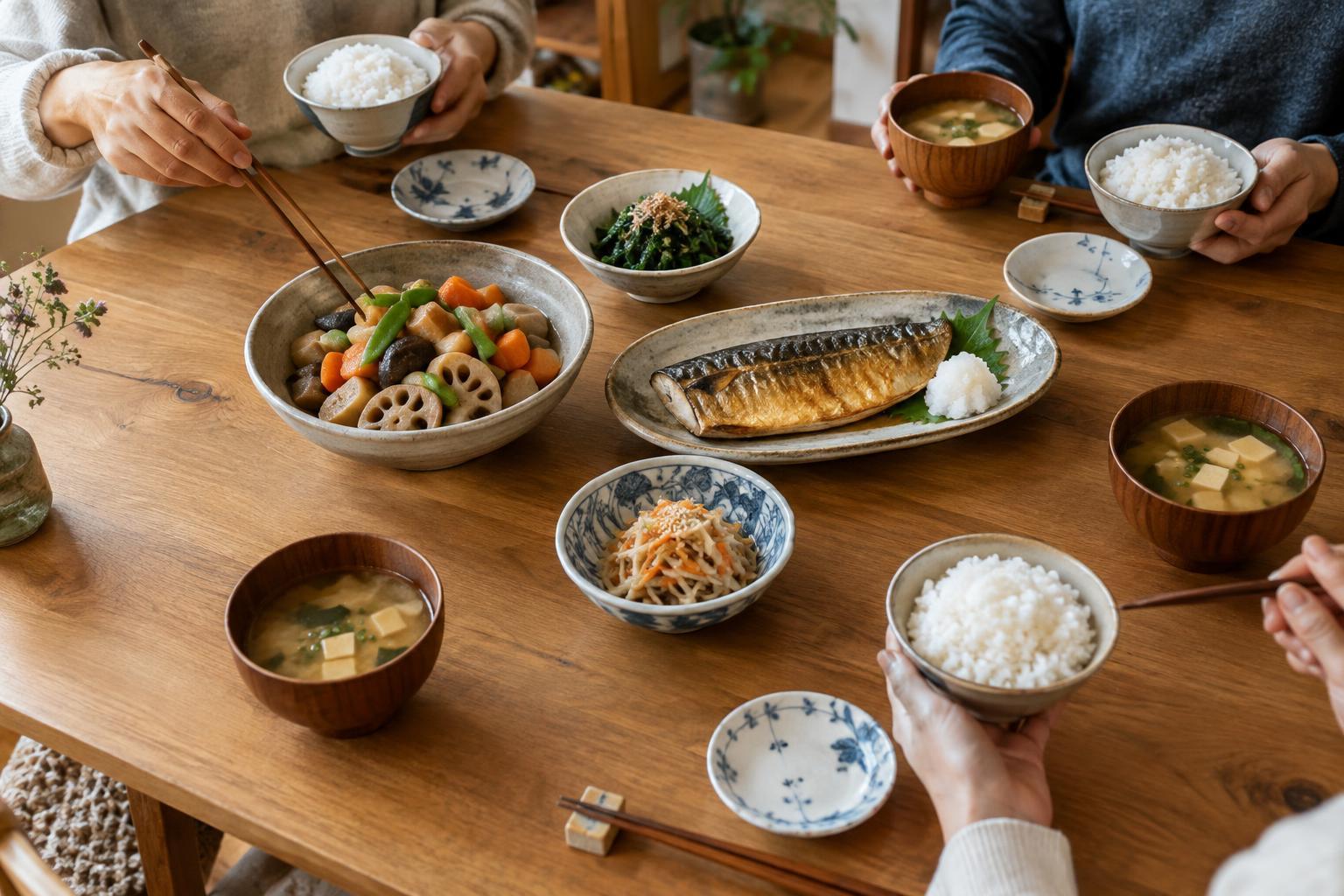
At a Japanese family meal, the table does not have to follow a single rule about portions. Each person might have a bowl of rice, a bowl of soup and a small plate, while a platter of grilled fish, a vegetable dish or a pot of simmered food sits within reach of everyone. Some households divide nearly everything before sitting down; others leave several dishes to be served at the table. Both approaches can fit an everyday meal.
It helps to think of individual bowls as a way to make eating comfortable, not as a sign that the meal is entirely separate. Rice and soup are easy to handle in personal bowls, and a small plate gives each diner a place to put food taken from a shared dish. The shared dishes, in turn, let people choose a little more of what they enjoy without requiring the cook to predict every appetite.
What often goes in each person’s place
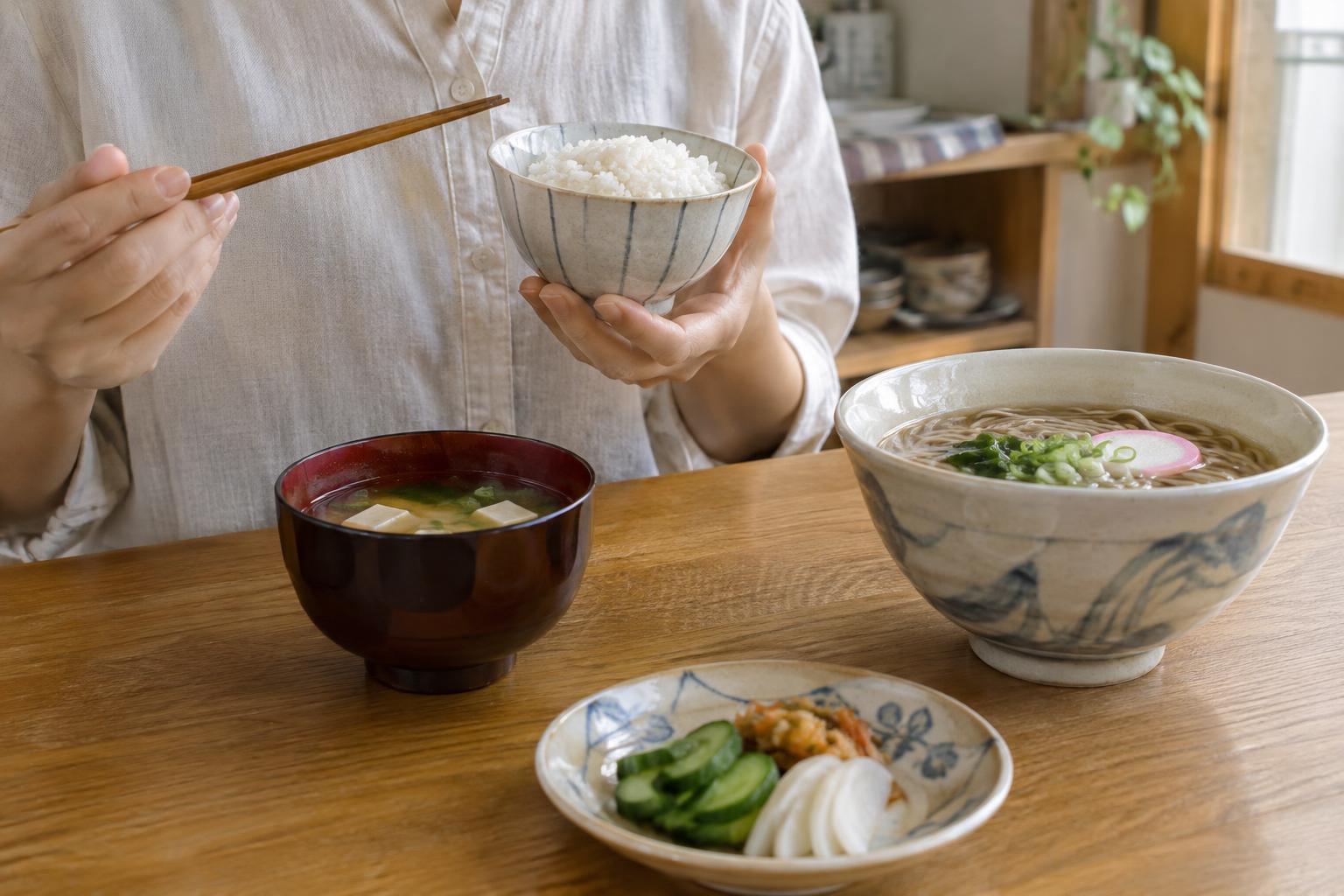
Rice is commonly served in an individual bowl, and soup, when included, usually has its own bowl as well. A person may also receive a small side dish already portioned out. In a simple home meal, the main dish might be plated individually, especially if it is a single piece of fish, a cutlet or something that is easier to serve before it reaches the table. None of these choices requires elaborate tableware; ordinary bowls and plates work well.
The arrangement also depends on who is eating and what is being served. A young child may need food cooled, cut into smaller pieces or placed within easy reach. A guest may appreciate a portion served for them at first, so they do not have to guess how much to take. If a dish is especially saucy, delicate or difficult to divide neatly, plating it in the kitchen can make the meal simpler for everyone.
Why put dishes in the center?
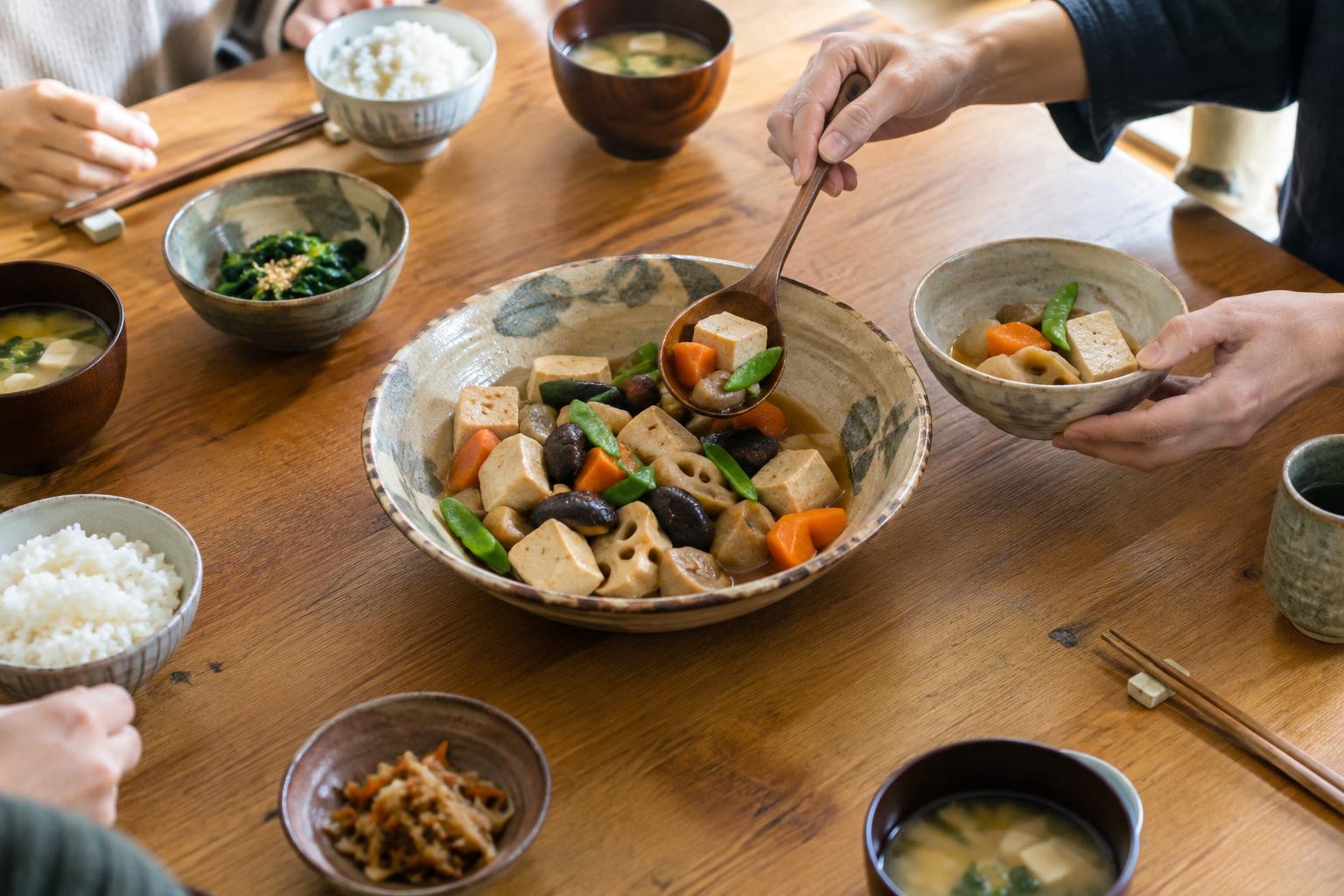
Shared plates are useful for foods that divide easily: cooked vegetables, pickles, tofu, sliced omelet or pieces of a stir-fry. A large bowl or platter can save space in the kitchen and allow diners to take modest amounts, then return for more if there is enough. At a casual family table, this can feel more flexible than setting out a full portion of every dish for every person.
Sharing does not mean that every plate is open for taking at any moment. A household might set aside portions for someone eating later, or reserve part of a dish for a person with particular dietary needs. If you are cooking for others, a quick explanation such as “This plate is for everyone; those bowls are yours” removes uncertainty. The point is to make food accessible while ensuring everyone gets a fair serving.
Serving food from a shared dish
A practical default is to provide a serving spoon, tongs or an extra pair of chopsticks for communal food. Use that utensil to move a portion onto your own plate or bowl, rather than eating directly from the central dish. For soup or a hot pot served from a larger vessel, a ladle and individual bowls make portioning easier. If there are no serving utensils, follow the host’s lead or ask what they prefer; habits vary among families.
Take a small first portion when several people are sharing, particularly if you do not know how much is available. You can usually take more later. Keep personal chopsticks and used utensils away from food that others will eat unless the household has clearly chosen a different practice. These are useful courtesies at any shared table, not a test of specialized etiquette.
Choose a layout that suits your meal
To set an approachable Japanese-style family table, start with one rice bowl and one small plate per person. Add soup bowls if you are serving soup. Then decide which cooked dishes are easiest to portion in the kitchen and which can go in the center with serving utensils. A plate of individually portioned fish can sit alongside a shared bowl of greens and a small dish of pickles; there is no need to make everything match.
Before sitting down, check whether everyone can reach the communal dishes safely, especially if a pot is hot or the table is crowded. You can pass a platter, serve people in turn or put food on two smaller plates instead of one large one. The best arrangement is the one that lets everyone eat comfortably, understand what is shared and enjoy the meal without fuss.