Start with the size of the dish
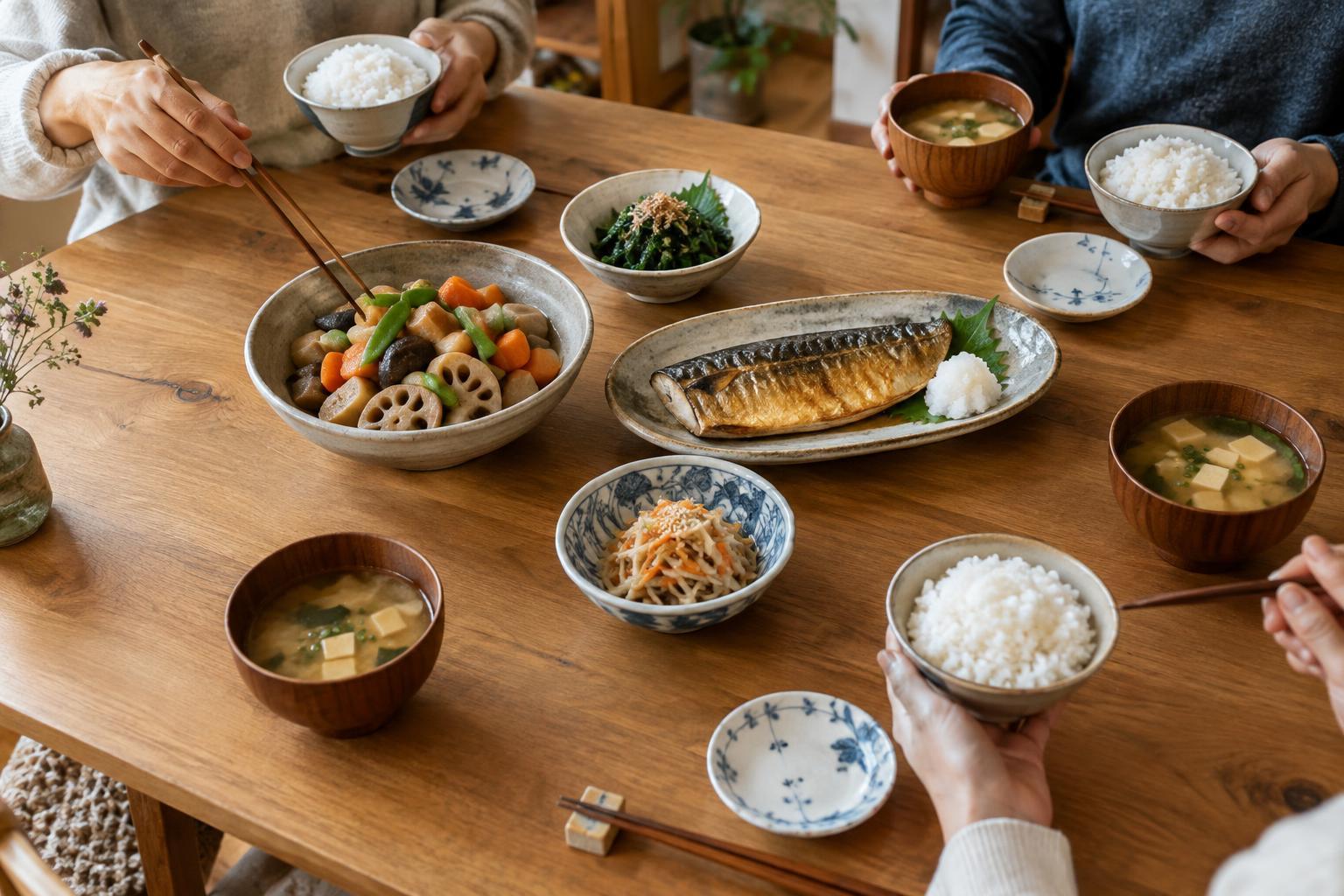
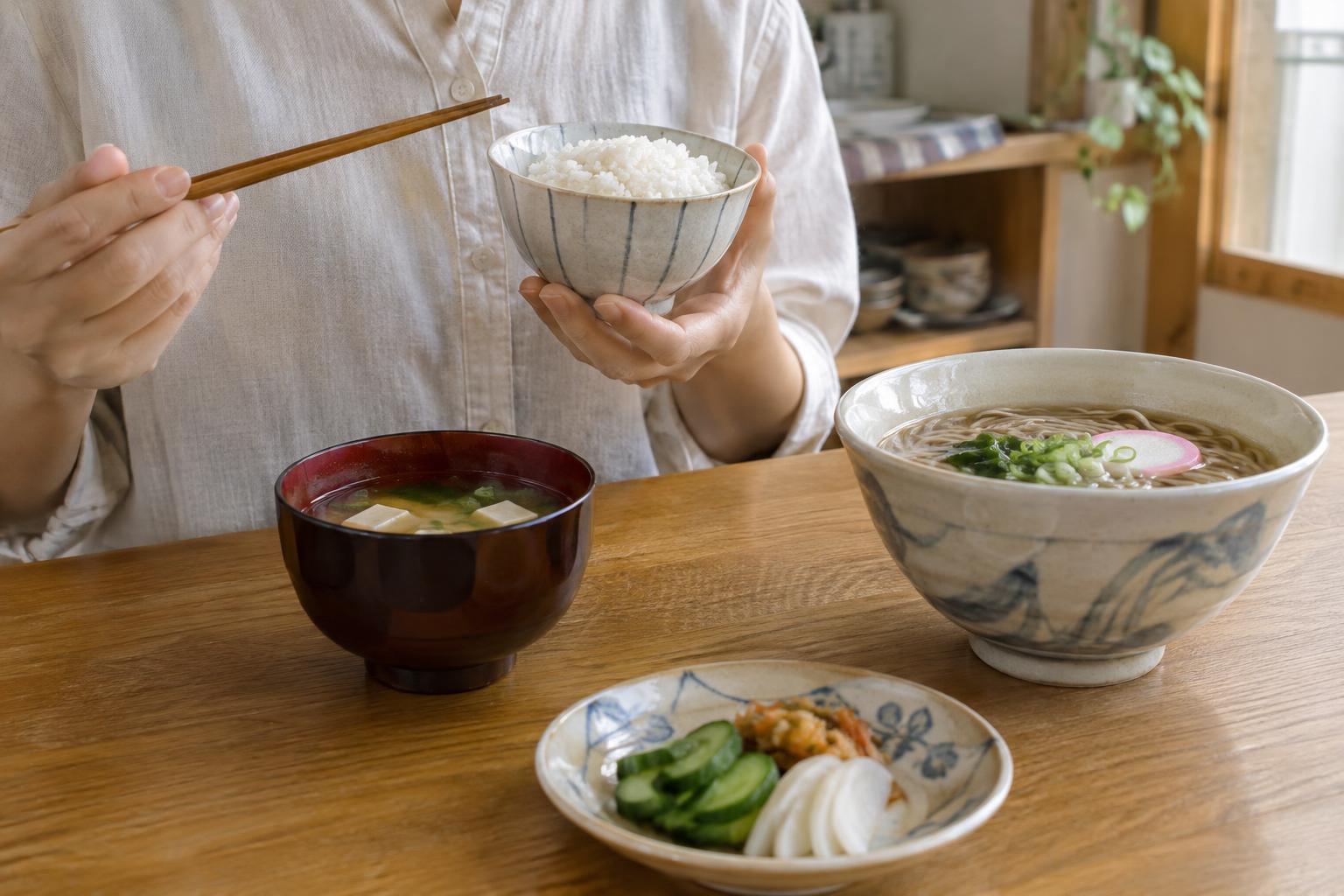
At a Japanese meal, lifting a small bowl is often a natural part of eating. A bowl of rice may be held in one hand while the other hand uses chopsticks. Bringing the bowl closer shortens the distance the food has to travel and makes it easier to catch a few loose grains. You do not need to raise it to your lips for every bite; holding it comfortably near your chest is enough.
Size is a useful first clue. A small, light bowl intended for one person is generally easier to lift than a wide or heavy dish. Large serving bowls, platters and most plates stay on the table. If a dish is awkward to support securely in one hand, leave it down rather than trying to follow a rule about lifting bowls.
Rice and soup follow different motions
For rice, hold the bowl steady in one hand and pick up a manageable amount with your chopsticks. Avoid pressing the rim against your mouth and sweeping rice in with the chopsticks. The point of lifting the bowl is to make ordinary bites easier, not to rush the food from bowl to mouth.
Miso soup is also commonly served in a small bowl that can be lifted. Sip the broth directly from the bowl, then use chopsticks to pick up tofu, vegetables or other solid pieces. It is fine to alternate between sipping and eating the contents. If the bowl has a lid, set the lid down carefully where it will not wobble or get in anyone's way. Check the heat before taking a large sip, and hold the bowl with both hands if that feels steadier.
Some small side dishes come in bowls too, but they do not all need to be lifted. A shallow dish of pickles or a bowl containing food that is easy to take with chopsticks can remain on the table. Use the shape and weight of the dish, as well as your own comfort, to decide.
Leave large noodle and rice bowls on the table
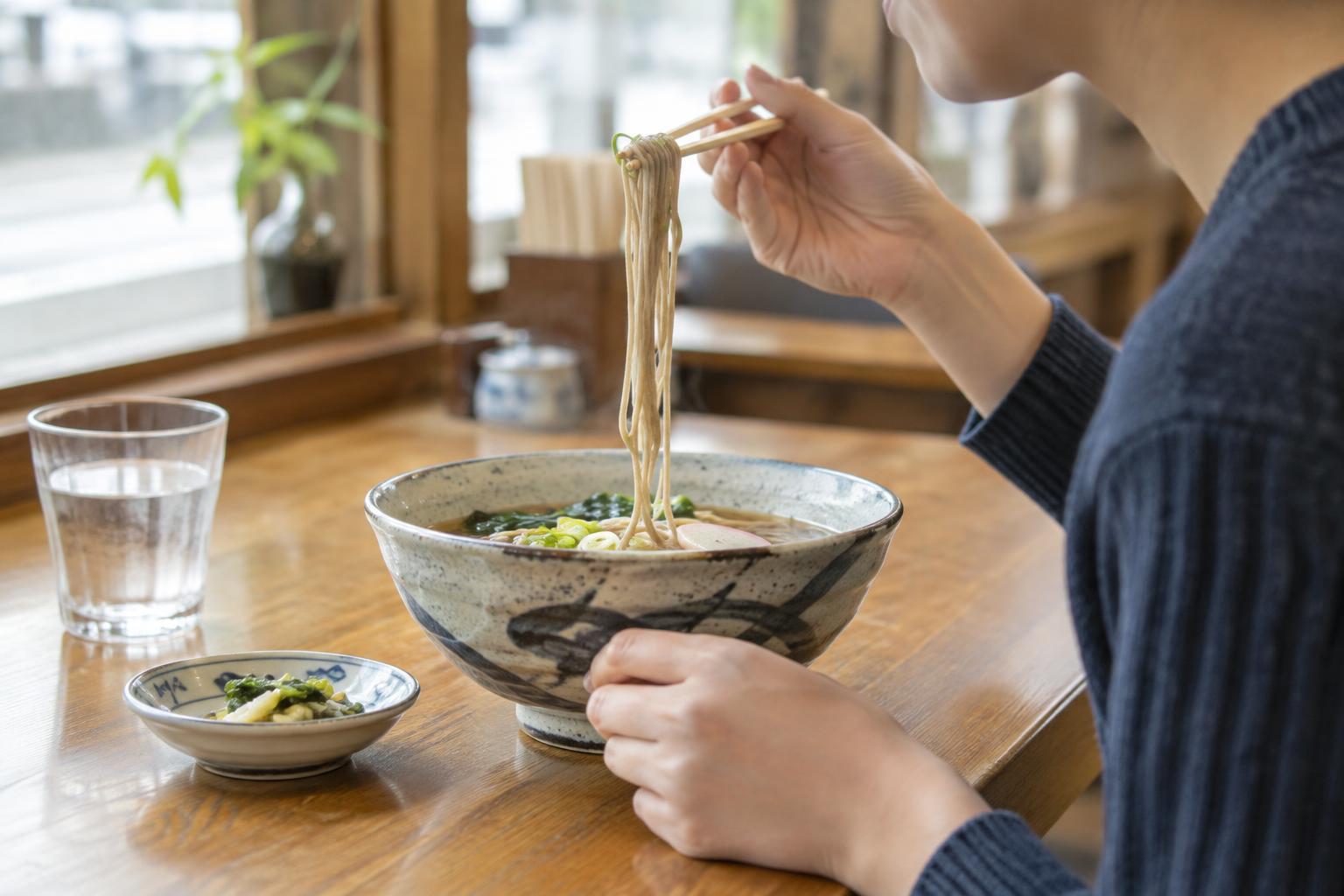
The word bowl covers a wide range of dishes. A small rice bowl is different from a deep ramen bowl full of hot broth. Ramen bowls are typically too large and heavy to hold throughout the meal, so leave them on the table while eating noodles and toppings. If you want some broth, a spoon is often provided. You may also lift a manageable bowl briefly to sip, but there is no need to handle a hot, full bowl just because it is called a bowl.
Donburi, a meal of rice with toppings served in one bowl, also varies in size. A compact bowl may be comfortable to hold; a generous one may be better left down. With either, bring food to your mouth in small bites rather than bending far over the bowl. For soba or other noodles served with a separate dipping sauce, the small cup of sauce may be held while you dip and eat. The tray or plate holding the noodles stays put.
Look at the setting, then eat comfortably
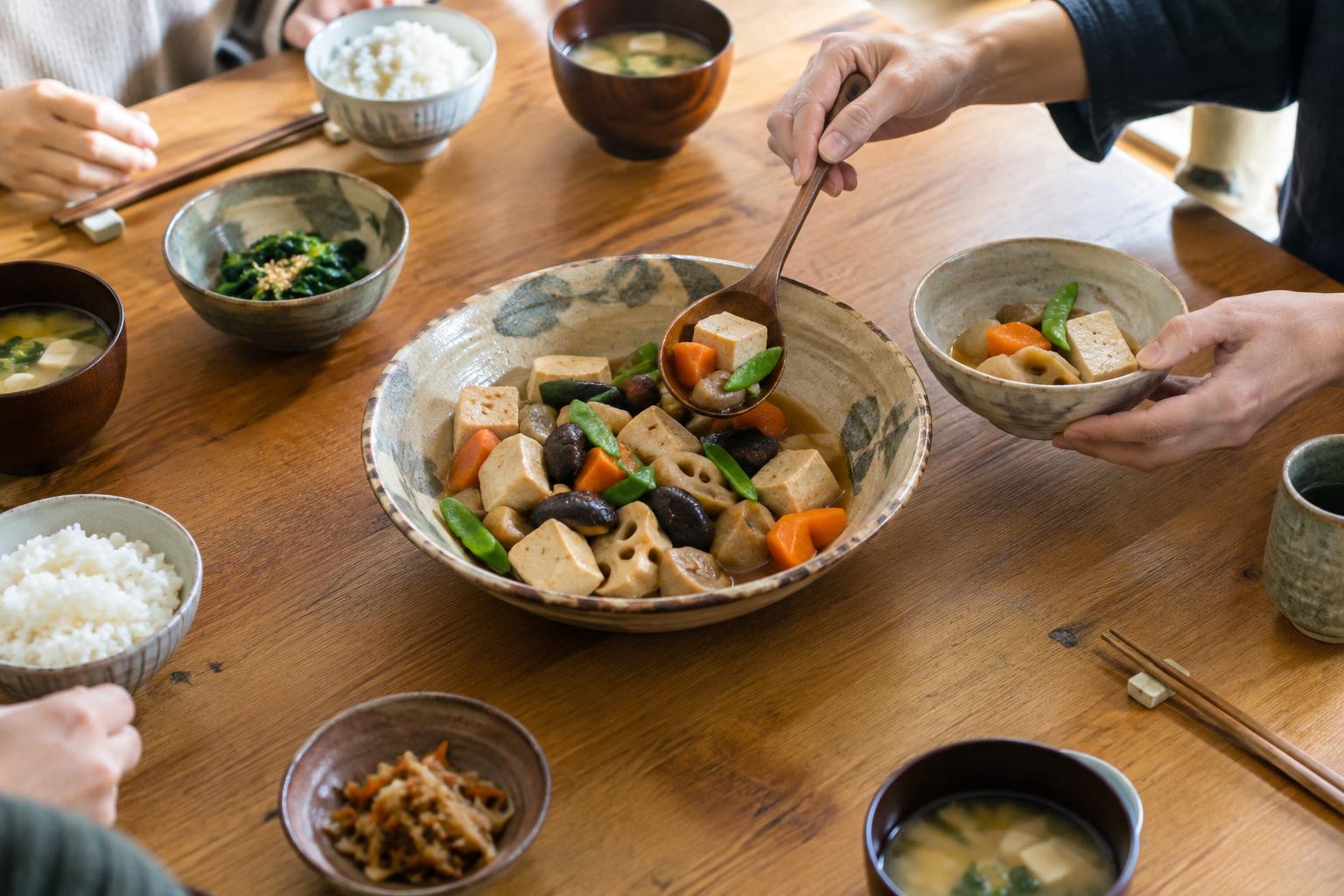
A meal with several small dishes gives you plenty of chances to see which vessels are made to be held. In a shared meal, move food from a communal dish to your own dish before eating it; do not lift a serving bowl as though it were your personal rice bowl. Keep your grip secure and avoid reaching across the table with a bowl in hand.
Table habits can differ among households, restaurants and individual diners. If you are a guest and feel unsure, notice how the people around you handle similar dishes, without treating any one person's choice as a rigid rule. The most reliable approach is simple: lift a personal bowl when doing so helps you eat neatly and safely, and leave it on the table when it does not. Comfort and care for the dishes matter more than performing a perfect sequence of gestures.