A celebration begins with context
What makes food festive? Sometimes it is an ingredient reserved for a particular occasion. Sometimes it is a familiar dish served on a day when everyone gathers. In Japan, celebrations range from household observances to neighborhood festivals, and their foods are just as varied. There is no single menu that represents every region or family.
Timing gives many dishes their meaning. A sweet enjoyed during a seasonal observance, for example, may feel different from the same sweet eaten on an ordinary afternoon. Serving food at a particular moment can mark a change in season, welcome guests or create a pause in the usual routine. The occasion is part of the dish.
Foods that carry wishes and meanings
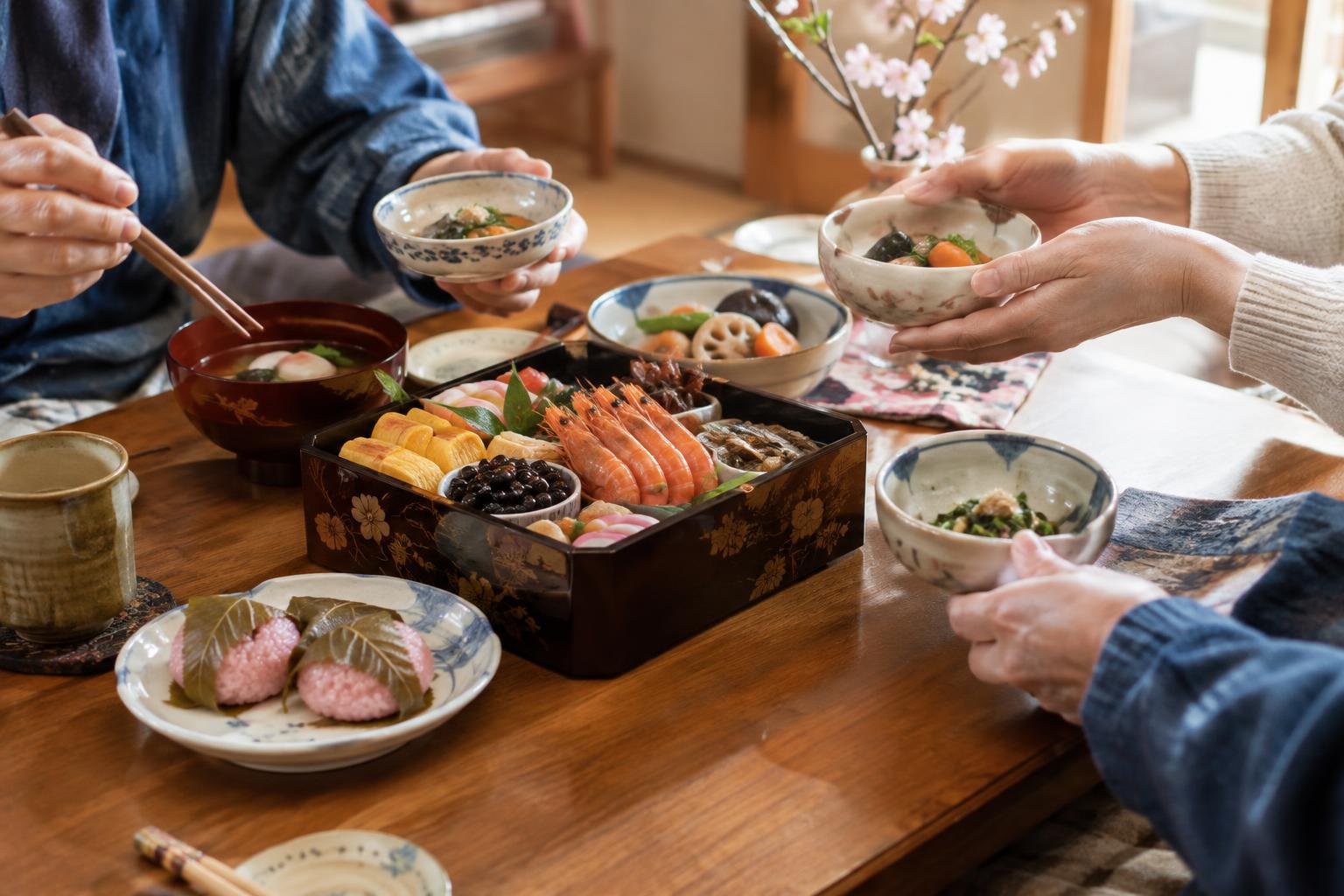
Some celebratory dishes are associated with hopes for the year ahead or with a milestone in someone’s life. Osechi ryori, the assortment of foods served around New Year, is a familiar example. Its components vary, but particular ingredients and shapes are often given auspicious meanings. Those associations add a layer to the meal; they do not mean every household prepares or interprets each item in the same way.
Ozoni, a soup containing mochi, is another New Year food with considerable variation. The broth, other ingredients and shape of the mochi can differ by region and household. The shared name identifies the occasion, while the version in the bowl may tell a more personal story about where a family is from or how it likes to cook.
Sekihan, rice cooked with red beans, is commonly served for happy occasions. Its place at a table illustrates a simple principle: a food can become celebratory through repeated use. Seeing it served at important moments helps people recognize that the meal is marking something special.
Season and presentation make the occasion visible
Seasonal foods help distinguish one observance from another. Around Hinamatsuri, some households serve chirashi sushi, a bowl or platter of seasoned sushi rice topped with colorful ingredients. Hina arare, small rice crackers, are also associated with the occasion. For Children’s Day, kashiwa mochi—soft rice cakes with a sweet filling wrapped in oak leaves—are a familiar treat in many places. Availability and customs differ, so these examples are best understood as recognizable traditions rather than required menus.
Presentation can do some of the work of celebration. A scattering of toppings, a carefully arranged assortment or a sweet wrapped in a leaf invites people to notice the food before eating it. Special serving dishes may come out, or a family may simply take more care setting the table. Neither approach needs to be elaborate. What matters is the visible shift from an ordinary meal to one made for an occasion.
Seasonal connections can be practical as well as symbolic. Cooking with ingredients people expect at a certain time of year makes a celebration easier to recognize and remember. Even when a recipe stays nearly the same, its annual return can become something to look forward to.
Festival food is also food eaten together
At an outdoor matsuri, or festival, food stalls can be as memorable as the event itself. Foods such as yakisoba, grilled noodles, or takoyaki, small savory balls typically containing octopus, are often eaten while walking with friends or family. They are not necessarily exclusive to festivals. Their festive quality comes partly from the setting: the bustle of stalls, the ease of sharing and the pleasure of eating something freshly prepared outside.
Home celebrations create a different kind of shared experience. Someone may make a dish the way a parent did, while another person brings a store-bought favorite. Both can belong at a meaningful table. Recipes change with available ingredients, time and taste, but the habit of eating together gives them continuity.
This is why asking whether a dish is “authentic festival food” may be less useful than asking how people use it. A food may have a widely recognized connection to an event and still leave room for local and family choices.
Bring the idea to an everyday table
You do not need to reproduce an entire festival menu to appreciate these traditions. Start with one dish and learn what occasion it is associated with. Notice its ingredients, when it is served and how it is presented. If you cook it, keep the meal manageable enough to enjoy with the people eating it.
The lasting lesson of festival foods is that celebration does not depend only on rare ingredients or complicated techniques. A familiar bowl of soup, a shared plate of rice or a sweet anticipated each year can all mark time and strengthen a connection to others. The food matters, and so does the moment made around it.