Two regions, many kitchens
Kanto and Kansai are broad regions of Japan, often represented in food conversations by Tokyo and Osaka or Kyoto. Comparing their cooking can be a useful way to notice differences in seasoning, ingredients and familiar meals. It is not a rulebook, though. Each region contains many local traditions, and a home cook’s preferences may reflect family habits as much as geography.
One commonly described contrast is that Kanto dishes may look darker and taste more assertively seasoned, while Kansai dishes may look lighter and place particular emphasis on the flavor of dashi, the stock used in many Japanese foods. Appearance alone can mislead: a pale dish is not necessarily low in salt, and a dark one is not necessarily stronger in every flavor. The best way to understand the distinction is to look at how cooks build a particular dish.
What a bowl of noodle soup can show you
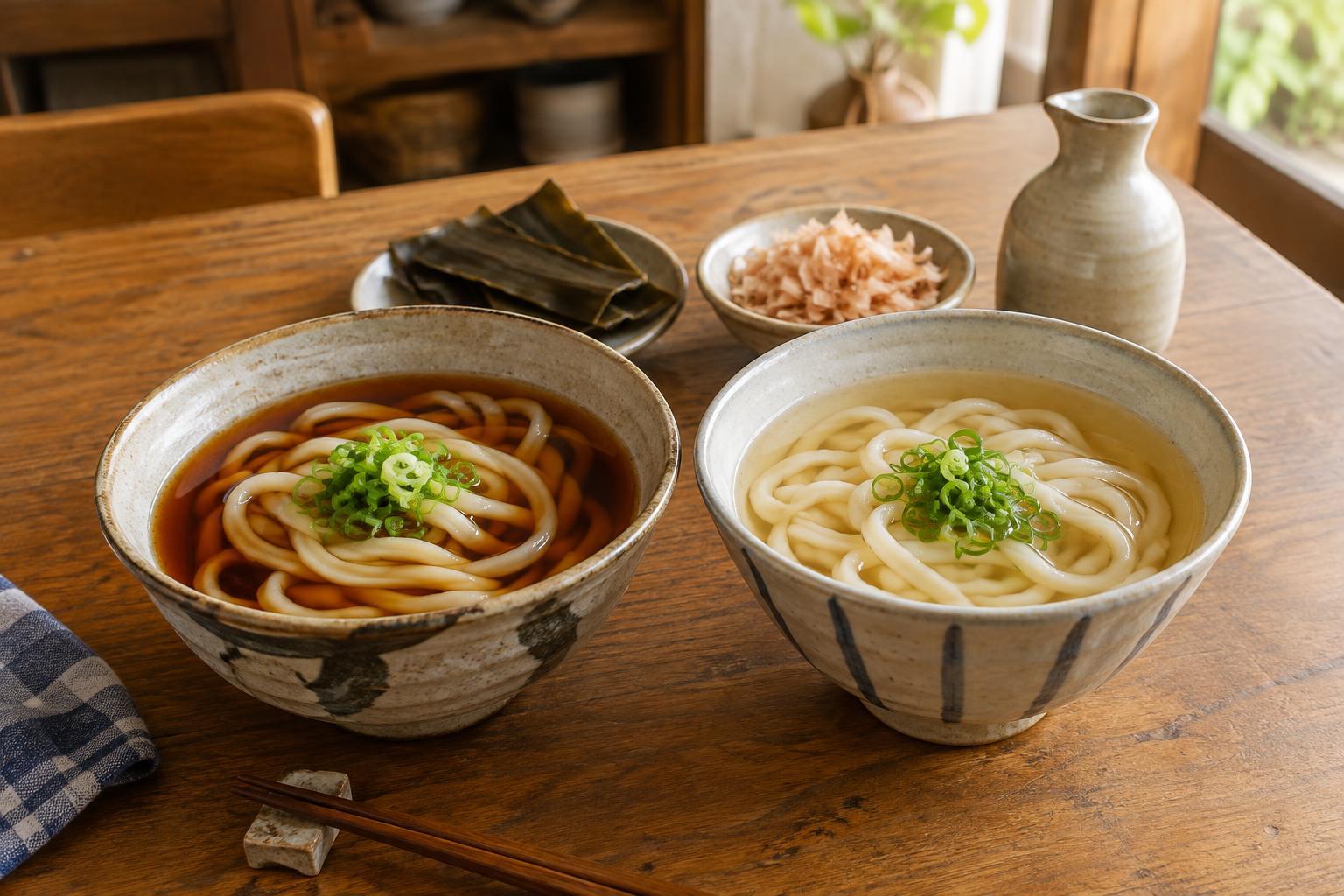
Noodle broth makes the comparison easy to see. A Kanto-style soup for soba or udon is often made with a dark-colored soy sauce seasoning and dashi. The result can have a deep brown color and a distinct soy sauce presence. A Kansai-style udon broth is often lighter in color, with dashi more noticeable alongside a measured amount of soy sauce and salt. Both approaches can be savory and satisfying; they simply balance their components differently.
The soy sauces involved help explain the visual difference. Koikuchi, a commonly used dark soy sauce, gives broth a deeper color. Usukuchi is lighter in color and is often used when a cook wants the ingredients or stock to remain visually prominent. Despite its name and paler appearance, usukuchi is not a low-sodium substitute. If you make either style at home, taste before adding extra salt or soy sauce rather than seasoning by color.
Noodle preferences also appear in regional shorthand: Kanto is frequently associated with soba, and Kansai with udon. You can find both noodles in both places, so the distinction is better treated as a clue to familiar local styles than as a limit on what anyone eats.
Dashi and the shape of a meal
Dashi is a foundation for soups, simmered vegetables, noodle broth and many other everyday dishes. Kombu, a type of kelp, and katsuobushi, dried bonito flakes, are two familiar ingredients used to make it. Recipes may use either one or combine them. Kansai cooking is often described as giving kombu-based dashi a prominent role, while some Kanto preparations lean toward a more pronounced bonito flavor. In real kitchens, the choices overlap considerably.
To notice what dashi contributes, try a simple soup before thinking about regional labels. Warm dashi, add a little soy sauce or salt, and taste it. Then add an ingredient such as tofu, mushrooms or cooked greens. The stock should support that ingredient rather than hide it. This approach can be especially helpful when exploring lighter-colored broths, where a generous pour of soy sauce would change both the flavor and appearance.
Seasoning choices can affect how a whole meal feels. A soup with a pronounced soy sauce note may sit comfortably beside plain rice and simply prepared vegetables. A more delicate soup may invite attention to the aroma of the stock or the taste of each topping. Neither makes a meal more authentically Japanese; they offer different ways to bring familiar foods together.
Familiar dishes, different expectations
Regional differences are not confined to soup. Okonomiyaki, a savory griddled dish, is strongly associated with Kansai, where a familiar version mixes cabbage and other ingredients into a batter before cooking. Other regions have their own approaches, and individual households adapt the fillings and toppings. The dish is a reminder that regional food culture includes preparation habits, not just the final level of sweetness or saltiness.
Even a shared dish can prompt different expectations at the table. A cook might aim for a stronger soy sauce note, a clearer dashi flavor, a softer texture or a particular balance of toppings. These preferences are easiest to appreciate by asking what a dish is meant to highlight, rather than deciding that one region uses more or less flavor overall. Restaurant versions, home versions and packaged products can vary widely within the same region.
How to explore the difference at home
For a small, practical comparison, prepare one batch of dashi and divide it between two bowls. Season one with a little koikuchi soy sauce for a darker, soy-forward broth. Season the other gradually with usukuchi soy sauce, if available, keeping the dashi prominent. Add the same cooked udon and toppings to each. Because soy sauces vary, use your palate rather than equal spoonfuls as your guide.
Notice the aroma, color and aftertaste, then consider which broth suits the toppings you chose. You may prefer one style, borrow elements of both or make something that fits neither label. That is a natural part of home cooking. Kanto and Kansai provide helpful points of comparison, but the everyday lesson is simpler: taste the stock, season with intention and leave room for the ingredients in the bowl.