What does kyushoku mean?
Kyushoku means a provided meal, but in everyday conversation it often refers to school lunch. In many Japanese schools, lunch is part of the school day rather than a separate trip to a cafeteria. Students eat with their class, often in their usual classroom. The details vary by school and age group, but the meal commonly involves a shared routine: getting ready, distributing food, eating together and putting things away.
A typical lunch may include a staple such as rice or bread, a main dish, vegetables, soup and milk. Menus change, and local preferences and school arrangements shape what is served. The important point is not that every student eats the same particular dish. It is that a group receives a planned meal and makes time to share it.
From the kitchen to the classroom
Lunch can be prepared in a kitchen at the school or brought in from a kitchen that serves multiple schools. Food arrives in containers suited to keeping dishes separate until serving time. Alongside the food come the items needed to eat it, which may include trays, bowls and utensils. Exact equipment and procedures differ, so one school's lunchtime will not look identical to another's.
Before anyone eats, the room has to be ready. Desks may be arranged for lunch, surfaces cleared and hands washed. These small steps make the change from lessons to mealtime visible. They also give the class a practical task to complete together: making space for everyone to sit down and eat.
How students take part in serving
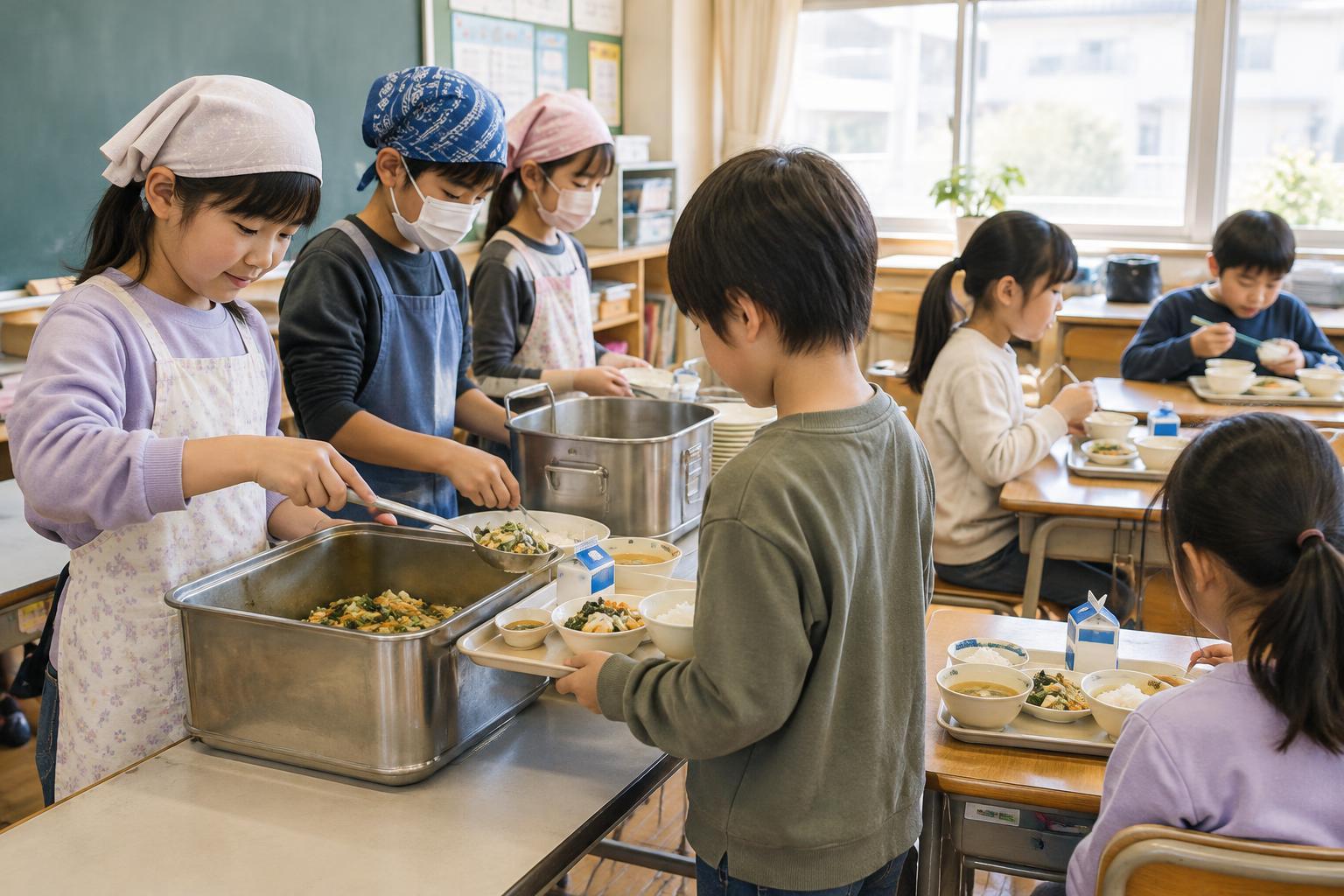
In many classrooms, students take turns as lunch helpers, called kyushoku toban. Their work may include carrying supplies, setting out dishes and portioning food for classmates under a teacher's supervision. Helpers may wear items such as an apron, cap or mask, according to the school's practice. Other students might collect their portions in an orderly line and take them back to their desks.
Serving a class calls for attention to both the food and the people waiting for it. A helper may need to judge portions so there is enough to go around, while a teacher helps manage the process. Schools also have their own ways of handling dietary needs, including allergies; those arrangements should not be assumed to be the same everywhere. The shared task is an opportunity to practice consideration, but it remains an organized school routine, not a meal run by children alone.
Eating together without assuming every lunch is alike
Once everyone has been served, the class usually marks the start of the meal together. The familiar phrase itadakimasu expresses appreciation before eating, though what the moment looks like can vary. Lunch then gives students a chance to talk, notice an unfamiliar ingredient or simply enjoy a break in the day. Teachers are often present and may eat with the class.
Kyushoku is sometimes described as a way for children to encounter dishes they might not choose for themselves. That can be true, but experiences differ. A new flavor may delight one student and take another time to get used to. Menus may also draw on seasonal ingredients or local food traditions without representing a single, fixed picture of Japanese cooking. Looking at a school lunch as one everyday meal, rather than a showcase of national cuisine, makes its variety easier to appreciate.
The work after the meal
Lunch is not finished when the last bite is eaten. Students may return dishes and containers, sort leftover materials as directed and put the classroom back in order. Some schools include cleaning tasks in the wider daily schedule. As with serving, adults set the procedures, while students carry out age-appropriate parts of the work.
This full sequence is what makes kyushoku distinctive to many visitors: a meal is received, shared and cleared away through repeated cooperation. It does not mean that every lunch is quiet, perfectly balanced for every child's tastes or free of challenges. It means that eating is woven into classroom life. For anyone interested in Japanese food culture, kyushoku offers a useful reminder that the way food reaches the table—and what happens afterward—can matter as much as the dishes themselves.