Start with the diner’s point of view
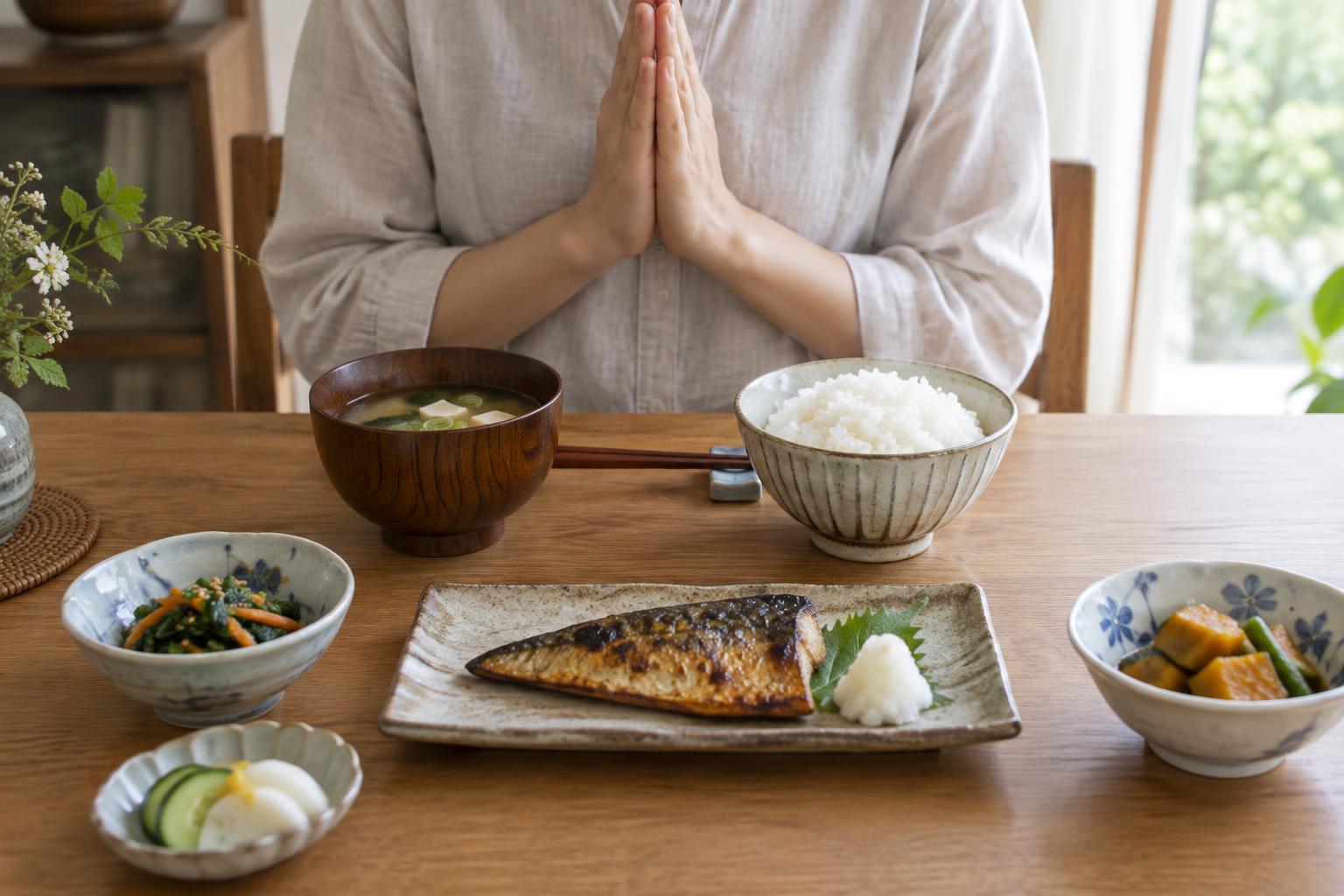
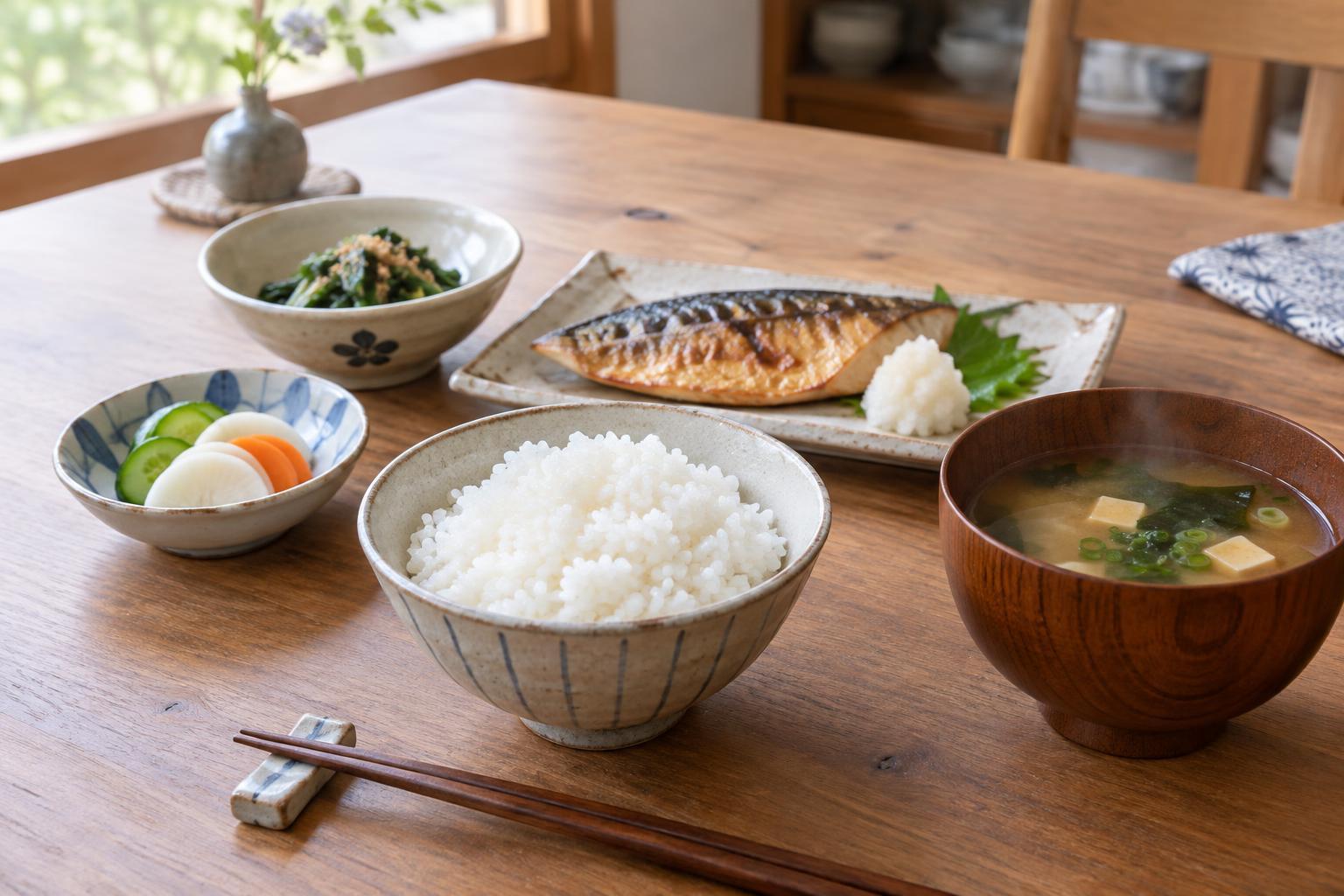
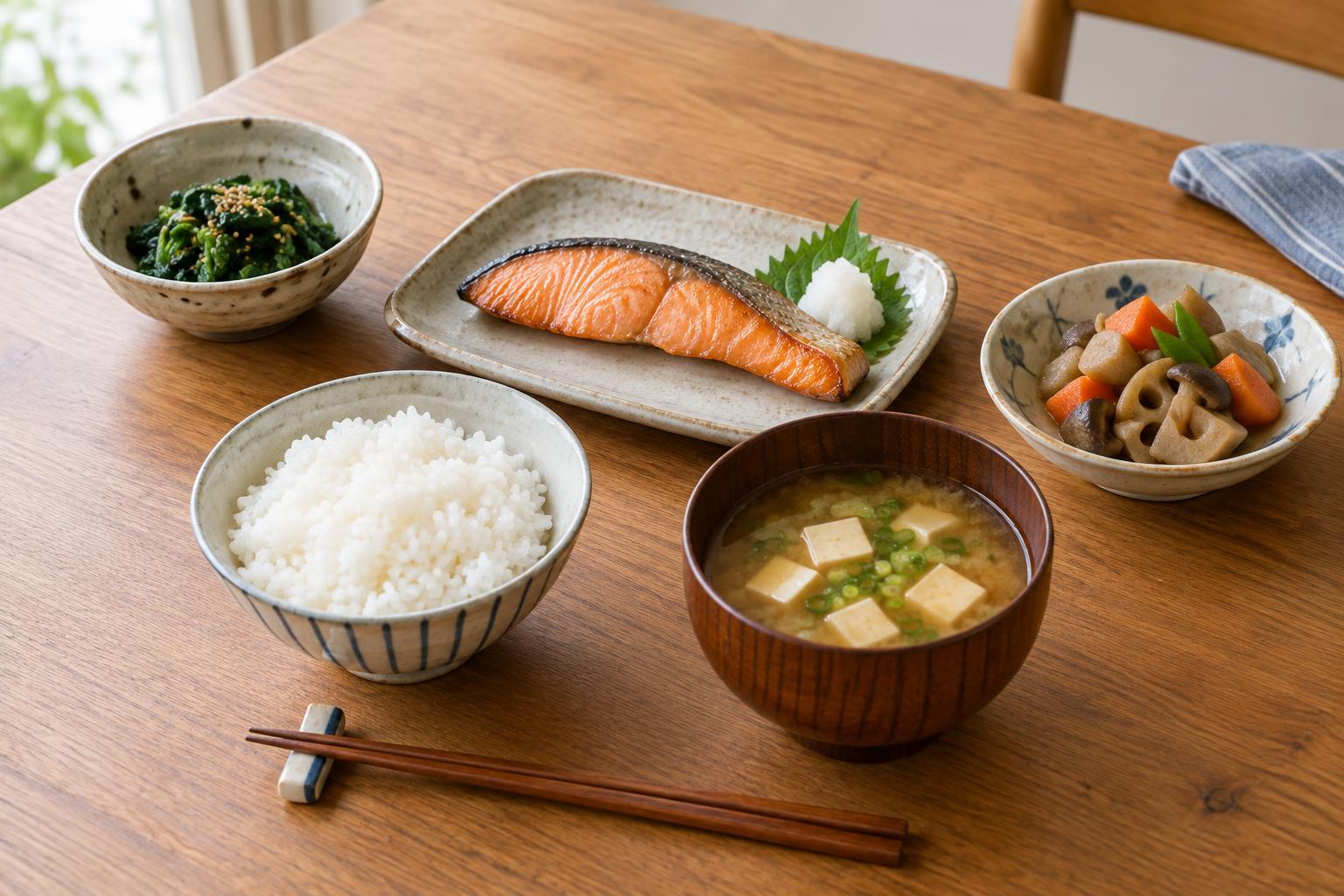
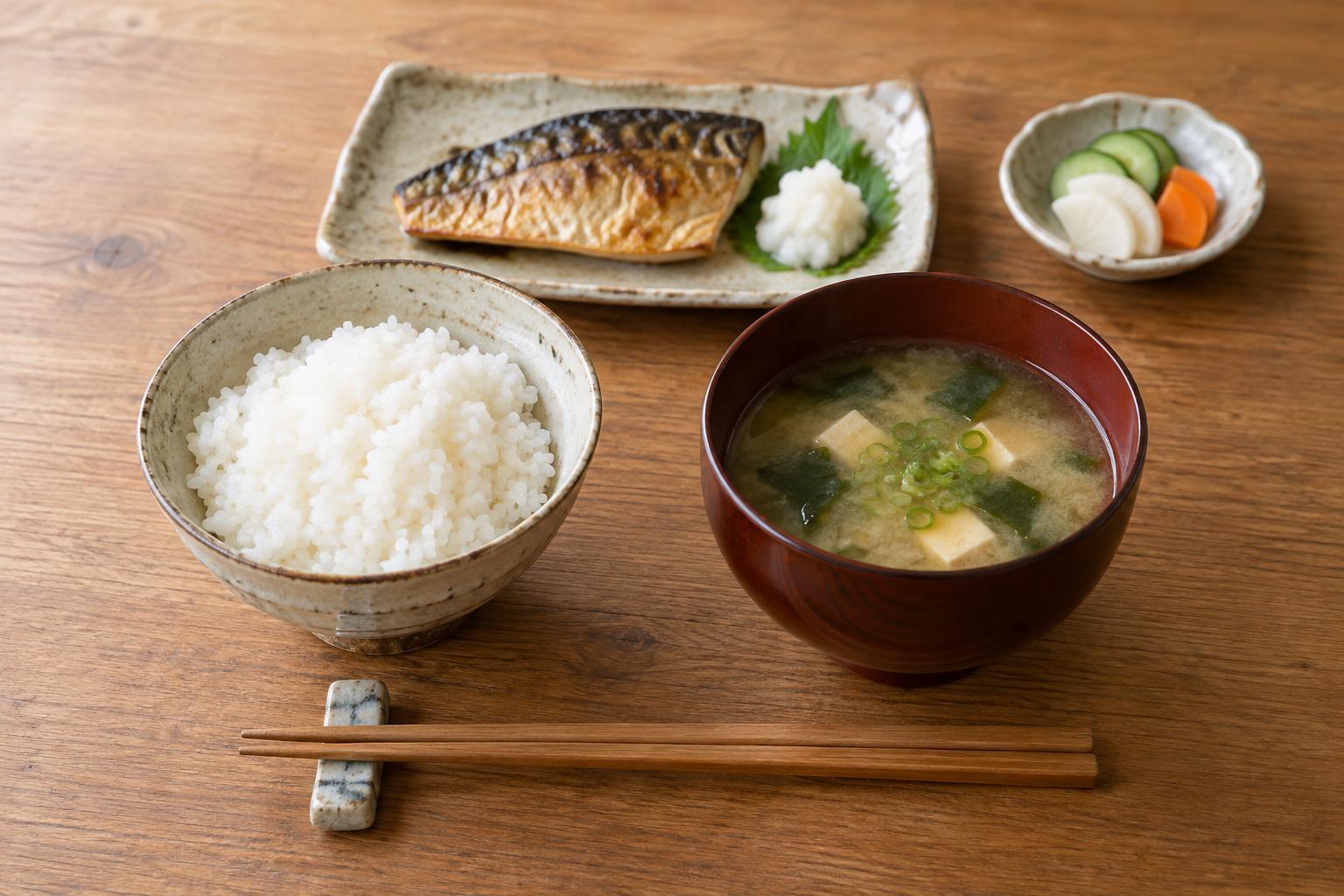
At a familiar Japanese-style place setting, the rice bowl sits toward the front on the diner’s left, and the soup bowl sits toward the front on the right. These directions are from the perspective of someone seated at the table. If you are setting places from the opposite side, it is easy to reverse them by accident.
Think of this as a useful starting pattern rather than a test of whether a meal is authentic. Home tables vary with the dishes being served, the size of the table, and the habits of the people eating. A bowl of noodles, a one-dish meal, or food shared from the center calls for a different arrangement. For a meal built around separate bowls of rice and soup, though, the left-and-right pairing makes the setting easy to recognize and use.
Give rice and soup room to be picked up
Place the rice bowl and soup bowl near the front edge of the setting, with enough space between them to lift either one comfortably. They need not be pushed to the very edge. A small gap also helps prevent sleeves or chopsticks from brushing a bowl when someone reaches for another dish.
In many everyday meals, diners lift a small rice bowl while eating. Soup is also often served in a bowl that can be lifted for sipping, with chopsticks used for solid ingredients. That is one reason the two bowls work well within easy reach. A heavy or unusually hot bowl may be less comfortable to hold, so let the vessel and the diner’s comfort guide you. The goal is a practical table, not a perfectly measured layout.
Set chopsticks across the front
Chopsticks are commonly laid horizontally in front of the bowls, with their eating tips pointing left and their handles to the right. If you have a chopstick rest, set the tips on it so they stay off the table. Without a rest, a clean wrapper or another designated spot can serve the same purpose. Leave a little clearance between the chopsticks and the bowls so everything is easy to pick up.
During the meal, return chopsticks to their rest or designated spot when you are not using them. Avoid sticking them upright in rice or passing food directly from one pair of chopsticks to another; both actions carry associations beyond an ordinary meal. You also do not need to balance chopsticks across the top of a bowl. A simple resting place keeps the setting tidy and avoids confusion about where used tips should go.
Fit the other dishes around the bowls
Once rice, soup, and chopsticks have their places, arrange the remaining dishes where they can be reached without crowding the front of the setting. In a meal with an individual main dish and small sides, the main dish may sit farther back, with smaller dishes filling the available space. Pickles or another small accompaniment can go wherever they fit neatly. There is no need to force every meal into the same diagram.
If several dishes are shared, put them where everyone can reach them and use serving utensils when helpful. At a compact table, you might bring out one dish at a time or keep a large platter off to the side. If someone uses a spoon, add it where it will not overlap the chopsticks. These choices do not undo the basic place setting; they make it work for the food and the people in front of you.
Use the pattern, then adapt it
For a straightforward home meal, set each diner’s rice bowl at the front left, soup bowl at the front right, and chopsticks horizontally below them with the tips to the left. Add the other dishes behind or around the bowls. Before sitting down, check that each person has a clear path to their food and a place to put down their chopsticks.
That quick check matters more than exact spacing or matching tableware. A familiar arrangement offers a calm starting point, especially when you are serving several small dishes. Once you understand where the three basics usually go, you can adjust for a left-handed diner, a crowded table, or a different style of meal while keeping the setting comfortable and welcoming.