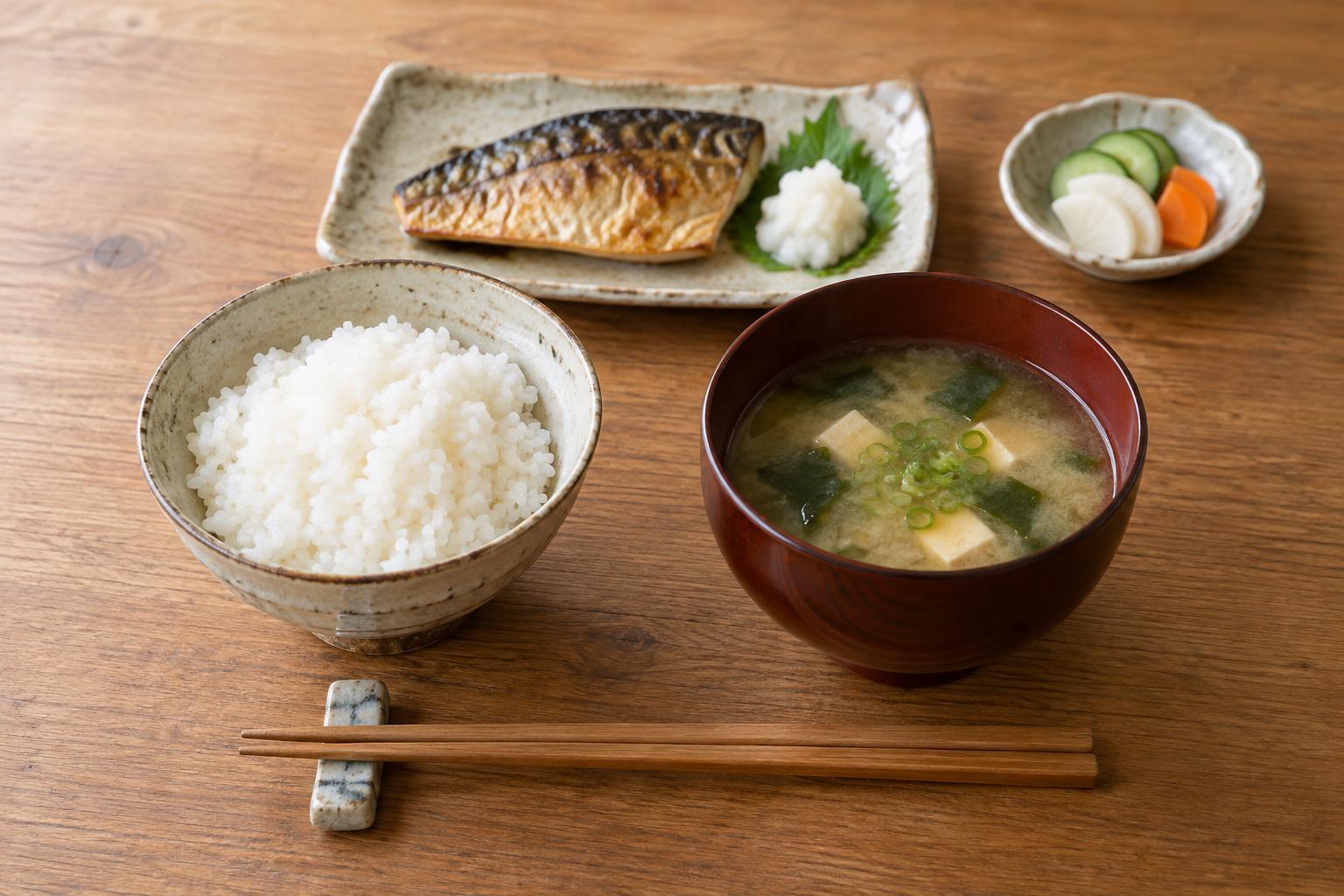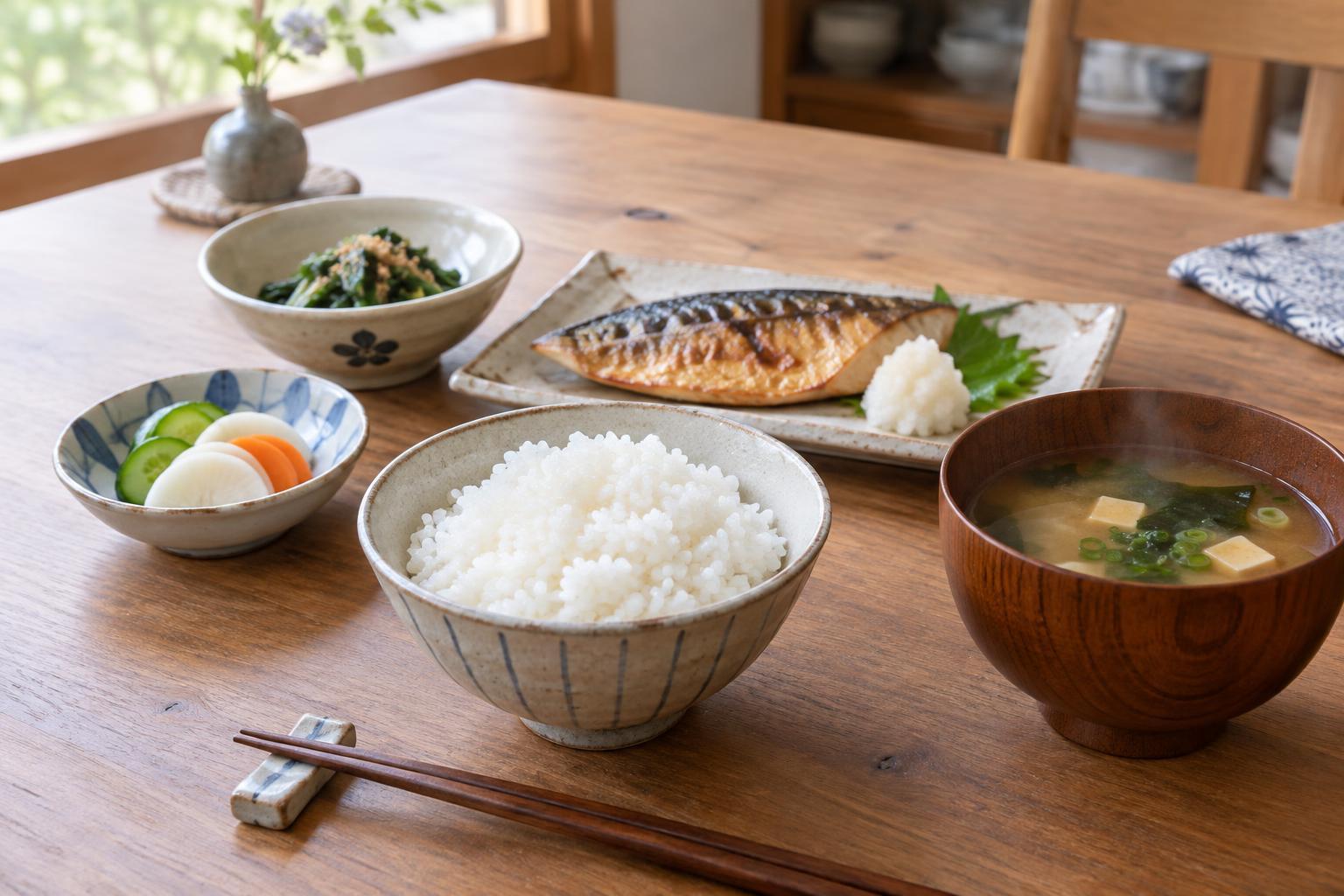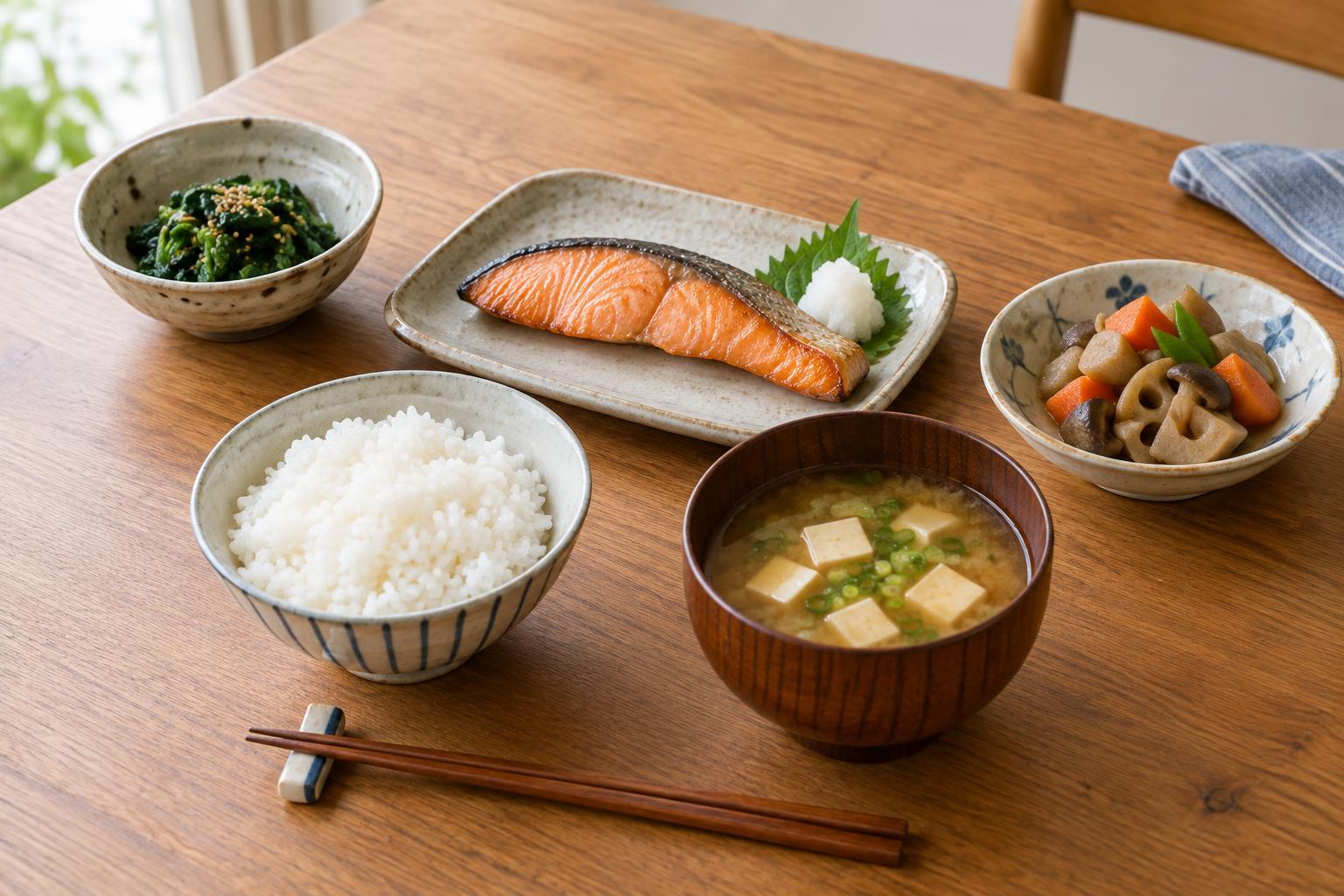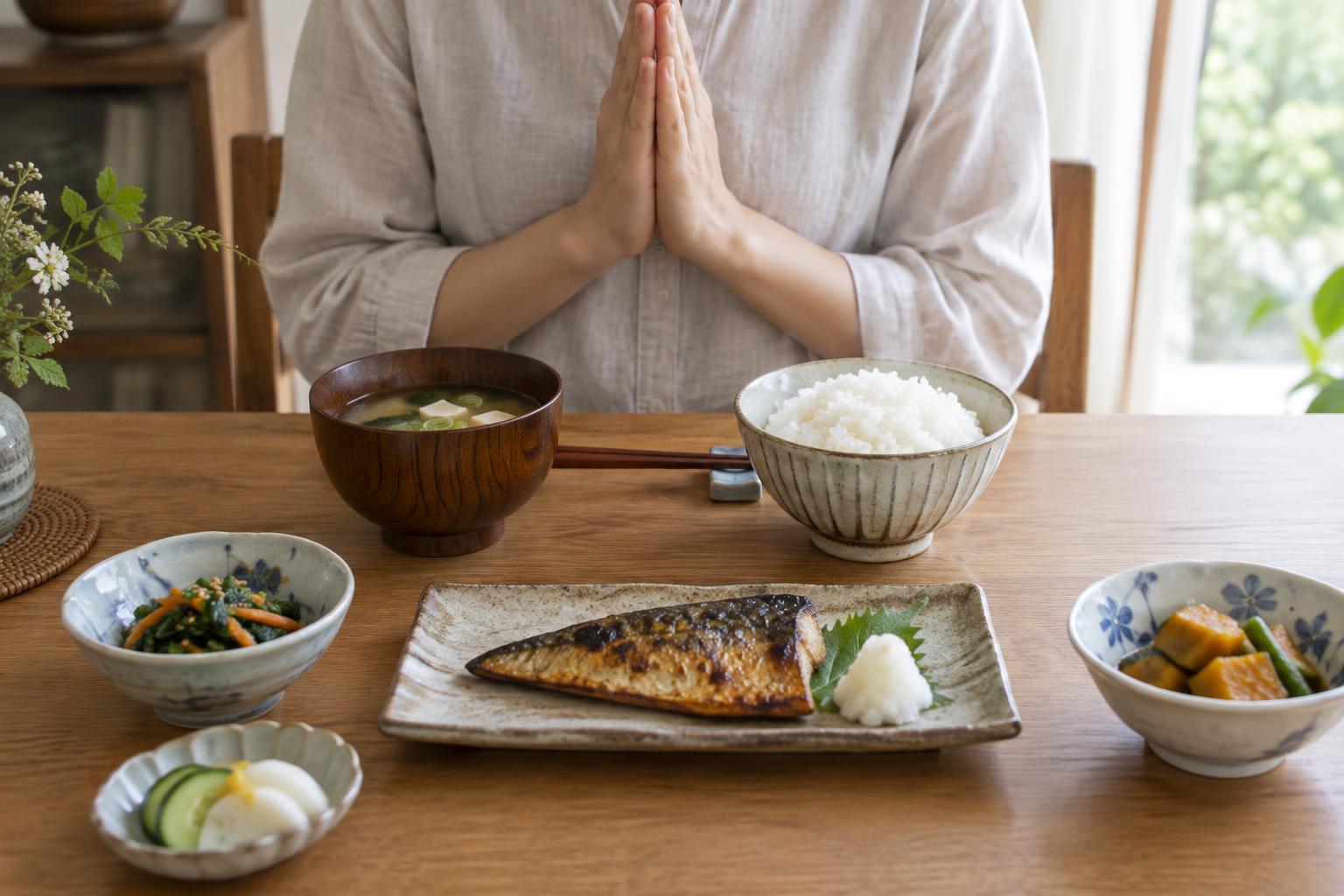
Two phrases that frame a meal
Itadakimasu and gochisousama are short phrases often heard around a Japanese table. Itadakimasu is said just before eating; gochisousama, often spoken as gochisousama deshita, is said after finishing. English translations such as “let’s eat” and “thank you for the meal” are useful starting points, but neither captures every shade of meaning. The phrases acknowledge the food and the effort involved in bringing it to the table.
You do not need an elaborate ritual to use them. At home, someone might bring their hands together briefly and say itadakimasu before picking up their chopsticks. After the meal, they might set their utensils down and say gochisousama deshita. Customs vary among households and individuals, so the most helpful guide is to notice what the people around you do.
When to say itadakimasu
Say itadakimasu when you are ready to begin eating, rather than when food first appears. If everyone is waiting for the meal to be served, it makes sense to wait until the group is ready. In a family setting, people may say the phrase together. At a casual lunch, each person may say it quietly as they start. The timing matters more than whether everyone speaks in unison.
The phrase is not limited to meals someone else has cooked. You can say it before eating food you made yourself, a packed lunch, or a restaurant meal. It is an acknowledgment of what you are about to receive, not simply a compliment to a cook. If you are eating with others, a warm tone and a brief pause before starting are enough; there is no need to perform the gesture of putting your hands together if it does not feel natural.
When to say gochisousama
Gochisousama marks the end of eating. Gochisousama deshita is a common, polite form, especially when speaking to someone who prepared or served the meal. You might say it when you finish at the family table, as you leave a restaurant, or directly to a host after a home-cooked dinner. The exact moment is flexible: at home it may come as you put down your chopsticks, while as a guest you may wait until you can address your host.
Unlike a comment on taste, gochisousama deshita expresses appreciation for the meal as a whole. You can still add a specific compliment if you mean one: for example, telling the cook that the soup was delicious. If someone has treated you to dinner, a personal thank-you is welcome too. The mealtime phrase does not replace ordinary courtesy; it gives you a familiar way to close the meal.
Using the phrases with other people
As a guest, follow the pace of the table. If your host invites everyone to start, that is a natural moment for itadakimasu. If dishes arrive at different times in a restaurant, there is no need to wait indefinitely for a perfectly shared start; take your cue from your companions. It is considerate to check whether anyone is still waiting for their food before you begin.
With gochisousama, think about whom you are addressing. Saying it toward the person who cooked can feel more direct than announcing it to the room. In a restaurant, staff may hear it as you leave, but you need not seek someone out solely to say it. A quiet phrase is fine. You also do not have to insist that other diners join in: these are everyday expressions, not a test of anyone’s manners.
Keeping the custom comfortable
It is tempting to look for a strict rule covering every snack, drink, or bite taken while cooking. Everyday practice is looser than that. Some people use the phrases consistently; others reserve them for a seated meal. A short snack may pass without either phrase. If you forget to say itadakimasu before the first bite, there is no need to interrupt the meal or make a fuss.
For an English-speaking cook exploring Japanese home food, the simplest approach is to connect the words to their moments: itadakimasu before you begin, gochisousama deshita when you are done. Listen to how your hosts or companions use them, and let the phrases remain sincere rather than mechanical. They offer a small pause at either end of eating—one to welcome the meal, and one to appreciate it.