A meal built around a bowl
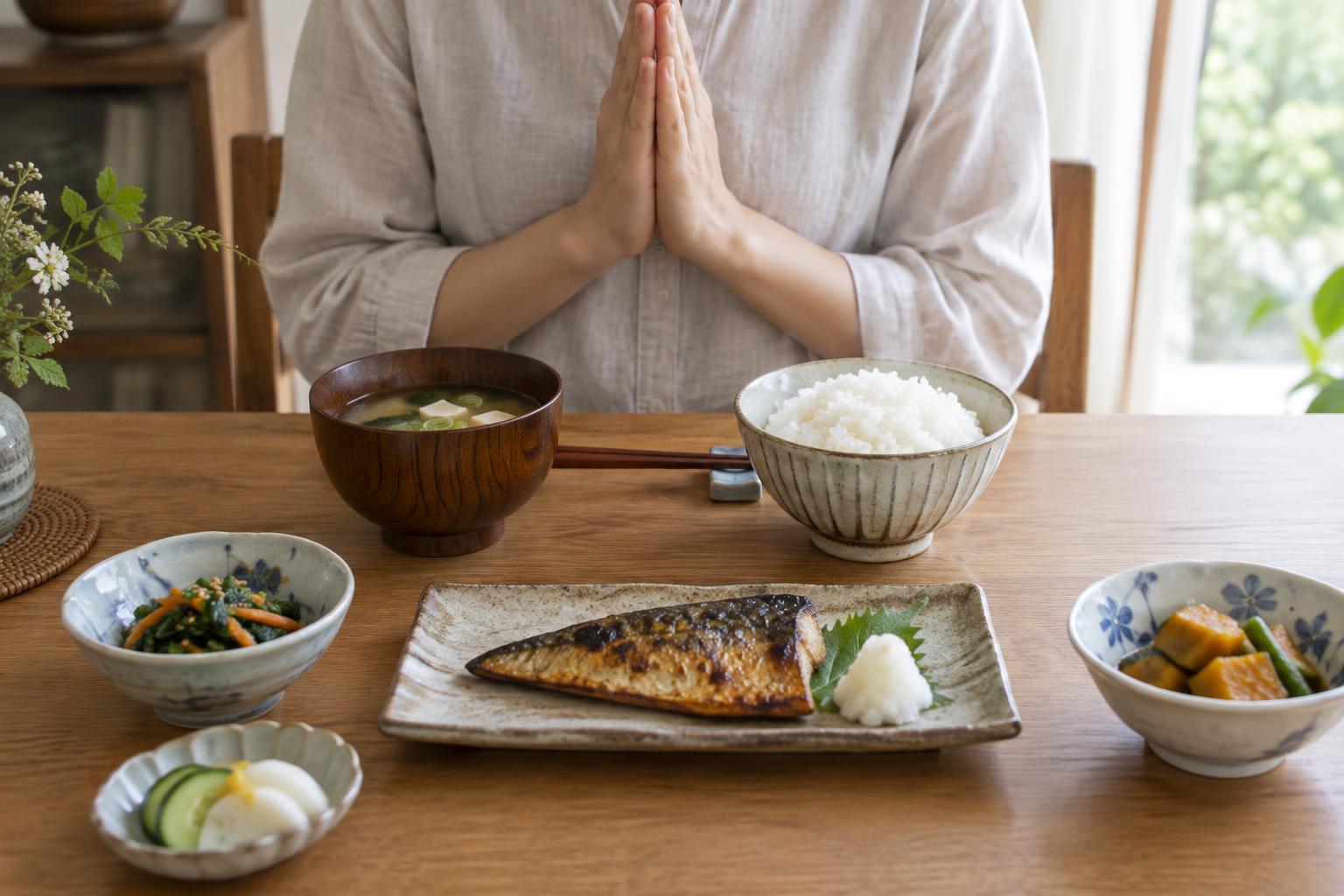
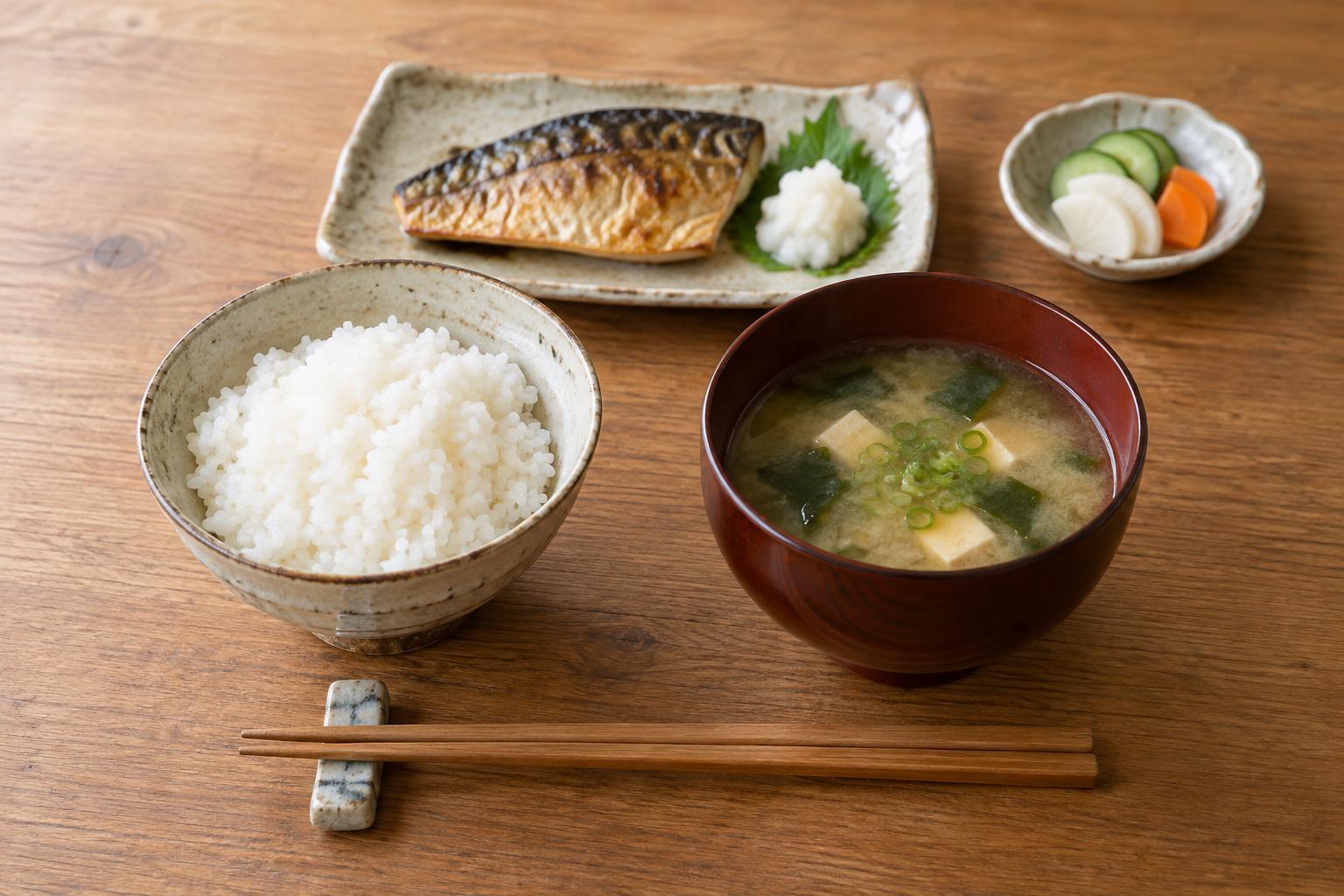
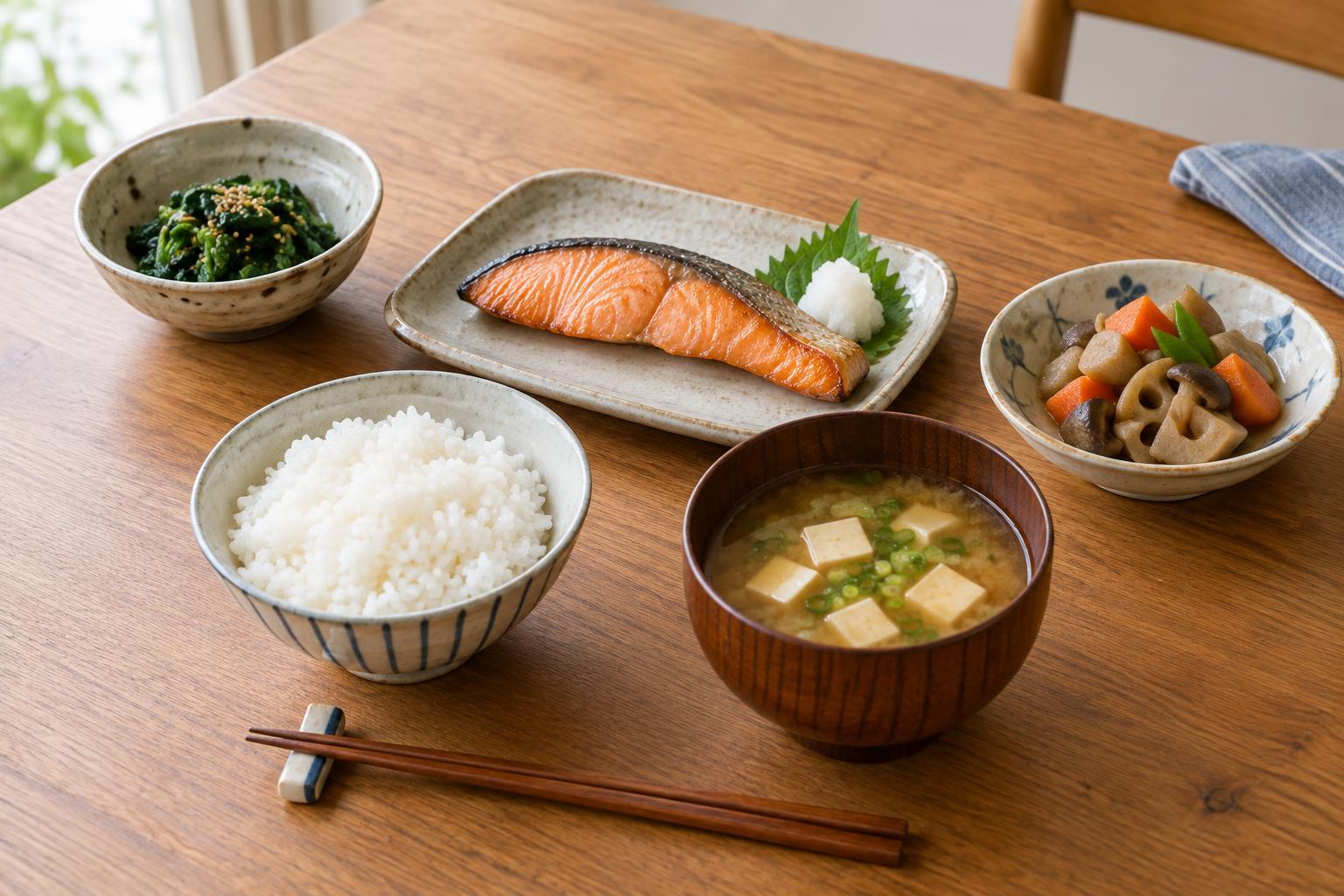
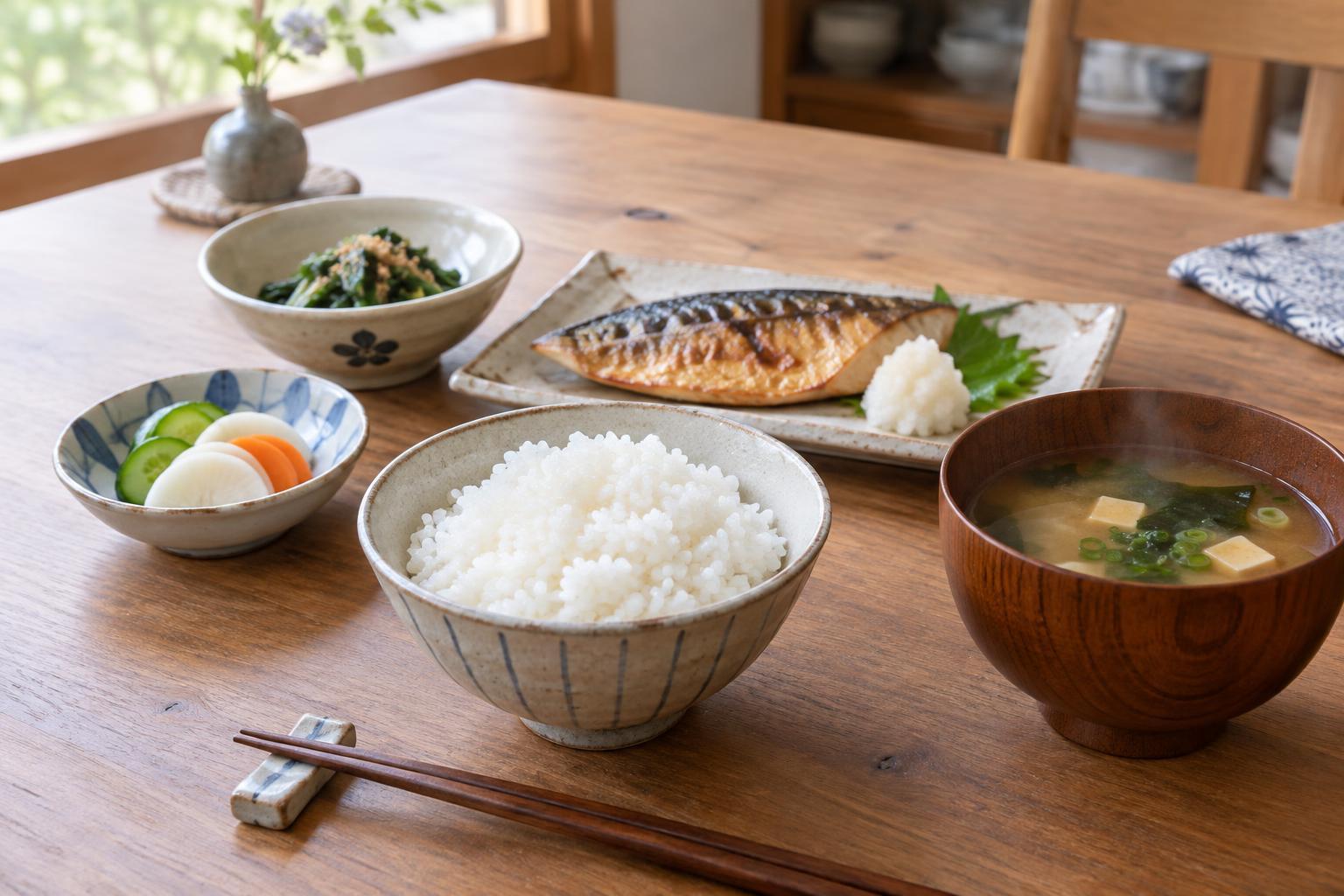
Picture a home meal with a bowl of plain rice, a bowl of soup, and a few small dishes of vegetables, fish, tofu, eggs, or meat. The rice may look like the simplest part, but it gives the other foods a shared center. Rather than serving everything together on one large plate, a cook can offer modest portions with different tastes and textures. Each bite can be enjoyed on its own or followed by rice.
The Japanese word gohan can mean cooked rice and, in everyday speech, a meal. That overlap hints at rice’s familiar place at the table, though it does not mean every Japanese meal includes it. Noodles, bread, and other foods are also part of everyday eating. Rice is best understood as a common starting point for thinking about a meal, not a rule that every household follows.
How plain rice balances the other dishes
Japanese short-grain rice is often cooked without salt or other seasoning when it will accompany a meal. Its mild flavor makes room for foods with stronger tastes: a salty grilled fish, a savory simmered vegetable, a tangy pickle, or a rich piece of tofu. A mouthful of rice between bites can soften an intense flavor without erasing it. The rice is not merely a blank filler; its gentle sweetness, texture, and warmth are part of the pleasure.
This relationship helps explain the word okazu, often used for dishes eaten with rice. An okazu can be quite simple, such as a fried egg or a small serving of leftovers. It need not be a large centerpiece. If you are putting together a quick meal, start with rice and ask what would taste good beside it: something substantial, something vegetable-based, and perhaps a sharp or crisp accent. You can keep the selection small and still have a satisfying combination.
A flexible way to organize the table
A familiar framework for a rice-centered meal is ichiju sansai, or “one soup, three dishes.” It describes a way to arrange rice with soup and several accompanying dishes, rather than a requirement for dinner on a busy day. A home cook might make one main dish and use prepared pickles or yesterday’s vegetables to complete the table. Another day, rice, soup, and a single dish may be enough.
Separate bowls and plates let diners notice what each food contributes. Soup offers liquid and warmth; a vegetable dish can add a different texture; a savory dish can make the plain rice especially appealing. You do not have to prepare all the components from scratch at once. Cooking extra rice, keeping a simple soup base in mind, or saving a small portion of a side dish can make this style of meal easier to assemble.
The rice bowl shapes the rhythm of eating
At many Japanese tables, rice is served in an individual bowl. It is common to lift the bowl toward the mouth while eating with chopsticks, which makes small bites of rice easier to manage. Dishes are generally served separately, so a diner can move among them rather than mixing every flavor together at the start. Customs vary by household and occasion, but this arrangement encourages attention to each part of the meal.
Plain rice also gives diners choices. One person might alternate a bite of fish with rice; another might eat a little vegetable dish first. Soup can be sipped along the way. For someone new to this kind of meal, there is no need to master a fixed sequence. Try tasting the rice on its own, then notice how its flavor changes your experience of a more strongly seasoned dish.
When rice becomes the whole dish
Rice does not always sit in a separate bowl. In a donburi, cooked rice forms the base for toppings such as eggs and vegetables. Onigiri turns rice into a portable hand-shaped food, sometimes with a filling. Mixed rice can bring ingredients and seasonings into the pot. These meals use rice differently, yet its texture and ability to bring other flavors together remain important.
The easiest way to understand rice’s central role is to cook a pot and build one uncomplicated meal around it. Add a dish you enjoy, a vegetable, and soup if you like. Taste how the parts work together before adding more. Rice can be the center of a meal without making the meal elaborate—and without limiting the many other ways people eat in Japan.