Start with a cooling plan
A bento often brings several textures together in one small box: rice, a cooked main, vegetables, and perhaps fruit. Packing them while they are still steaming can leave condensation under the lid. That moisture softens crisp foods and makes sauces travel. Cooling the components before closing the box helps preserve their textures, but it is not a substitute for keeping perishable food cold.
Plan the meal backward from the time you need to leave. Cook the foods that need cooling first, then prepare dry garnishes and wash the box while they cool. Spread hot rice in a shallow, clean container rather than leaving it in a deep mound. Divide large portions of cooked food into smaller, shallow containers and refrigerate them promptly. Cooked rice deserves particular care: do not leave it sitting at room temperature for an extended period.
Cool before closing the lid
If you are packing a bento to eat cold or at room temperature, let visible steam escape from freshly cooked components, then move them into the refrigerator to finish cooling. A brief uncovered rest helps prevent condensation; a long rest on the counter is not the goal. Keep the food protected from splashes and handling while it cools. When everything is cold, pack it in a clean box and close the lid.
A refrigerated bento should stay cold after it leaves home. Use an insulated bag with a chilled ice pack, especially if lunch will spend time in transit or away from a refrigerator. Put the box in a refrigerator on arrival when one is available. If you cannot keep a perishable lunch cold, choose foods that can safely be stored without refrigeration instead of relying on a tight lid to protect it.
Give sauces and juices their own space
Moist foods need more than a visual boundary. Before packing simmered vegetables, sautéed mushrooms, or a dressed side dish, lift them from their cooking liquid and let excess liquid drain. Aim for food that is pleasantly seasoned but not dripping. Pack a sauce separately in a leak-resistant little container if the dish benefits from adding it at lunchtime. Check that container over the sink before putting it beside the rest of the meal.
Use fitted compartments, reusable cups, or small lidded containers to keep a moist side away from rice and crisp vegetables. A divider can help organize food, but a flimsy leaf or strip of paper will not stop liquid from seeping underneath. If a dish is especially juicy, a separate sealed container is the more dependable choice. Avoid overfilling: pressure from a closed lid can push liquid across even a well-arranged box.
Protect the textures you want to keep
Think about where moisture will move during the morning. Rice readily absorbs sauce, while fried coatings and toasted nori lose their crunch when pressed against damp ingredients. Place a drier main dish next to rice, or use a snug cup between the two. Pack nori separately and add it just before eating. If you include cut fruit, give it a closed compartment of its own so its juice cannot reach savory foods.
A few small choices make a difference. Dry washed vegetables thoroughly before packing. Let cooked greens drain, and squeeze out excess water when appropriate for the dish. Put a dressing in its own container rather than tossing a salad hours in advance. For foods meant to be crisp, consider whether they will still be enjoyable after sitting in a closed box; some dishes are better packed with the expectation that they will soften slightly.
Use a simple packing order
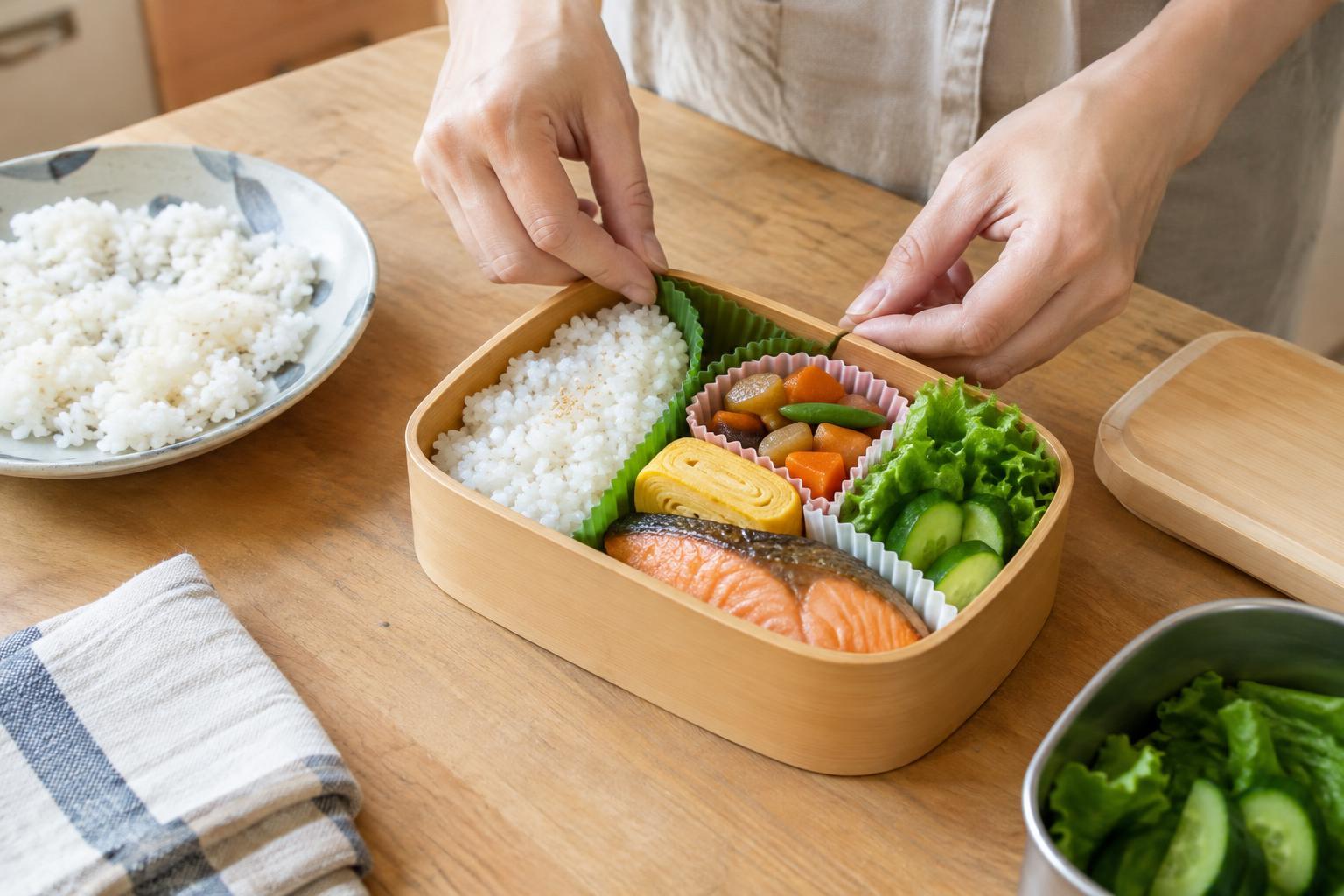
Before filling the box, make sure the container and its dividers are clean and dry. Set in any lidded sauce cups first, then pack the cooled rice and main dish so they fit securely without being crushed. Add drained sides in their own compartments. Keep dry garnishes and crisp toppings apart from wet foods, and wipe moisture from the rim before fastening the lid. If the box has a gasket, check that no food is caught in it.
Finally, place the bento in its insulated bag with an ice pack and keep it chilled until lunch. At eating time, open any separate sauces and add crisp toppings. This routine does not require elaborate equipment or decorative dividers. It simply gives heat a chance to leave, gives liquid a place to stay, and helps each part of the meal taste as intended.