What makes panko different?
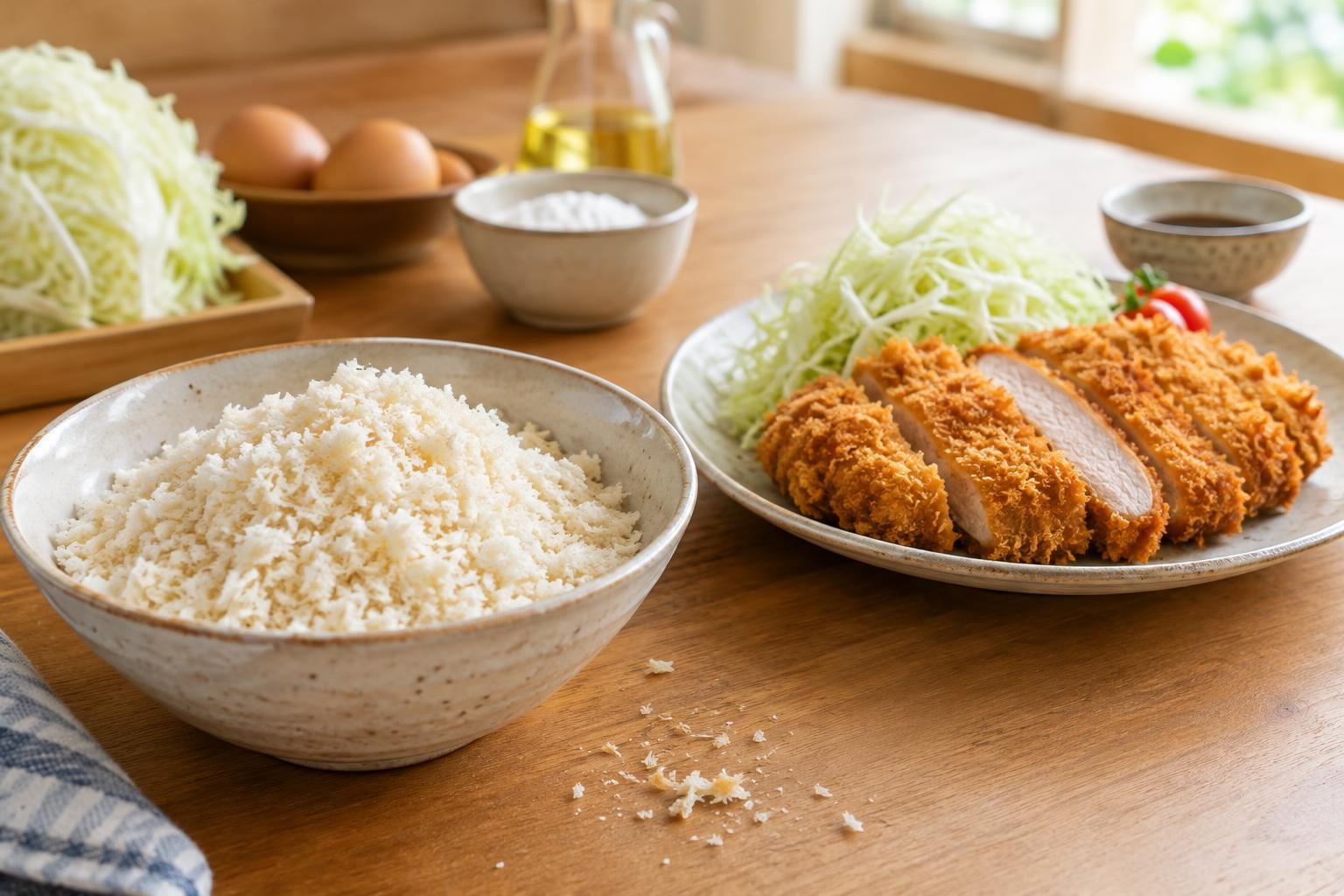
Panko is a style of breadcrumb with relatively large, airy flakes. Compared with the fine, sandy crumbs often used in meatballs or casserole toppings, it tends to form a more textured coating. That texture is especially welcome on foods such as tonkatsu, a breaded pork cutlet, or korokke, Japanese-style croquettes. Panko is also useful outside Japanese cooking whenever you want a crisp topping or coating.
Package labels do not always tell the whole story. Flake size, color, and ingredients can vary by brand. Some panko is made with bread that contains milk or other ingredients, so read the label if those details matter to you. Ordinary panko is usually sold dry, while some shops carry fresh breadcrumbs with more moisture. Either can work, but fresh crumbs and dry crumbs may behave differently in a recipe.
Choosing crumbs for the dish
For a cutlet or croquette, look for flakes that are fairly uniform and loose rather than packed into hard clumps. Larger flakes make a visibly craggy crust; smaller ones create a finer, more even finish. Neither is automatically better. A thinner piece of fish, for example, may be easier to coat neatly with slightly smaller crumbs, while a thicker cutlet can carry a coarser layer.
If the only panko available is very coarse, you can briefly crush a portion by hand for a more delicate coating. Avoid grinding it to powder unless a recipe calls for fine crumbs: the open texture is much of the point. For a casserole or vegetable topping, you can use panko straight from the package, or toss it with a little oil before baking so it browns more evenly.
Building a coating that stays put
A typical breading sequence is flour, beaten egg, then panko. Pat the food dry first. Dust it lightly with flour and shake off the excess; too much flour can leave a pasty layer between the food and its crust. Dip it in egg, let the excess drip away, then press the panko on gently. Try to cover the edges as well as the broad surfaces without compressing the flakes into a dense shell.
Give breaded food a short rest while you prepare the pan. This lets the coating settle and makes it less likely to come off during handling. If you are frying, use enough oil to make good contact with the coating, leave space between pieces, and turn them carefully. Crowding the pan can make the oil cool and encourage a greasy crust. Cook the food itself thoroughly as appropriate; a golden coating alone does not show that the center is done.
After frying, place the food on a rack if you have one. Air can circulate beneath it, helping prevent steam from softening the underside. A paper towel can absorb surface oil, but leaving hot cutlets on a flat, damp towel for too long may make the crust less crisp. Serve sauces alongside, or add them just before eating, if you want to preserve the crunch.
Other uses and sensible storage
Panko need not be reserved for deep-frying. Scatter it over a dish headed for the oven, use it as a coating for shallow-fried vegetables, or toast it in a skillet with a little oil to finish cooked greens. Watch closely when toasting: the flakes can change from pale to brown quickly. Seasoned panko can add flavor, but plain crumbs give you more control over salt and spices.
Keep unopened dry panko according to its package directions. Once opened, close the bag tightly or move the crumbs to an airtight container and store them somewhere cool and dry. Moisture can cause clumping and shorten their useful life. If you use panko infrequently, freezing it in a sealed container is a practical option; you can usually take out just what you need. Follow the package guidance for fresh breadcrumbs, which may require more careful storage.
Before using stored crumbs, check for an off smell, visible moisture, or signs of spoilage, and discard them if anything seems wrong. With a suitable flake size, a light hand during breading, and attention to moisture, panko can turn a simple ingredient into a dish with a satisfying contrast between crisp exterior and tender center.