Start with the vegetables you have
A small amount of cooked broccoli, green beans, carrots, spinach, mushrooms, or squash can be enough for a side dish. In a Japanese-style meal, a vegetable side often sits beside rice, soup, and a main dish, so it does not need to be large or complicated. The aim is to make the vegetables feel intentional rather than to disguise what they were yesterday.
First, consider how they were cooked. Plain steamed or boiled vegetables are easy to season in a new direction. Roasted vegetables may already have oil, salt, or browned edges, so taste them before adding anything else. Vegetables coated in a strongly flavored sauce are harder to redirect; they may be better served as they are.
Use leftovers that were stored safely, and discard any that smell off or have been left out for an uncertain length of time. Keep chilled leftovers refrigerated until you are ready to prepare them. If you plan to serve them hot, reheat them thoroughly. A new dressing can improve flavor, but it cannot make poorly stored food safe.
Manage moisture before adding flavor
Extra water is often what makes a vegetable side dish taste flat. Drain cooked vegetables well, then pat them dry or gently squeeze leafy greens. Be especially careful with spinach, which can release water after it has been dressed. If the vegetables are refrigerator-cold, let them drain in a strainer while you prepare the seasoning.
Cut large pieces into comfortable bites. Thinly slice firm carrots, halve thick green beans, or separate large broccoli florets. Similar-sized pieces are easier to coat evenly and easier to pick up with chopsticks. Soft vegetables such as squash need a gentler touch: fold them into dressing rather than stirring vigorously.
Taste a piece before mixing. If the original dish was salted, begin with less soy sauce or miso than you think you need. You can always add another drop or small spoonful, but you cannot easily remove excess salt. A little acidity or toasted sesame may give the dish enough character without much additional seasoning.
Make a quick sesame-dressed side
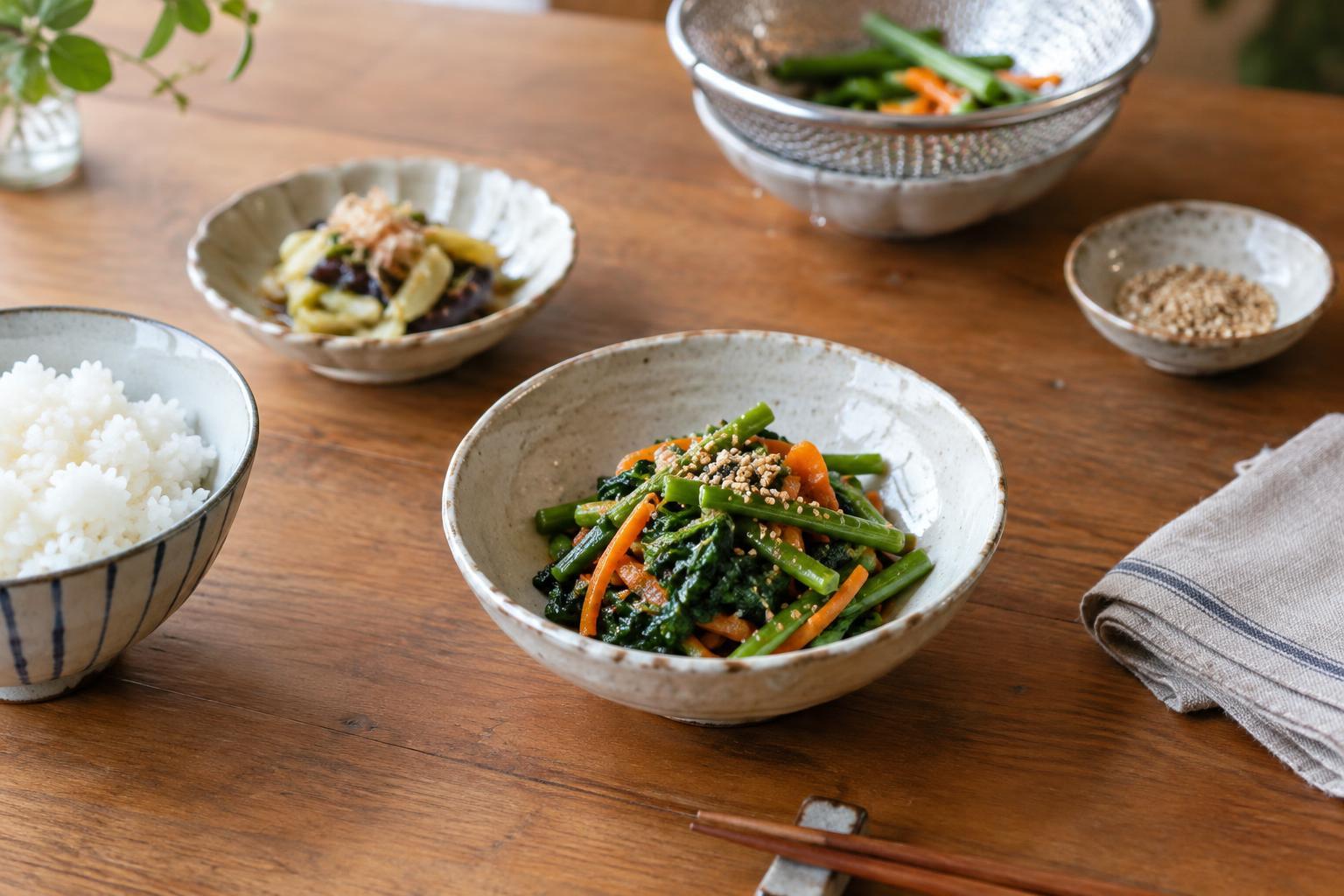
One useful approach is goma-ae: vegetables dressed with ground sesame and seasoning. For about a cup of drained cooked vegetables, start with a tablespoon of ground toasted sesame seeds, a teaspoon of soy sauce, and a small pinch of sugar. Mix the dressing in a bowl, taste it, then add the vegetables. Adjust with more sesame or a few drops of soy sauce as needed. These amounts are a starting point, not a rule.
Green beans, spinach, broccoli, and carrots all work well this way. The ground sesame clings to their surfaces and gives the dressing body without requiring much liquid. If you have whole toasted sesame seeds, crush them lightly in a mortar or with the back of a spoon. Sprinkle a few whole seeds over the finished dish for contrast.
For a different flavor, replace the sesame mixture with a small spoonful of miso loosened with water and a few drops of rice vinegar. Because miso varies in saltiness, add it gradually. This dressing suits roasted eggplant, mushrooms, or squash. If the vegetables were already seasoned, try only a little vinegar and sesame first.
Try a light dashi-based treatment
For vegetables that still have a pleasing shape and texture, try a light seasoning inspired by ohitashi. Ohitashi is commonly associated with cooked vegetables served with a savory broth-based seasoning. Mix a little prepared dashi with soy sauce, then spoon just enough over well-drained vegetables to flavor them. A kombu-based dashi is an option if you want to avoid fish ingredients.
This treatment is particularly good for spinach or other tender greens, but it can also brighten asparagus or broccoli. Give the vegetables a short rest in the refrigerator so they can take on some flavor, then serve them with a little of the liquid rather than a full bowl of broth. Grated ginger or a few sesame seeds can provide a finishing note.
Keep the seasoning light enough that you can still taste the vegetable. If you do not have dashi, a small splash of water with soy sauce and ginger can make a simple dressing, though it will have a different flavor. Avoid soaking very soft leftovers for long, since they may lose their texture.
Serve small, varied portions
Choose a serving bowl that fits the amount you have. A modest portion looks inviting in a small dish and leaves room on the table for rice, soup, or other foods. Serve sesame-dressed vegetables cool or at room temperature if they have been handled and stored appropriately; serve reheated vegetables warm. Dress them close to serving time if they tend to release water.
You can also divide a larger batch of plain leftover vegetables into two different sides. Toss green beans with sesame, for example, and season carrots with a little miso and vinegar. Changing the cut, dressing, and serving temperature helps familiar ingredients feel new without adding much work. The most useful habit is to look at what the vegetables need—less moisture, smaller pieces, or a clearer flavor—and make only that change.