Think in components, not finished dinners
A freezer stocked only with complete meals can feel surprisingly limiting: you have to want the exact dish you made. A component inventory offers more choice. A portion of dashi, a bag of sliced mushrooms and a packet of seasoned chicken can become soup one night and a rice-bowl topping another. The aim is to move the washing, slicing and portioning to a day when you have time, while leaving the final cooking flexible.
Start with meals you already enjoy making. Choose two or three familiar patterns, such as miso soup with rice, a noodle bowl, or a quick stir-fry. List the parts that slow you down, then freeze those parts in amounts you are likely to use at once. A small, dependable inventory is easier to maintain than a freezer full of ingredients without a plan.
Make a foundation shelf
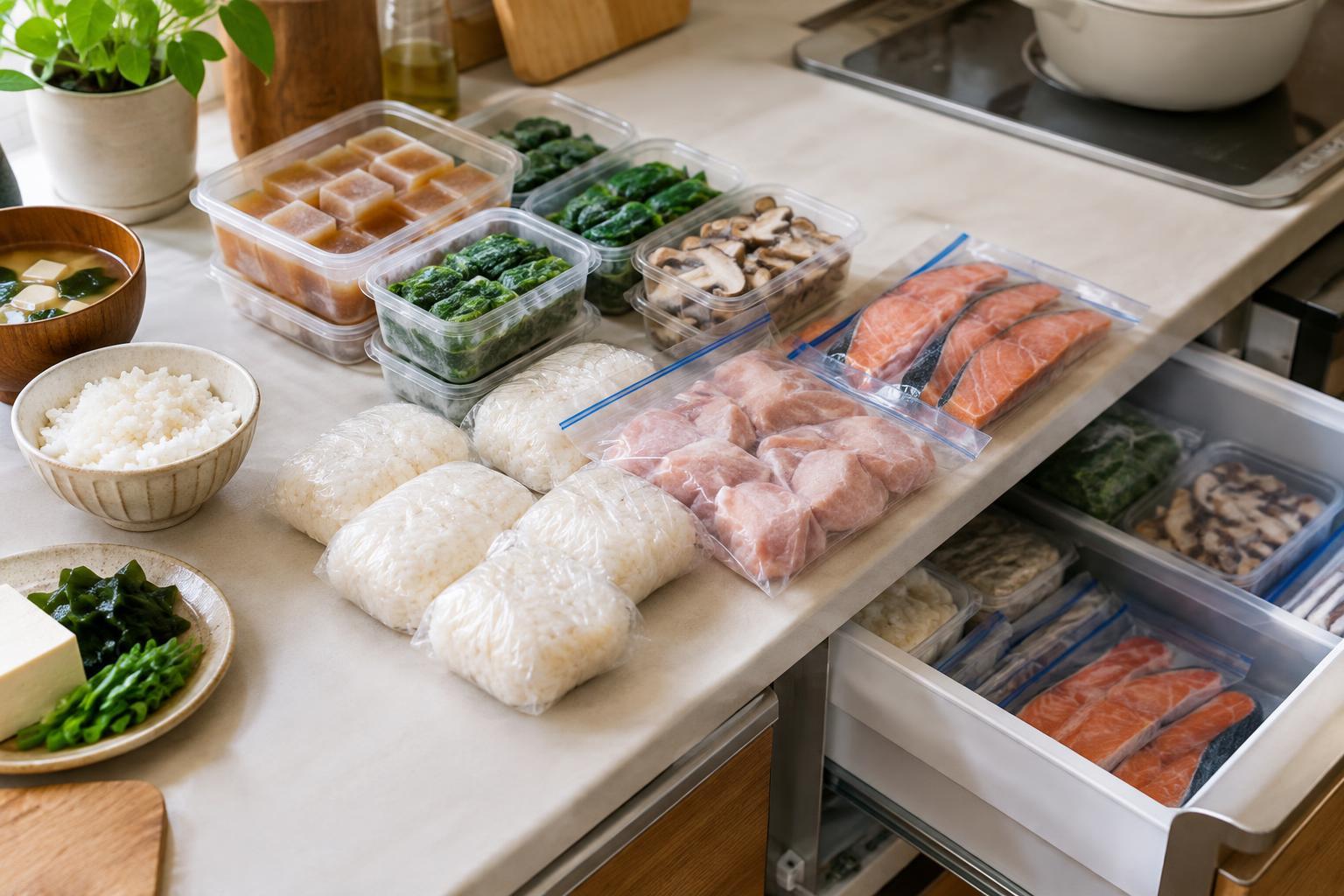
Dashi, the savory stock used in many Japanese dishes, is a useful first component. Freeze cooled homemade dashi in small containers or an ice-cube tray, then transfer the cubes to a labeled freezer bag. Small portions let you add a little to a sauce or combine several for soup. Leave space in rigid containers for expansion, and cool prepared food promptly before freezing it.
Vegetables can be organized by how you will cook them. Freeze sliced mushrooms, chopped scallions and grated ginger in separate, thin packets so you can take only what you need. Cut vegetables intended for soup or a stir-fry into convenient sizes before freezing. Some vegetables soften after thawing, so plan to cook them rather than use them as a crisp garnish. If you regularly make miso soup, a bag containing one meal’s worth of mushrooms and sliced vegetables can save a step without committing you to a particular broth or seasoning.
Portion proteins and rice for real meals
Divide chicken, pork, fish or tofu into the amounts your household uses for one meal. Keep raw proteins in well-sealed, clearly marked packages, separate from ready-to-eat foods. Thin pieces are especially convenient because they can be cooked without much further preparation. You can freeze a protein plain for maximum flexibility or add a simple seasoning such as soy sauce and ginger. Mark seasoned packets so you do not accidentally add the same seasoning twice.
Cooked rice is a useful partner to ready-to-cook components, even though it is ready to reheat rather than cook from scratch. Portion freshly cooked rice, let it cool promptly, and freeze it in suitable sealed containers or wraps. Reheat until thoroughly hot. For a rice bowl, you can then focus on cooking the topping and adding a fresh finishing touch, such as sliced scallion. Freezing tofu is possible, but its texture becomes more porous and chewy; try a small portion before preparing a large batch.
Give every packet a job and a label
Label each package with its contents, whether it is raw or cooked, any seasoning, the portion size and the date frozen. Keep a simple inventory on paper or your phone with a count beside each item. “Mushrooms: 3 soup portions” is more useful than “mushrooms.” When you use a packet, reduce the count; when you add a batch, increase it. Put older packets where you will see them first.
Pack food in portions you can use without repeatedly thawing a larger block. Flatten freezer bags when suitable to make them easier to stack and quicker to thaw. Thaw perishable food in the refrigerator, or use a microwave’s defrost setting and cook it immediately afterward. Follow safe cooking practices for raw proteins, and do not use a marinade that has touched raw meat or fish as a sauce unless you cook it thoroughly.
Turn the inventory into dinner
A short meal list makes the freezer more useful. For a soup-and-rice dinner, heat dashi with a packet of soup vegetables, add tofu or another protein, and stir in miso off the heat to taste. Reheat a portion of rice alongside it. For noodles, use dashi as a base, add cooked mushrooms and a protein, then adjust the seasoning to suit the dish. If you use bottled noodle sauce, check its directions: concentrates vary.
For a rice bowl, cook a portion of sliced protein and vegetables, add a modest amount of seasoning, and spoon the mixture over hot rice. These are templates, not recipes that require every component to be frozen. Fresh greens, an egg cooked to your preference, or a crisp garnish can make a freezer-based meal feel complete. After a few weeks, notice which packets you reach for and which remain untouched. Replenish the useful ones and stop making the rest.