What this dashi brings to a meal
Dashi is a light stock used throughout Japanese home cooking. A version made with kombu, a dried kelp, and katsuobushi, dried bonito flakes, has a gentle savory flavor without the heaviness of a long-simmered broth. It can be the liquid in miso soup, the base of a noodle broth, or a small addition to simmered vegetables. Because dashi is usually seasoned later, it may taste subtle on its own.
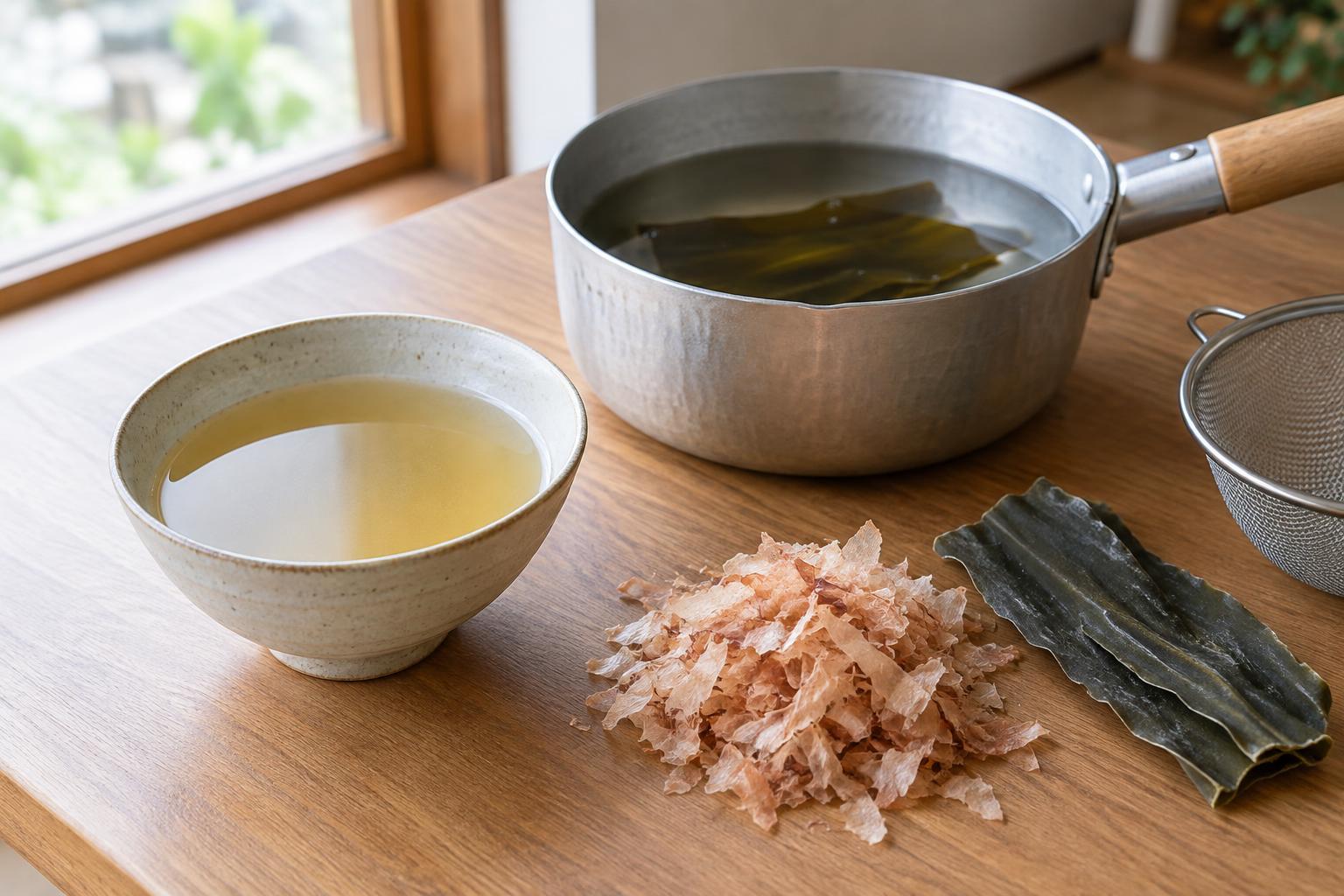
For a practical starting batch, use 1 liter of water, about 10 grams of kombu and 20 grams of bonito flakes. A scale is helpful, but exact amounts are not essential: a modest piece of kombu and a couple of loose handfuls of flakes will still make a useful stock. You will also need a saucepan, a strainer and a bowl or container to catch the liquid.
Prepare and warm the kombu
Check the kombu for grit and gently wipe it with a dry or barely damp cloth if needed. There is no need to scrub away the pale coating on its surface. Put the kombu and water in the saucepan. If time allows, let it soak for about 30 minutes before heating; for a longer soak, keep the covered pan or a separate container in the refrigerator. You can also start heating immediately when you need dashi sooner.
Warm the water slowly over medium-low heat. Look for small bubbles beginning to form around the edge of the pan, then remove the kombu before the water reaches a rolling boil. Slow heating gives the kombu time to flavor the water and makes it easier to catch that point. If it boils briefly, the stock is not ruined; remove the kombu and continue.
Steep the bonito flakes and strain
Once the kombu is out, bring the liquid just to a simmer, then turn off the heat. Add the bonito flakes and gently push any dry flakes beneath the surface. Leave them to steep for roughly 2 to 5 minutes. They will soften and gradually settle. A shorter steep makes a lighter stock; a little longer produces a more pronounced bonito flavor.
Pour the stock through a fine-mesh strainer into a clean bowl. If your strainer is coarse, line it with a clean cloth or paper towel. Let the liquid drain rather than squeezing the flakes, which can make the stock cloudy and bring out a stronger taste. Clear dashi is useful, but it does not have to be perfectly transparent to taste good.
Adjust it for the dish
Taste a spoonful before adding salt, soy sauce or miso. Dashi is a base, not a finished soup, so its flavor should leave room for the other ingredients. If it seems too strong for a delicate dish, dilute it with a little water. If it seems mild, try a slightly longer kombu soak or a few more bonito flakes next time rather than boiling the stock hard.
For miso soup, warm the dashi with ingredients that need cooking, such as sliced mushrooms or vegetables, then stir in miso near the end. For a simple noodle broth, season the dashi to taste with soy sauce and mirin. It can also provide the cooking liquid for tofu or greens. Each use may call for different seasoning, which is why making the stock plain is so flexible.
Store the stock and use the leftovers
Use freshly made dashi while it is warm, or cool it promptly and refrigerate it in a covered container. Plan to use refrigerated dashi within a couple of days. For longer storage, freeze it in portions sized for a bowl of soup or a recipe you make often. Thaw it in the refrigerator or heat it directly from frozen, then bring it up to serving temperature.
The strained kombu and bonito flakes have already given much of their flavor to the stock, but they need not go straight into the bin. You can make a lighter second batch of dashi by simmering them briefly in fresh water, or finely chop the kombu for a separately seasoned dish. Keep the first batch for recipes where you want its clean, balanced flavor.