What makes tamagoyaki different?
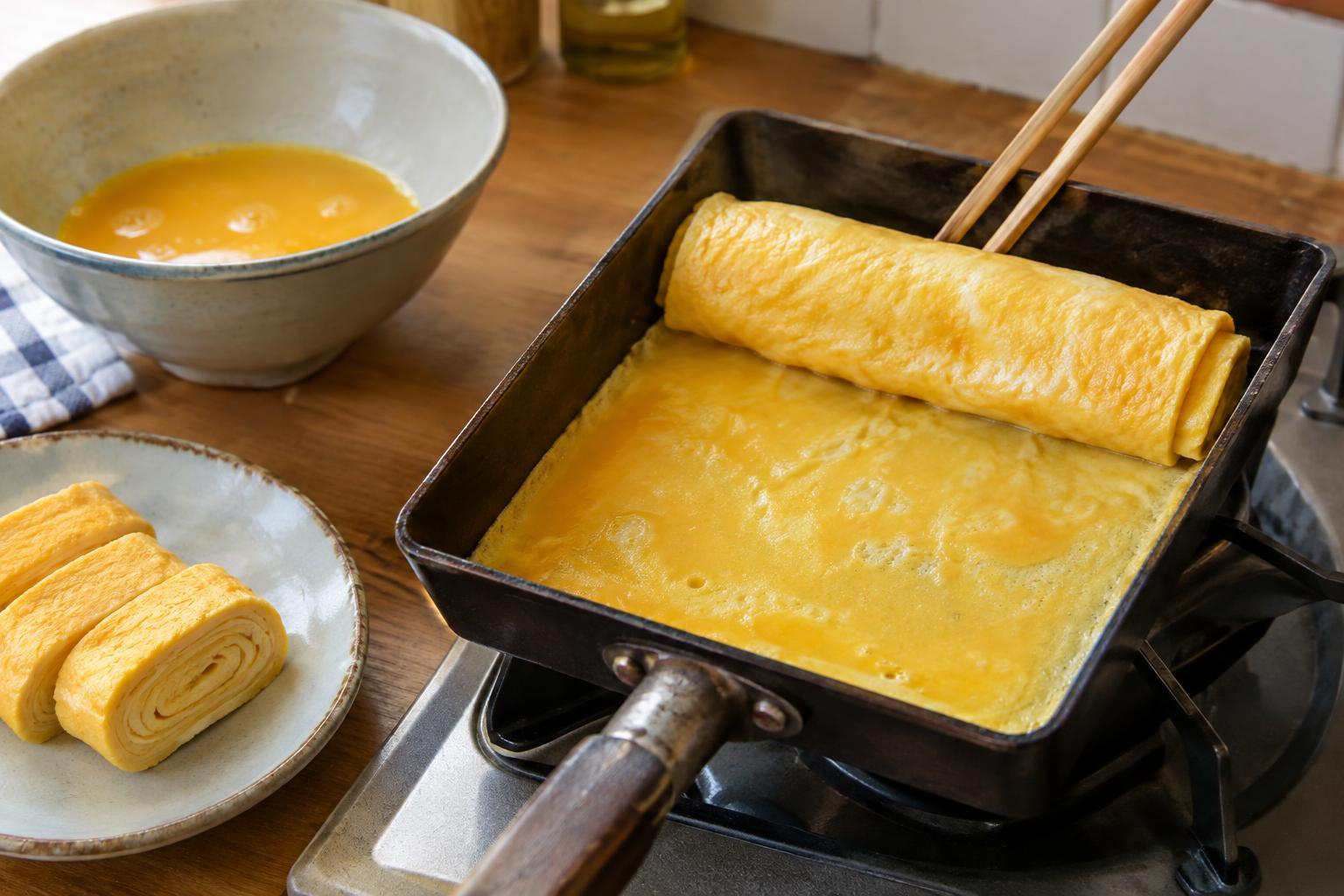
Tamagoyaki is a Japanese rolled omelet made by cooking egg in thin layers and folding each layer around the last. Cut across the finished roll, and you can see the layers inside. It can be served warm with a meal or cooled and packed in a lunch box. Recipes vary: some are sweet, some are savory, and some include dashi, a Japanese cooking stock.
The technique may look intricate, but the goal for a first attempt is simple: make a roll that tastes good and is cooked through. Neat corners and perfectly even stripes can come later. A rectangular tamagoyaki pan makes shaping easier, but a small nonstick round skillet works well for practice.
Ingredients and equipment for a simple batch
For one small omelet, use 3 eggs, 1 tablespoon water or cooled dashi, 1 teaspoon sugar if you like a little sweetness, and 1/2 teaspoon soy sauce. You can leave out the sugar for a more savory version. Beat everything together with a fork or chopsticks until combined, without worrying about making the mixture frothy. If you prefer a smoother texture, pour it through a fine-mesh strainer, though this is optional.
Set out a small bowl of neutral cooking oil, a folded paper towel for spreading it, a spatula or chopsticks for lifting the egg, and a plate for the finished roll. Choose a small nonstick skillet or a rectangular omelet pan. Keep the egg bowl beside the stove: the process moves quickly once the pan is hot, and having everything within reach makes each layer easier to manage.
Cook and roll one layer at a time
Warm the pan over medium-low heat. Wipe a thin film of oil across the cooking surface, including the corners if using a rectangular pan. Pour in just enough egg mixture to coat the bottom when you tilt the pan. Let the egg cook until the surface is mostly set but still a little tacky. Starting at the far edge, fold or roll it toward you in small turns. It may look more like a folded strip than a perfect spiral; that is fine.
Move the roll back to the far edge of the pan. Lightly oil the exposed surface, then pour in another thin layer of egg. Lift the existing roll gently so some of the fresh mixture runs underneath it. When the new layer is mostly set, roll the first strip toward you again, gathering the new egg around it. Repeat the oiling, pouring, lifting, and rolling until you have used all the mixture. Aim for several thin layers rather than a few thick ones.
If the outside is browning quickly while the egg on top remains liquid, lower the heat. Before removing the omelet, let it cook briefly on each side so the layers are set throughout. Transfer it to a plate and rest it for a minute or two before slicing; a short rest makes the roll easier to cut.
How to handle common beginner problems
If the egg sticks, use a little more oil between layers and check that the pan is not too hot. The paper towel should leave a sheen, not a puddle. If a layer tears, continue rolling: the next layer can hold the pieces together. Thin layers are easier to fold, but they do not need to cover the pan with perfect uniformity.
In a round skillet, the ends of the roll may be uneven because the egg spreads into a circle. You can fold in the sides as you roll, or simply trim the ends after cooking. If lifting the roll to let fresh egg flow underneath feels awkward, pause with the pan off the heat for a moment. A slower pace is more useful than trying to keep up with an overly hot pan.
Slice and serve
Cut the tamagoyaki crosswise into bite-size pieces with a sharp knife. Serve it alongside rice and other dishes, add it to a lunch box once cooled, or eat a few slices on their own. The basic mixture is a starting point: after you are comfortable with the rolling motion, adjust the sweetness or replace the water with dashi to find the version you enjoy.
Your first roll might be lopsided, and that does not make it a failure. Keeping the heat gentle, the pan lightly oiled, and the layers thin will do more for the result than trying to shape every fold perfectly.