Think of miso as the finishing ingredient
Miso soup is flexible enough for a quick breakfast or a side dish at dinner. Its basic pattern is simple: make a broth, cook any ingredients that need cooking, then stir in miso near the end. Miso is a fermented paste made from soybeans, salt, and a grain or other ingredient used in fermentation. Different misos vary in color, sweetness, saltiness, and depth of flavor, so there is no single amount that suits every pot.
For a small batch, start with about 2 cups of broth and 1½ tablespoons of miso. Taste before adding more. This is a starting point, not a rule: a mild miso may need a little more, while a salty one may need less. Adding the paste gradually makes it easier to get a soup that tastes savory without overwhelming the other ingredients.
Build the broth before adding miso
Dashi, a Japanese soup stock, gives miso soup a savory base. You can make it with kombu (dried kelp), bonito flakes, dried shiitake mushrooms, or a combination, depending on the flavor you want and what you eat. Prepared dashi is another convenient option; check its ingredients and seasoning, since some products contain salt. Plain water also works for a very simple soup, especially if you include flavorful vegetables, though the result will be lighter.
Bring the broth to a gentle simmer and add ingredients according to how long they need to cook. Thinly sliced carrots or daikon need more time than small tofu cubes or leafy greens. Simmer firmer vegetables until tender, then add delicate ingredients just long enough to heat or soften them. If using dried wakame, remember that a small amount expands when hydrated. Keeping the pieces bite-sized makes the finished soup easier to eat.
Turn down the heat, then dissolve the miso
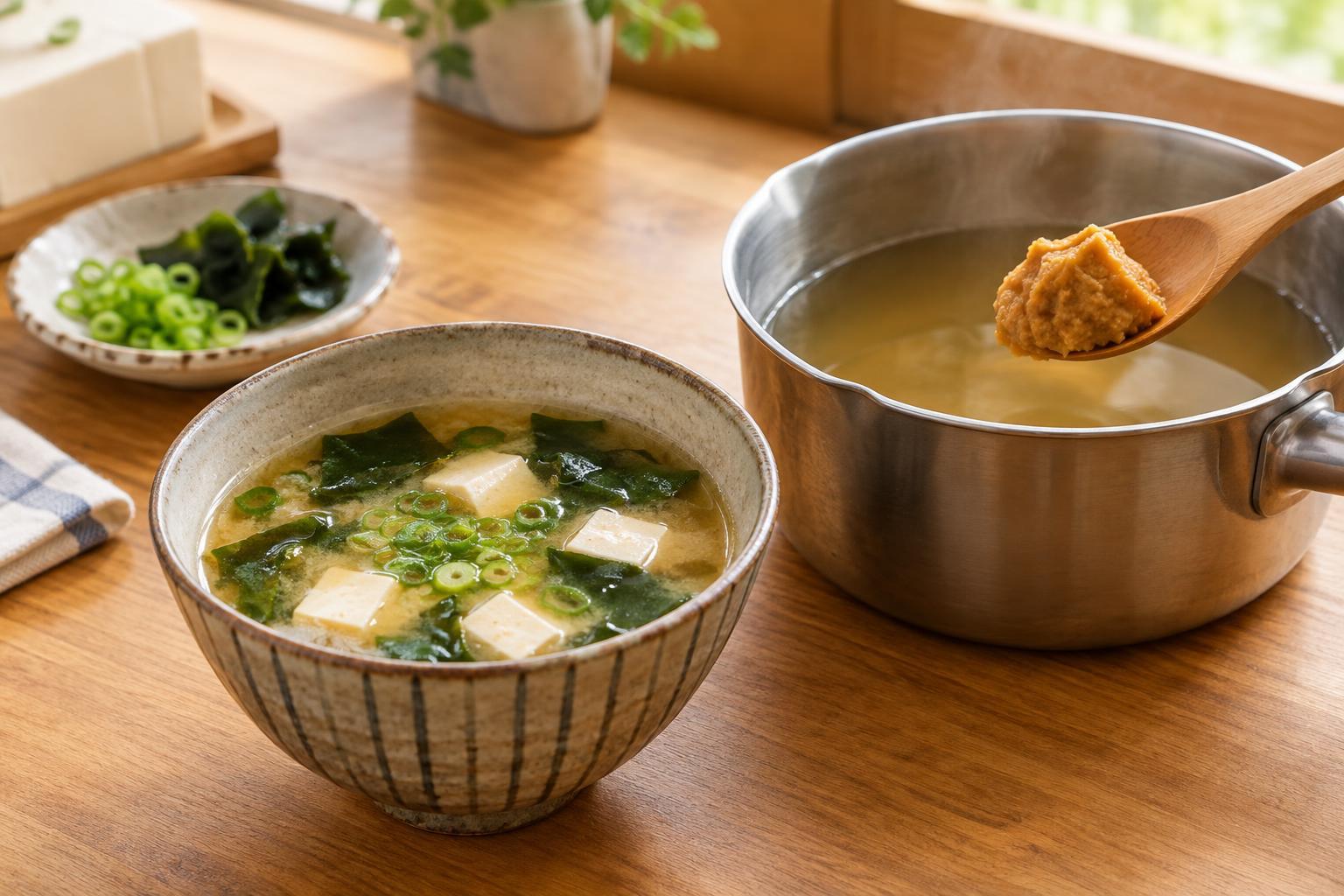
Once the other ingredients are ready, turn off the heat or move the pot off the burner. Put the miso in a small bowl with a ladleful of hot broth and stir until smooth. Pour that mixture back into the pot and stir gently. You can also dissolve miso in a ladle held partly in the broth, pressing the paste through a small strainer if you prefer a smoother soup. Either method helps prevent salty clumps.
Taste the soup after the miso is fully mixed in. Add a little more dissolved miso if it seems thin, or a splash of hot water or unsalted broth if it tastes too strong. The goal is a warm, balanced bowl, not an exact measurement. Because miso is added at the end, you can make these small adjustments without continuing to cook everything else.
Why avoid boiling miso soup?
A brief boil will not ruin miso soup or make it unsafe. The usual advice not to boil it is about flavor. Miso has a distinctive aroma, and vigorous boiling after it is added can make that aroma less noticeable. A hard boil may also leave delicate additions, such as tofu or greens, less pleasant in texture. Adding miso off the heat keeps the final step gentle and lets its flavor stand out.
If the soup cools before serving, warm it over low heat until it is pleasantly hot, rather than bringing it to a rolling boil. It is fine if a few small bubbles appear at the edge of the pot; there is no need to watch the temperature anxiously. Just avoid leaving the finished soup boiling while you prepare the rest of the meal.
Make the method your own
For a first pot, try dashi with tofu, a little wakame, and sliced green onion. Cook the broth and any vegetables first, warm the tofu and wakame, then turn off the heat and add the miso. Scatter the green onion into the bowls or stir it in just before serving. This short sequence shows what each step contributes without requiring many ingredients.
Once the timing feels familiar, vary the soup with mushrooms, cabbage, spinach, or whatever vegetables you enjoy. Cut ingredients so they cook evenly, and avoid crowding the pot with so many additions that there is little broth left. Most importantly, taste each batch: the miso you use, the strength of your dashi, and the ingredients in the pot will all affect the final bowl.