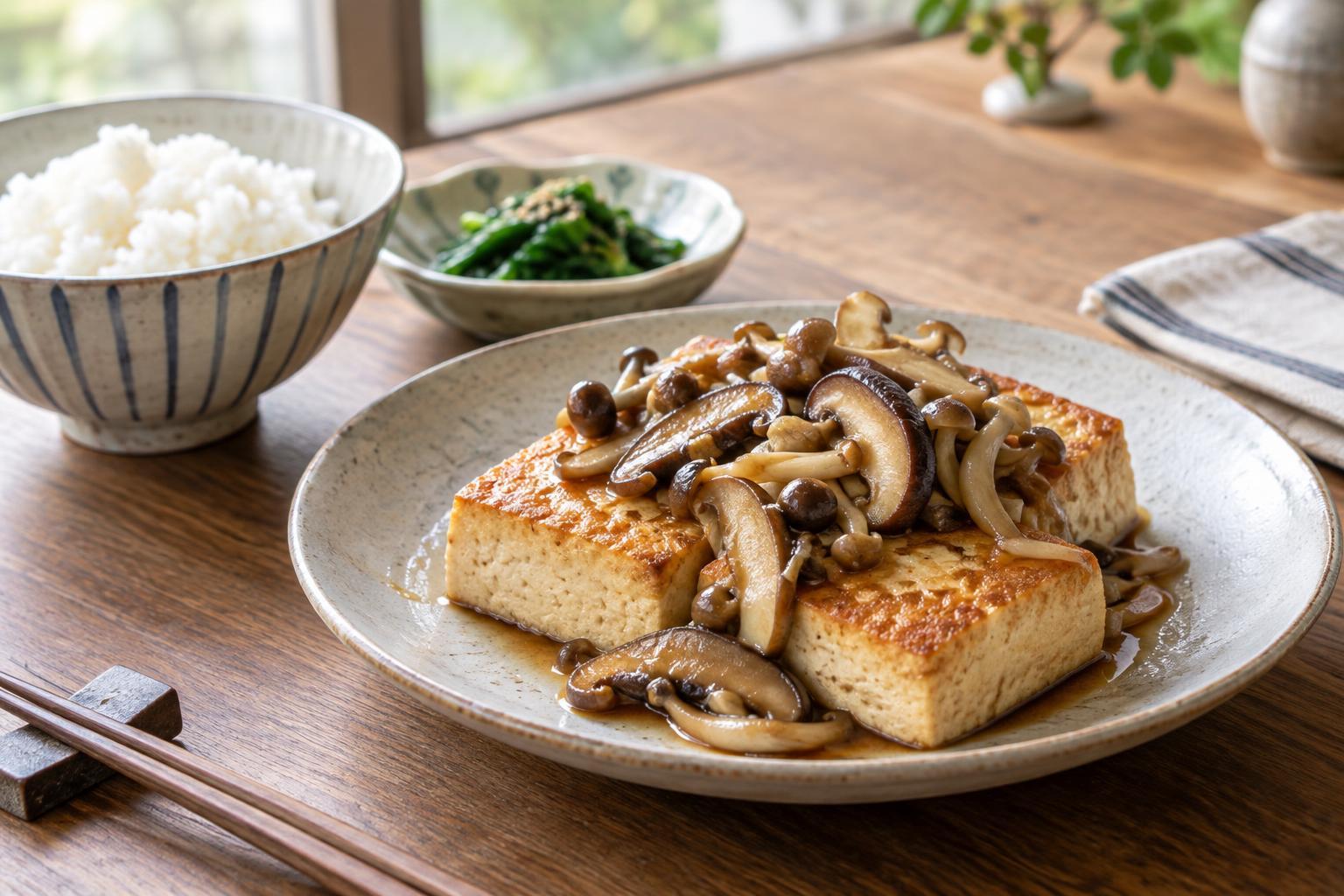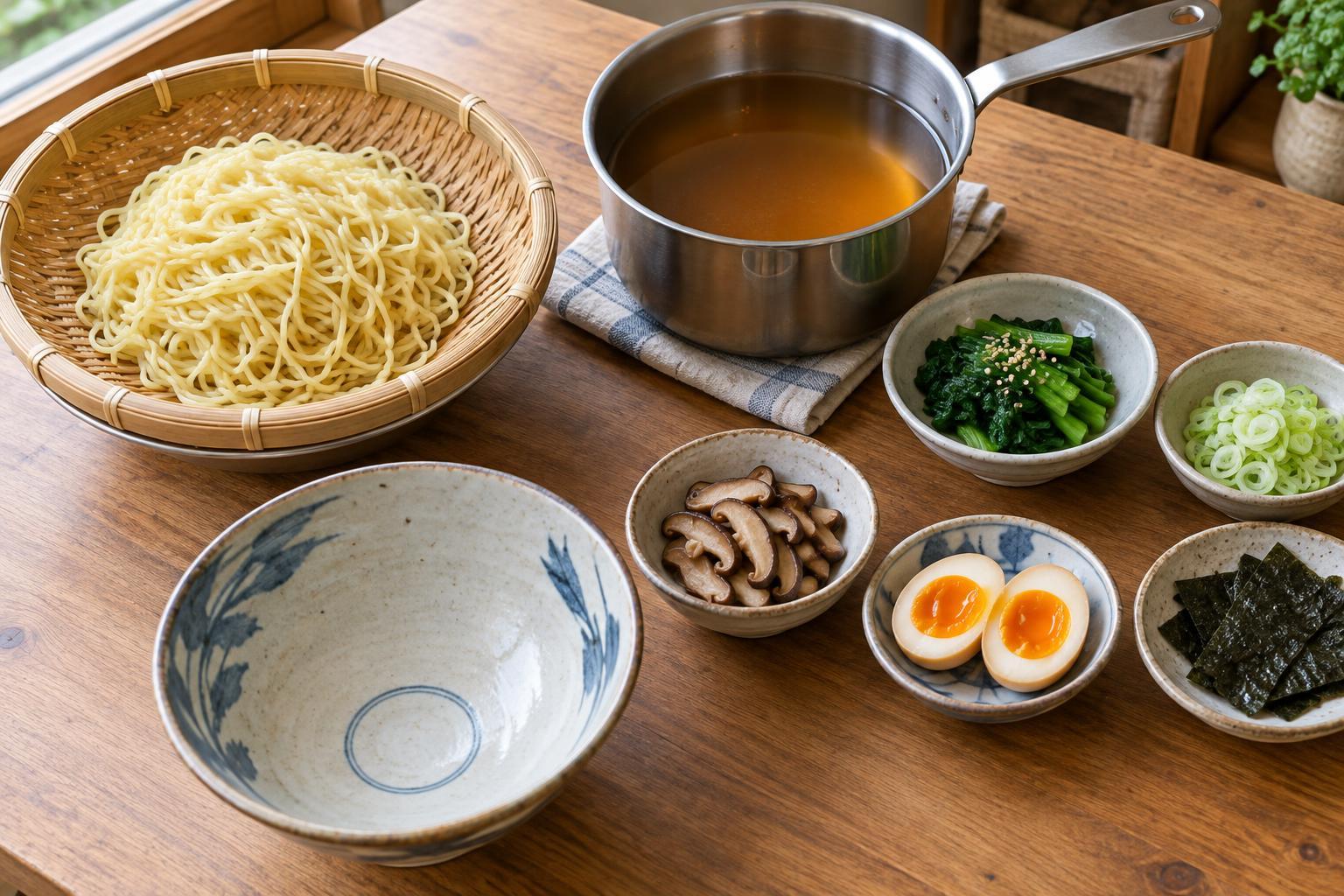
Think in components, not finished bowls
A Japanese-style noodle bowl can be a convenient meal to prepare in stages, whether you prefer warm udon in broth, chilled soba with dipping sauce, or somen with a few simple toppings. The key is to avoid assembling the whole bowl in advance. Noodles absorb liquid, crisp vegetables lose their texture, and delicate garnishes can soften long before you sit down to eat.
Instead, plan around four components: the noodles, a broth or sauce, substantial toppings, and finishing garnishes. You can prepare several of these ahead without deciding exactly how every bowl will look. A container of cooked vegetables, for example, might go into a hot broth one day and alongside chilled noodles the next.
Choose a broth or sauce that fits the meal
For a hot bowl, prepare a lightly seasoned broth and store it separately from the noodles. Dashi is one possible base; the amount of soy sauce or other seasoning can be adjusted when you reheat it. If you are using miso, consider stirring it in close to serving rather than boiling the finished soup. Keep any meat or seafood separate until you can reheat or cook it thoroughly.
For a cold bowl, prepare a dipping sauce or a small amount of dressing in its own covered container. Taste it again before serving: a sauce that seems strong on its own may be appropriate when paired with plain noodles, but you can adjust it to suit your meal. Chill the sauce if its ingredients require refrigeration, and avoid adding watery vegetables until you are ready to eat.
If you prepare more liquid than you expect to use soon, portion it before freezing. Smaller containers let you thaw only what you need. Leave room for expansion in freezer-safe containers, and follow appropriate cooling and storage practices for the ingredients you used.
Prep toppings with texture in mind
Toppings that hold their shape are useful for advance preparation. Cooked mushrooms, blanched green beans, or a portion of cooked chicken can be packed separately and added to a hot bowl at serving time. Keep perishable toppings refrigerated and handle them according to their ingredients; a topping made with cooked protein needs more careful handling than an unopened packet of dried nori.
Some toppings are better prepared only partway. Wash and dry cucumbers before storing them, then slice them shortly before serving if you want a crisp finish. You can wash scallions ahead, but cutting them later preserves more of their fresh texture. Store sesame seeds, dried nori, and other dry garnishes away from moisture rather than packing them beside sauce or vegetables.
For variety without a long prep list, choose one substantial topping and one fresh or crunchy finish. Mushrooms with sliced scallions, or cooked chicken with cucumber, make distinct bowls using the same basic sauce. This approach also makes it easier to use small amounts of ingredients you already have.
Decide when to cook the noodles
Cooking noodles just before eating is the simplest way to protect their texture, especially for hot soup bowls. While the water comes to a boil, reheat the broth and set out the toppings. Follow the package directions for the type of udon, soba, or somen you have; cooking times and rinsing instructions can differ. Put the cooked noodles in the bowl only when the rest of the meal is nearly ready.
If you need to cook noodles ahead, treat that as a convenience rather than a guarantee of the same texture. Drain them well, rinse if appropriate for that noodle and preparation, and store them separately from any liquid. Refrigerate promptly, then use them within a suitable period for the product and your storage conditions. Chilled noodles may need loosening before serving; warm noodles may benefit from a brief dip in hot water before they go into broth.
Make serving a short assembly task
Before you start cooking, set out the containers you will need. For a hot bowl, heat the broth, cook or warm the noodles, add any toppings that need heating, and finish with fresh garnishes. For a cold bowl, chill the sauce, prepare the noodles as directed, drain them thoroughly, and bring the toppings to the table separately. Each person can then add sauce without leaving the noodles to sit in it.
Label prepared components so you know what they contain and when you made them. If a component develops an off smell or appearance, discard it rather than trying to make it work in a bowl. With the wet, dry, hot, and crisp elements kept apart until serving, advance preparation saves effort while still leaving you a meal that tastes freshly assembled.