There Is No Single Japanese Breakfast
A picture of a Japanese breakfast often shows rice, miso soup, grilled fish, and several small dishes arranged on a tray. That can be a satisfying morning meal, but it is not a required template for every household or every day. Some people eat rice, others prefer bread, and many mornings call for whatever is quick to prepare. Household schedules, appetite, and what is already in the kitchen all shape breakfast.
It helps to think of Japanese breakfast as a set of familiar possibilities rather than one fixed menu. A bowl of rice with a little leftover food may be enough on one day. On another, toast and a hot drink may be the easiest choice. Looking at how these meals come together is more useful than trying to recreate a restaurant-style spread before work or school.
Building a Rice-Based Morning Meal
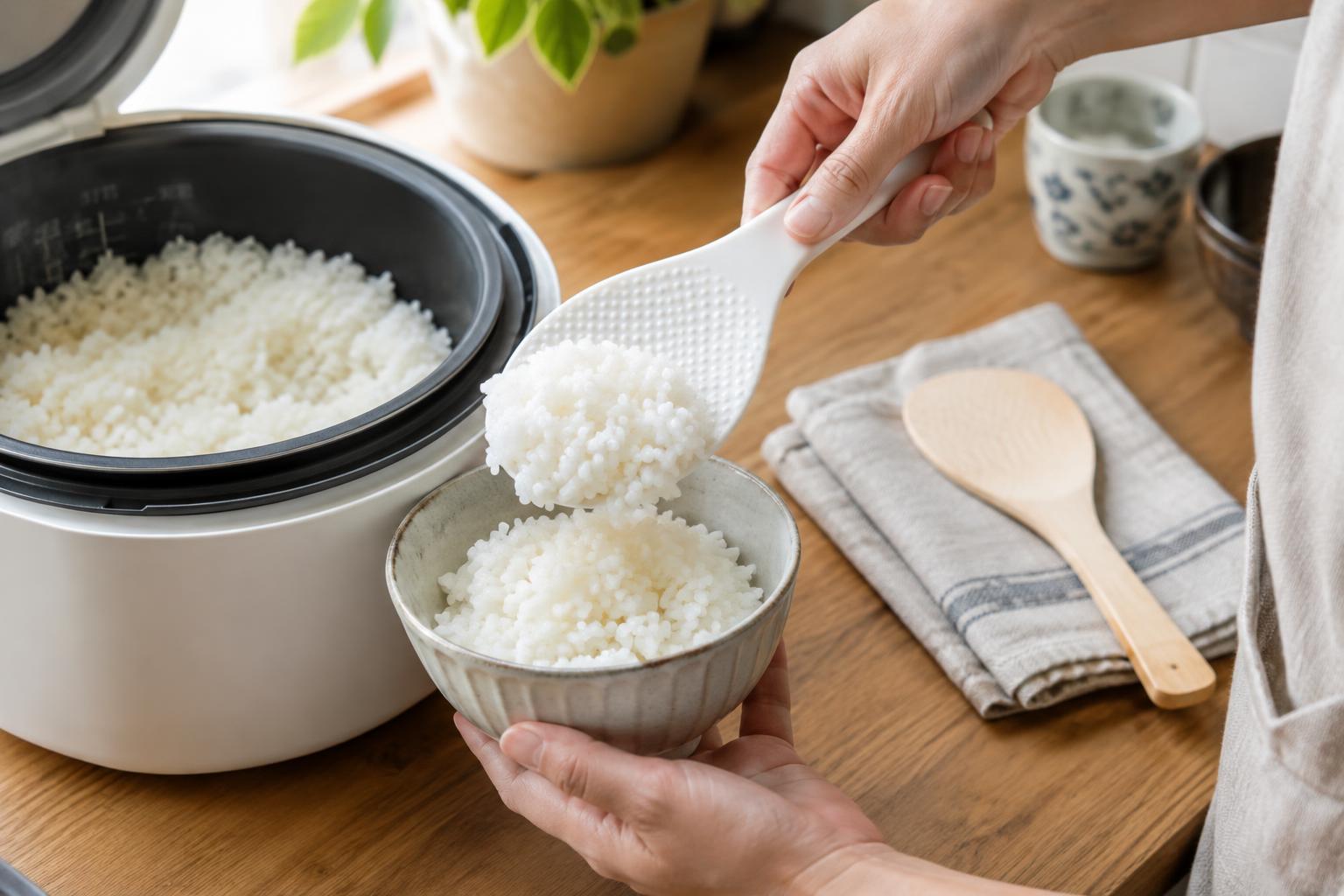
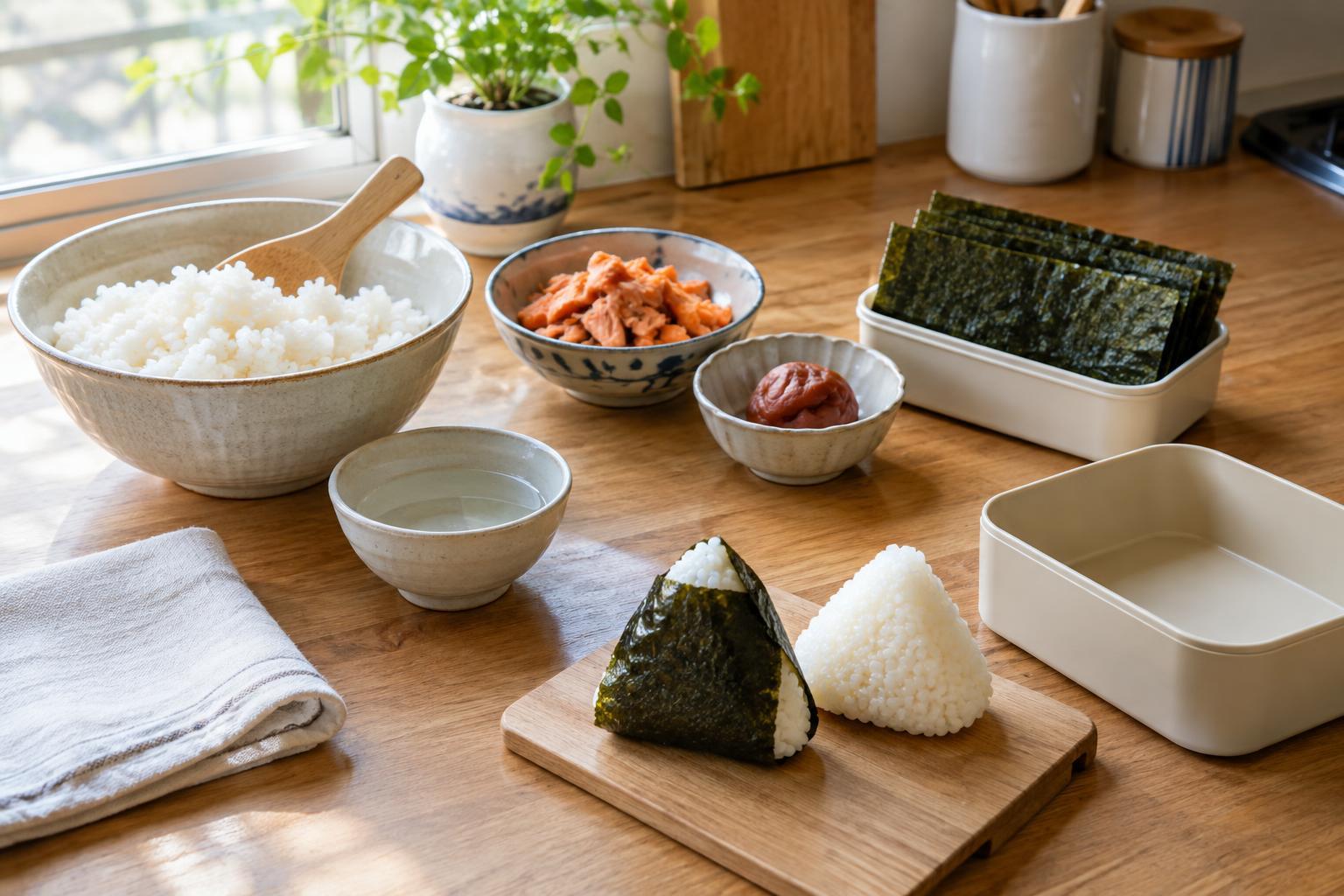
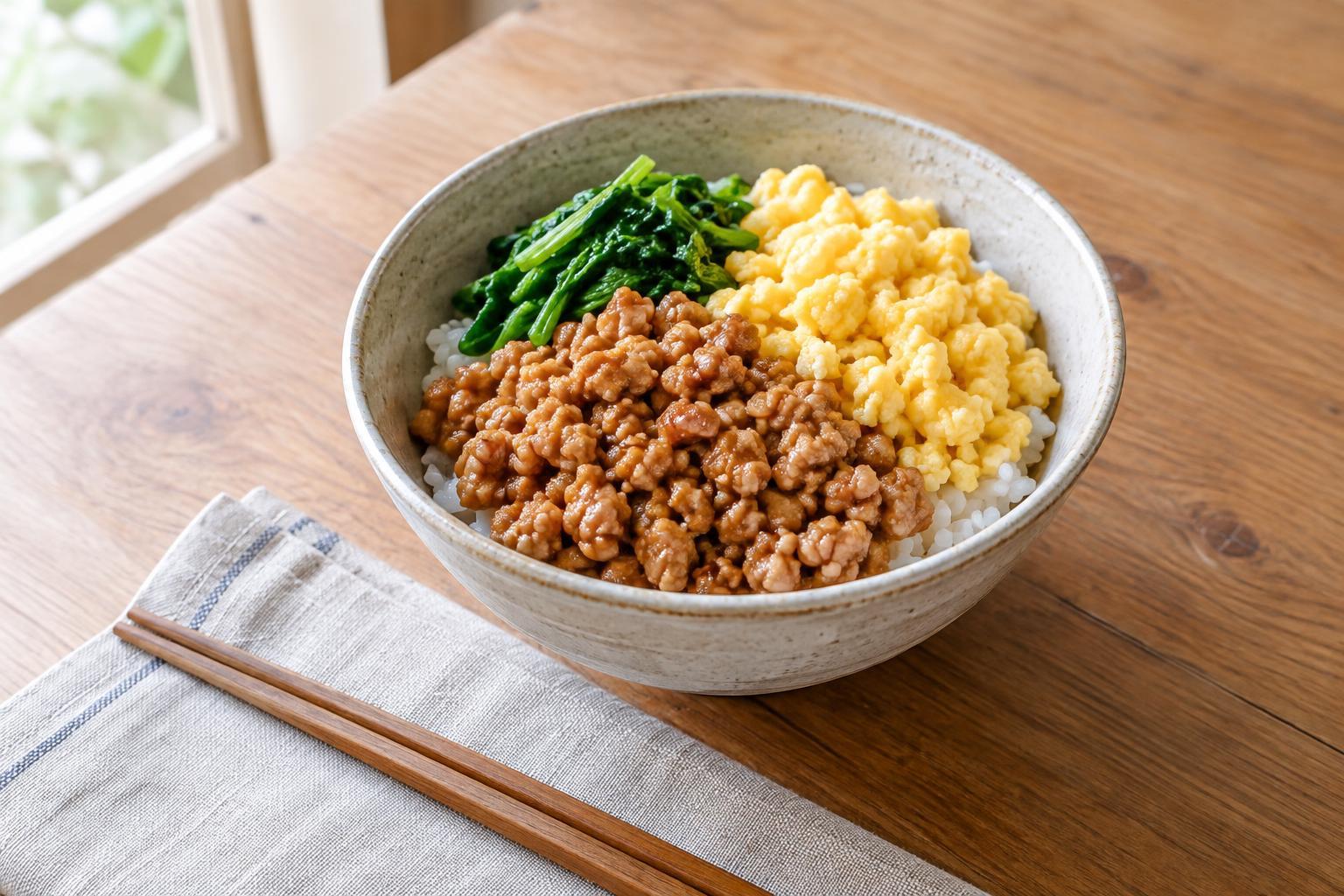
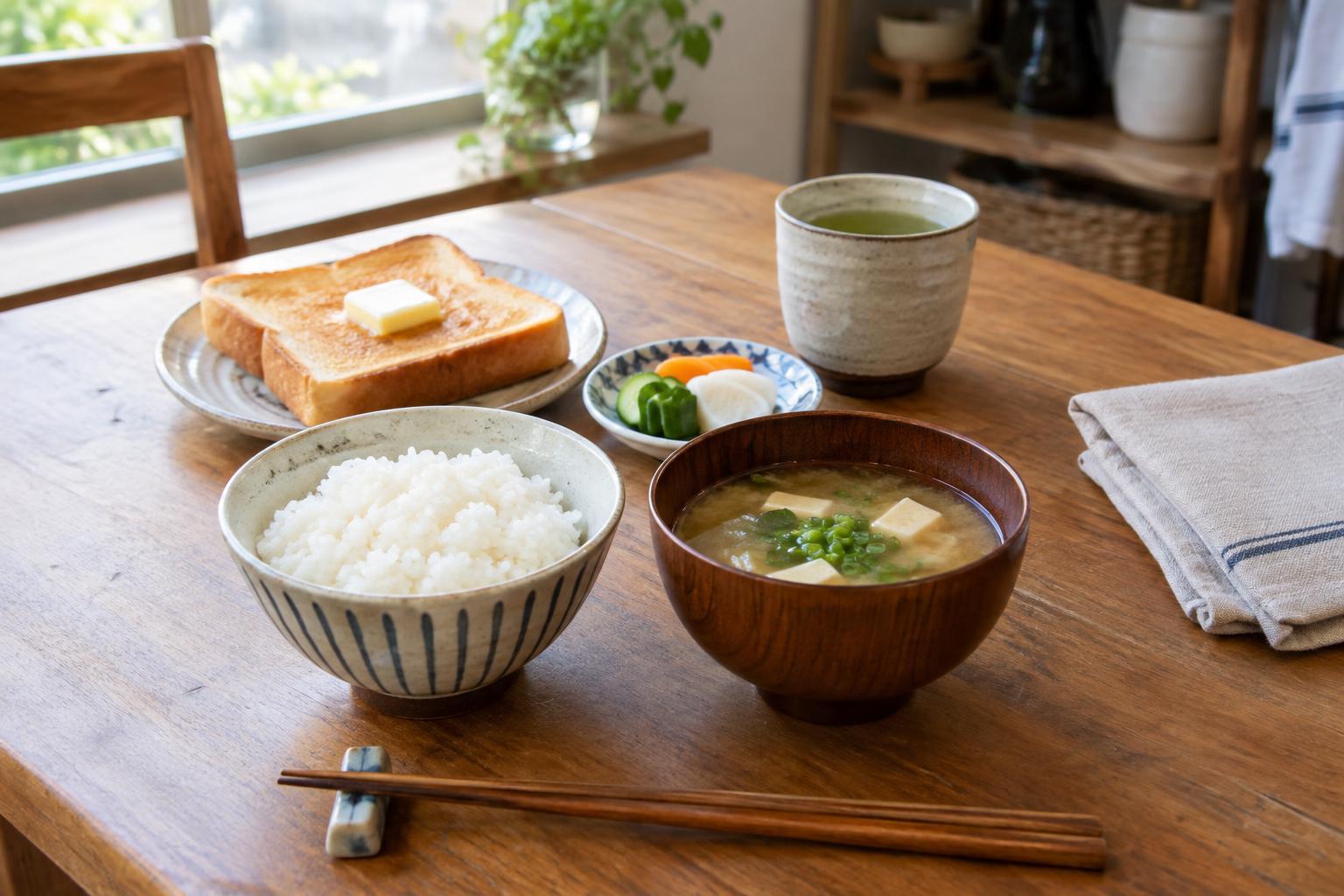
Rice provides a simple starting point because it can be paired with foods that are already prepared. A basic breakfast might be rice, miso soup, and one accompaniment, such as an egg, tofu, cooked vegetables, pickles, or a portion of fish. There is no need to serve all of these at once. The aim is to make a meal that feels satisfying without turning breakfast into a major cooking project.
Miso soup is flexible, too. Its ingredients can change according to what is available: tofu and green onion make one combination; mushrooms or vegetables make another. If rice or a cooked side dish is left from an earlier meal, breakfast can become a way to use it. Handle leftovers with ordinary food-safety care: refrigerate them promptly, store them appropriately, and reheat foods that need reheating.
Accompaniments can bring contrast to the table. A crisp pickle beside soft rice, for example, offers a different texture and a stronger flavor in a small amount. Some foods, such as natto or salted fish, have distinctive tastes and will not suit everyone. They are options to explore, not tests of whether a breakfast is authentic.
Bread Has a Place at the Table
Bread-based breakfasts are also part of everyday life in Japan. Toast may be served with an egg, fruit, yogurt, or a drink. Thick-sliced toast is one recognizable style, but the practical idea is familiar: choose a bread you like and pair it with something that makes the meal satisfying. A morning with toast is not a departure from everyday Japanese food culture simply because it does not include rice.
The choice between rice and bread can also be a matter of timing. Toast is easy to make just before eating, while rice may be most convenient when it has been prepared in advance. Neither choice tells the whole story of a household’s eating habits. People may alternate between them, eat different breakfasts from others at the same table, or skip the idea of a set meal altogether when time is short.
The Morning Routine Matters as Much as the Menu
A manageable breakfast begins with a realistic view of the morning. If there is little time to cook, decide what can be ready the night before. That might mean washing fruit, setting out bowls, preparing soup ingredients, or putting a cooked side dish in the refrigerator. These small steps can make a rice-and-soup breakfast feel possible without requiring a long preparation session.
Serving can remain simple. One bowl of rice, one bowl of soup, and a small plate are enough for many combinations. If several people are eating, the dishes need not match exactly: one person might want an egg, while another prefers vegetables or toast. The everyday table is adaptable, and a modest meal served without a rush may be more appealing than an ambitious one that is difficult to repeat.
Try a Flexible Breakfast, Not a Perfect One
To put these ideas into practice, start with what you already enjoy. For a rice-based breakfast, try rice, a simple soup, and one small side. For a bread-based breakfast, try toast with an egg or yogurt and fruit. If you are curious about an unfamiliar ingredient, add just one at a time so the meal stays approachable.
The most useful question is not whether your breakfast looks like a photograph of a traditional meal. Ask whether it fits your appetite, your schedule, and the food you have available. Japanese home breakfasts offer plenty of inspiration precisely because they can be assembled in different ways. A small, repeatable routine is a good place to begin.