What a rice paddle does
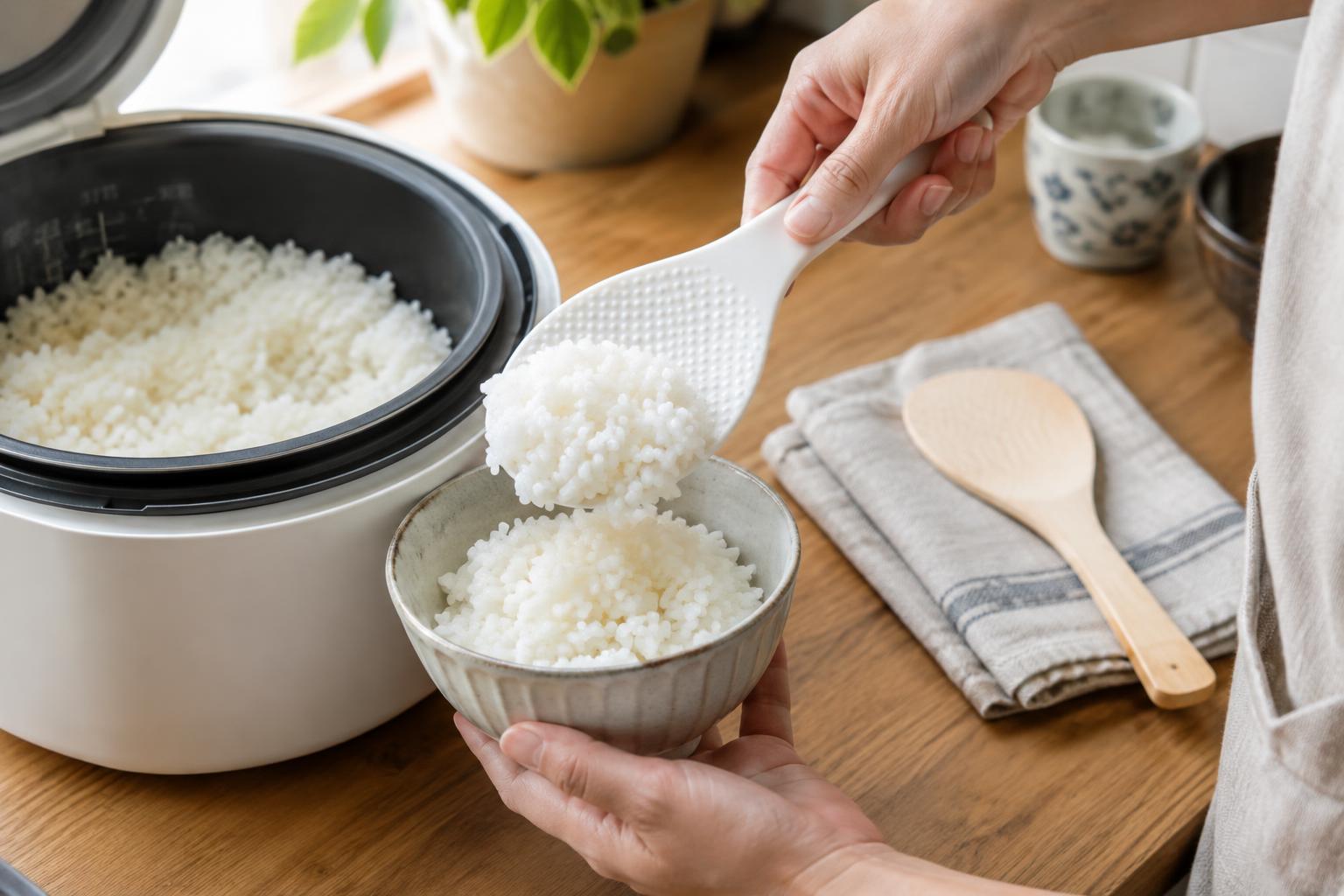
A shamoji is a broad, relatively flat paddle used to scoop and serve cooked rice. Its edge slides beneath the rice, while its wide face supports a portion as you lift it. Compared with digging into a pot with a spoon, that motion makes it easier to loosen rice without pressing it into a dense mass. You do not need a specialized paddle to make Japanese-style meals, but it is a convenient tool if rice is often on the table.
Rice paddles also help when moving rice into bowls or a larger dish for seasoning. The aim is usually to lift and separate the rice, not mash it. A paddle is simple to use, but the right size and a few small habits can make serving noticeably tidier.
Choose a shape and material that fit your kitchen
Start with the pot or rice cooker you use most. A paddle should fit comfortably inside it and reach the bottom without forcing your hand against a hot rim. A slim edge is useful for sliding under rice, and a handle should feel secure when your hands are damp. If you cook small batches, an oversized paddle can be awkward; if you regularly serve several people, a larger face may be more convenient.
Plastic paddles are lightweight and generally easy to wash. Some have a textured face designed to reduce sticking, although rice can still cling to them. Check that a plastic paddle is suitable for contact with hot food, and avoid resting it against a hot burner or pan. Wood and bamboo offer a different feel and can be pleasant to handle, but they need thorough drying after washing. Follow any care instructions that come with the paddle, especially before putting it in a dishwasher.
You may also see paddles that stand upright on a built-in base or come with a separate rest. These features help keep the food-contact surface off the counter between servings. They are conveniences rather than essentials: a clean plate or rest works, too.
Serve rice gently and keep sticking manageable
Before serving, loosen the cooked rice with a few gentle cuts and lifts. Slide the paddle down through the rice, turn a section over, and repeat in a few places rather than stirring vigorously. This helps release steam and makes portions easier to scoop. When you fill a bowl, lift rice onto the paddle instead of compressing it against the side of the pot.
A light rinse with clean water can help plain rice release from a paddle, especially a smooth wooden one. Shake off excess water first so it does not drip into the rice. You can rinse the paddle again between servings if needed. If you are seasoning rice, use the paddle to fold the seasoning through with lifting and slicing motions; pressing or repeatedly stirring can make the rice feel heavy.
Keep the paddle on a clean rest while you eat rather than leaving it buried in the rice. If you use a rice cooker, check its instructions before leaving any utensil inside: a paddle can interfere with the lid or sit against a surface that is not meant to hold it during a warming cycle.
Clean and store it between meals
Wash the paddle after use with warm water and dish soap, paying attention to any texture or grooves where starch may collect. Dried rice is easier to remove after a brief soak than by scraping hard. Use a soft brush if needed, particularly around a textured face, then rinse well. Wash a paddle used with seasoned rice promptly so seasoning does not dry onto it.
Dry the paddle completely before putting it away. This is especially important for wood and bamboo, which should not be left soaking or stored while damp. If a paddle becomes cracked, splintered, or difficult to clean, replace it. A well-fitting, clean paddle needs little special treatment; its main advantage is making the everyday act of serving rice a little easier.