Start with a realistic plan
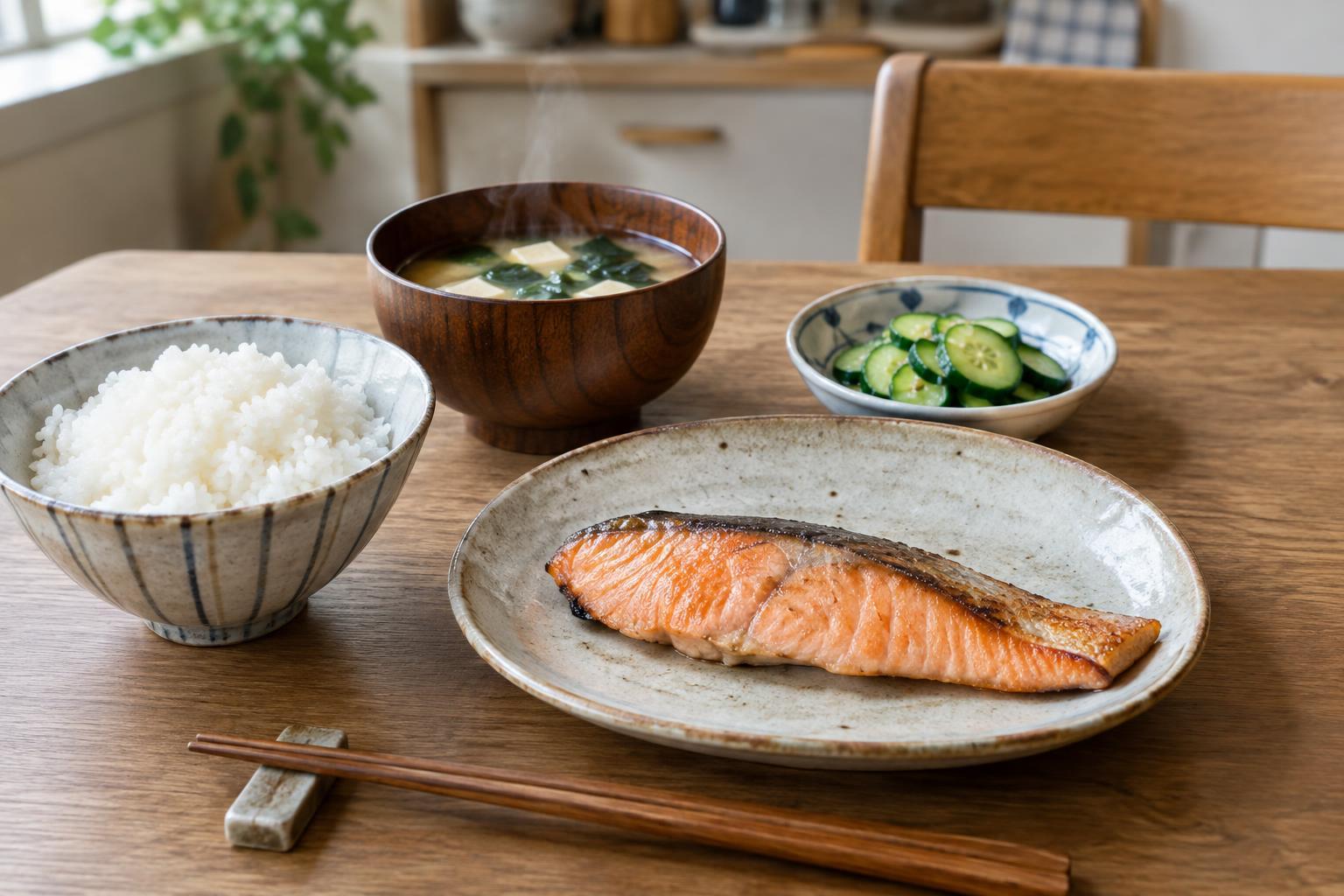
The key to a 30-minute dinner is choosing dishes that do not all need the stove at once. For two people, this plan pairs ready-cooked rice with pan-seared salmon, miso soup, and a cucumber side. The rice reheats while the other dishes come together; the side can wait at room temperature; and the soup needs only gentle heating at the end.
Set out two portions of cooked rice, two small salmon fillets, one cucumber, about two cups of water or prepared dashi, miso paste, a little dried wakame, soy sauce, rice vinegar, sesame seeds, cooking oil, and optional grated ginger. Use an instant dashi you enjoy, or make the soup with water for a lighter flavor. If your rice is uncooked, start it before the 30-minute window: rice cooker cycles vary, and washing and cooking rice can take longer than this schedule allows.
Minutes 0–8: Start the rice and make the side
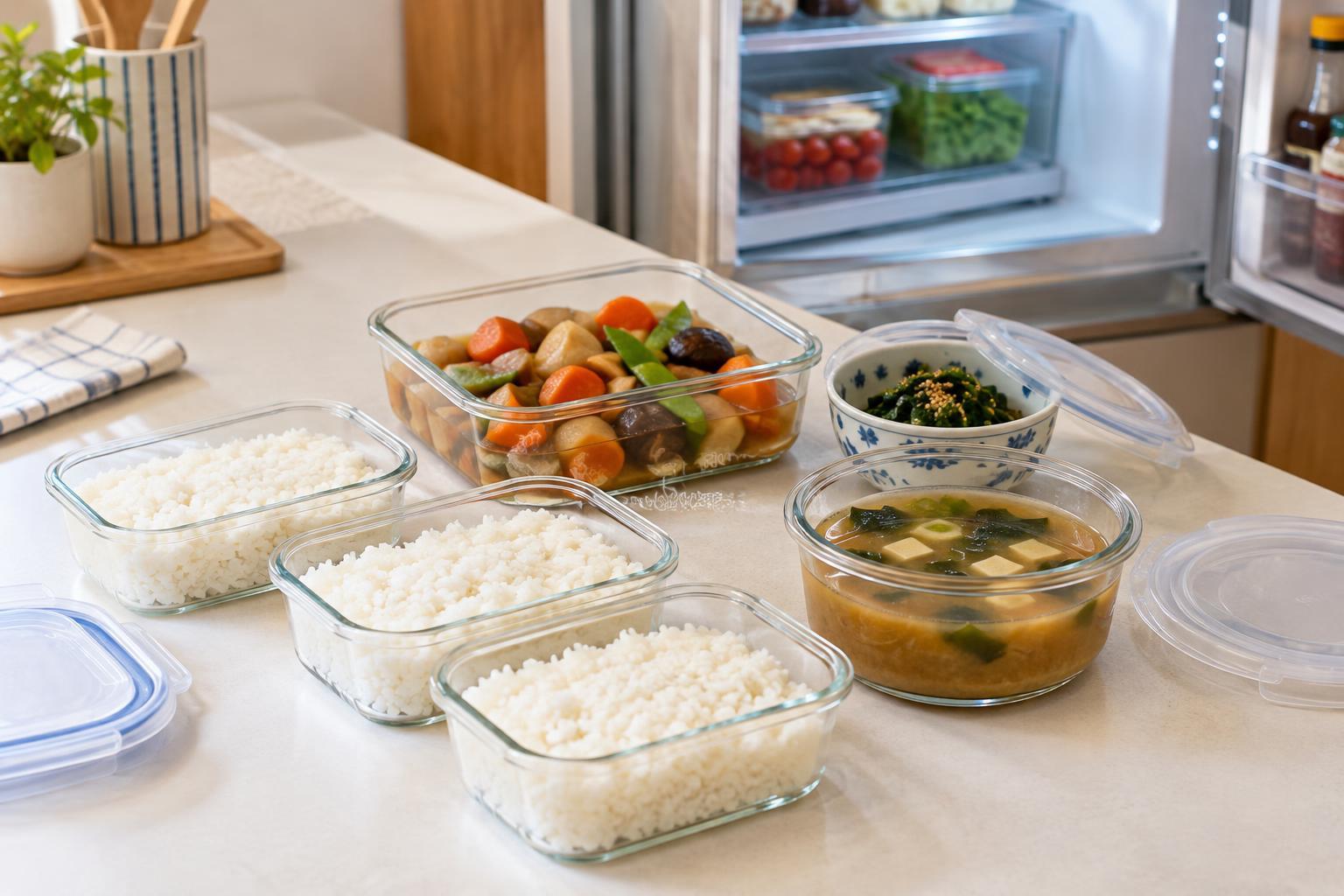
Put the cooked rice on to reheat first, following the package or your usual method. For refrigerated rice, a covered microwave-safe bowl with a small splash of water helps it warm without drying out. Heat frozen rice according to its package directions. Once hot, keep it covered until serving.
Slice the cucumber thinly. Toss it with a small splash of rice vinegar and soy sauce, then add sesame seeds. Taste before adding more soy sauce; the salmon and soup will also bring savory flavors to the meal. Put the cucumber aside while you cook. If it releases liquid, give it a quick toss and lift it into serving dishes with a spoon.
Minutes 8–18: Prepare the soup and cook the main
Pour the water or dashi into a small saucepan. Add a small pinch of dried wakame and heat until the seaweed has softened and the liquid is hot. Turn the heat low, or take the pan off the burner. In a small bowl, loosen one to two tablespoons of miso with a little hot liquid, then stir it back into the saucepan. Taste and adjust gradually. Avoid a hard boil after adding miso; gentle heat is enough to keep the soup ready.
While the soup heats, pat the salmon dry. Heat a lightly oiled skillet over medium heat, then add the fillets. Cook for several minutes on the first side before turning, and continue until the fish is cooked through. Thickness and pan heat affect the timing, so check the center rather than relying only on the clock. A little grated ginger and a splash of soy sauce added near the end give the salmon a simple glaze. Keep raw fish and its utensils away from the ready-to-eat cucumber.
Minutes 18–27: Check, adjust, and set the table
If the salmon needs more time, lower the heat slightly and let it finish without rushing the center. If it is ready early, take it off the heat rather than leaving it in the hot pan. Check that the rice is heated through, fluff it, and cover it again. Warm the soup gently if needed, stirring before you taste it.
Use this quieter stretch to set out rice bowls, soup bowls, plates, and chopsticks or other utensils. Transfer the cucumber to small dishes. Dividing the side now makes the final minutes easier: you will only need to plate the salmon and pour the soup when everything is hot.
Minutes 27–30: Serve together, and adapt next time
Spoon the rice into bowls, plate the salmon with the cucumber side, and ladle out the soup last. This order keeps the soup hot and prevents the fish from sitting while you search for dishes. The meal does not need to be elaborate: rice provides a foundation, the salmon is the main dish, and the soup and cucumber offer contrasting warmth and crunch.
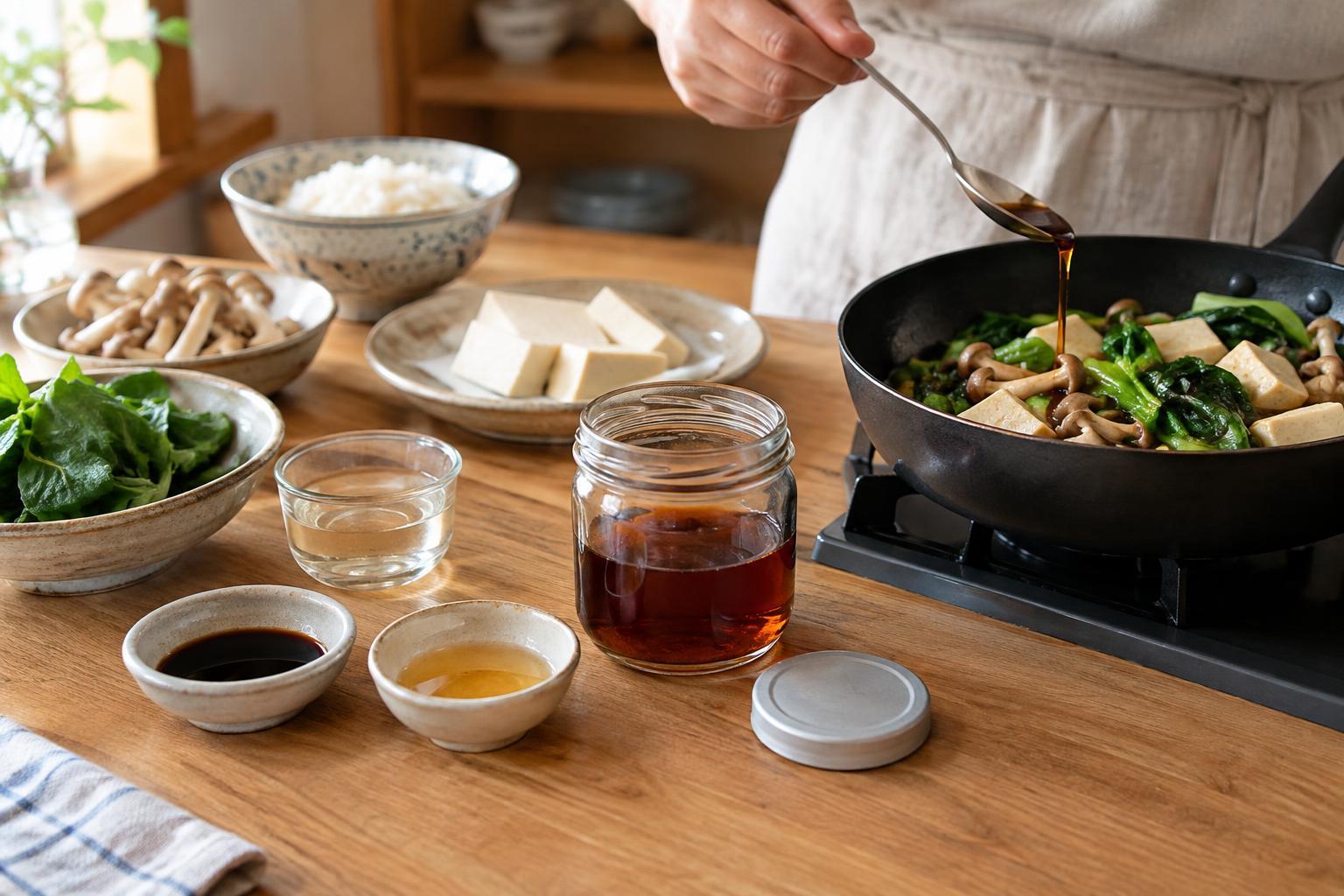
Once you know the sequence, change one component without rebuilding the whole plan. Firm tofu can replace salmon for a meatless main; pat it dry and pan-sear it until browned before adding ginger and soy sauce. Shredded cabbage or sliced radishes can stand in for cucumber. Keep the same timing principle: start rice first, make a side that can wait, cook the main while the soup heats, and serve the soup last.