Start cooling soon after the meal
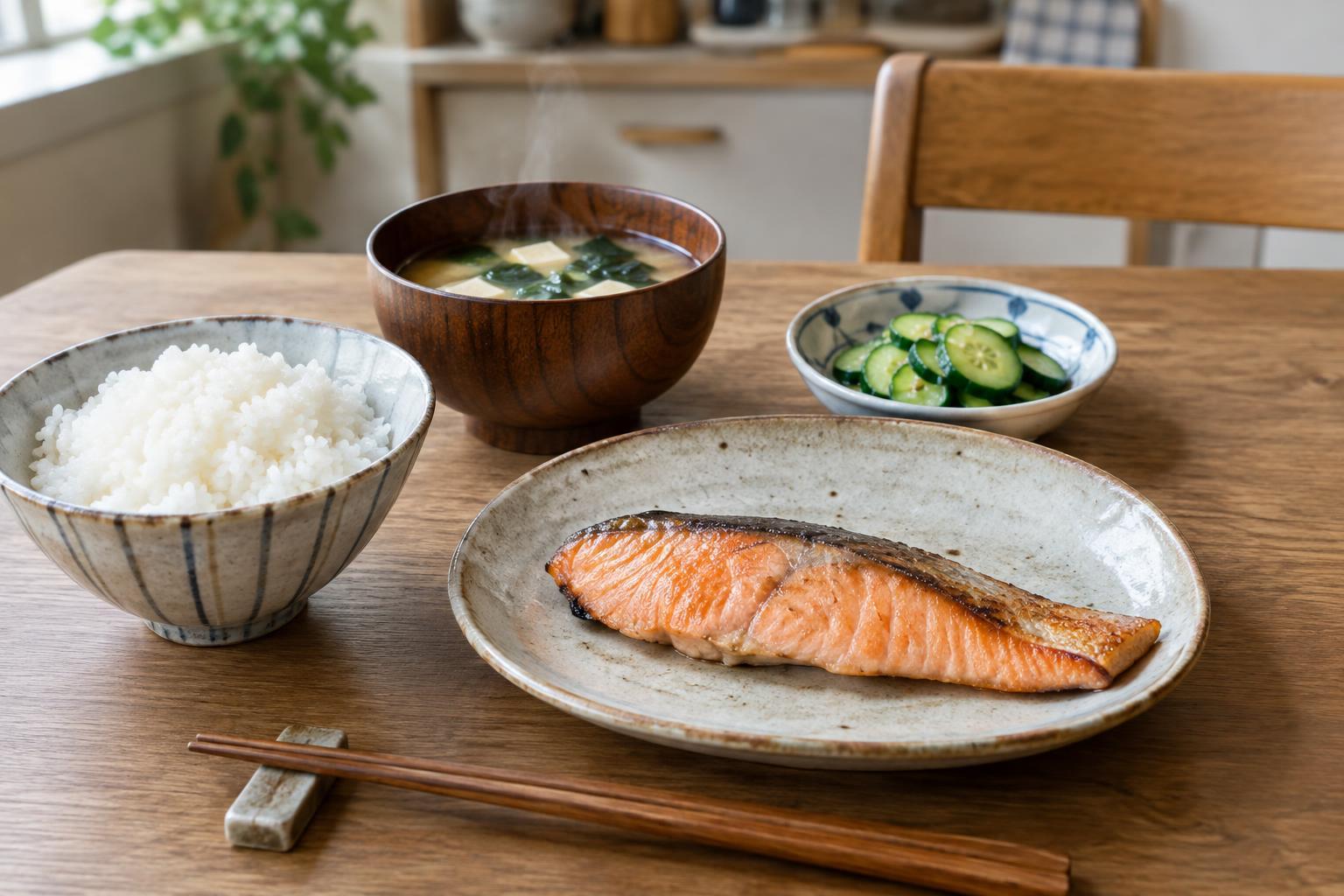
A Japanese home meal may leave several small dishes behind: a little rice, miso soup, simmered vegetables, and perhaps grilled fish. Their serving dishes make a pleasant table, but they are not always the best containers for storage. Once the meal is over, move perishable leftovers toward refrigeration rather than leaving them out while you finish other kitchen tasks.
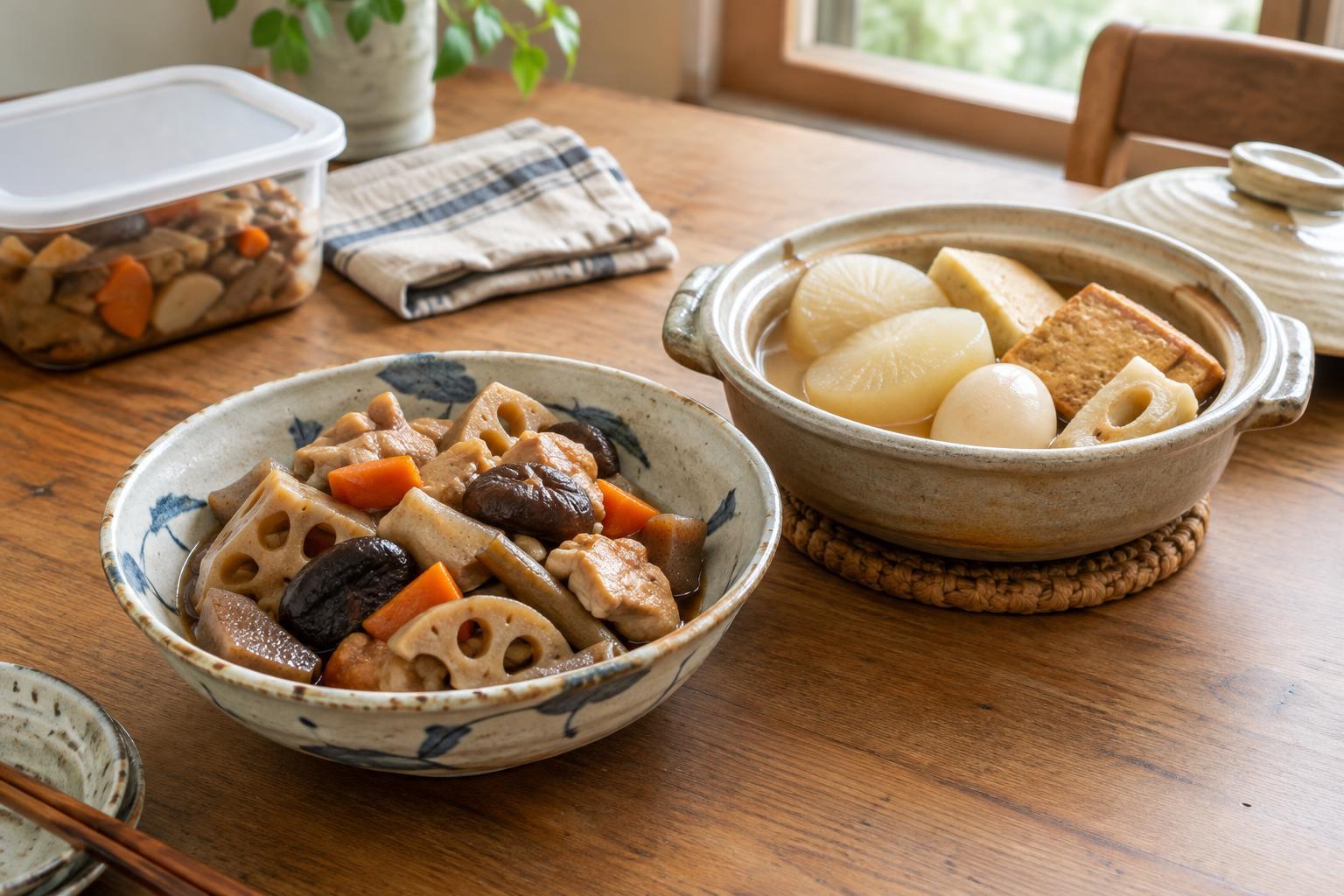
As a general rule, refrigerate cooked perishable food within two hours of cooking or serving; if the room is very hot, do so sooner. Food does not need to reach room temperature before it goes into the refrigerator. For a large or deep batch, divide it into smaller portions so heat can escape more quickly. A shallow container of simmered daikon, for example, will cool more evenly than a full, deep pot.
Pack rice and noodles in meal-sized portions
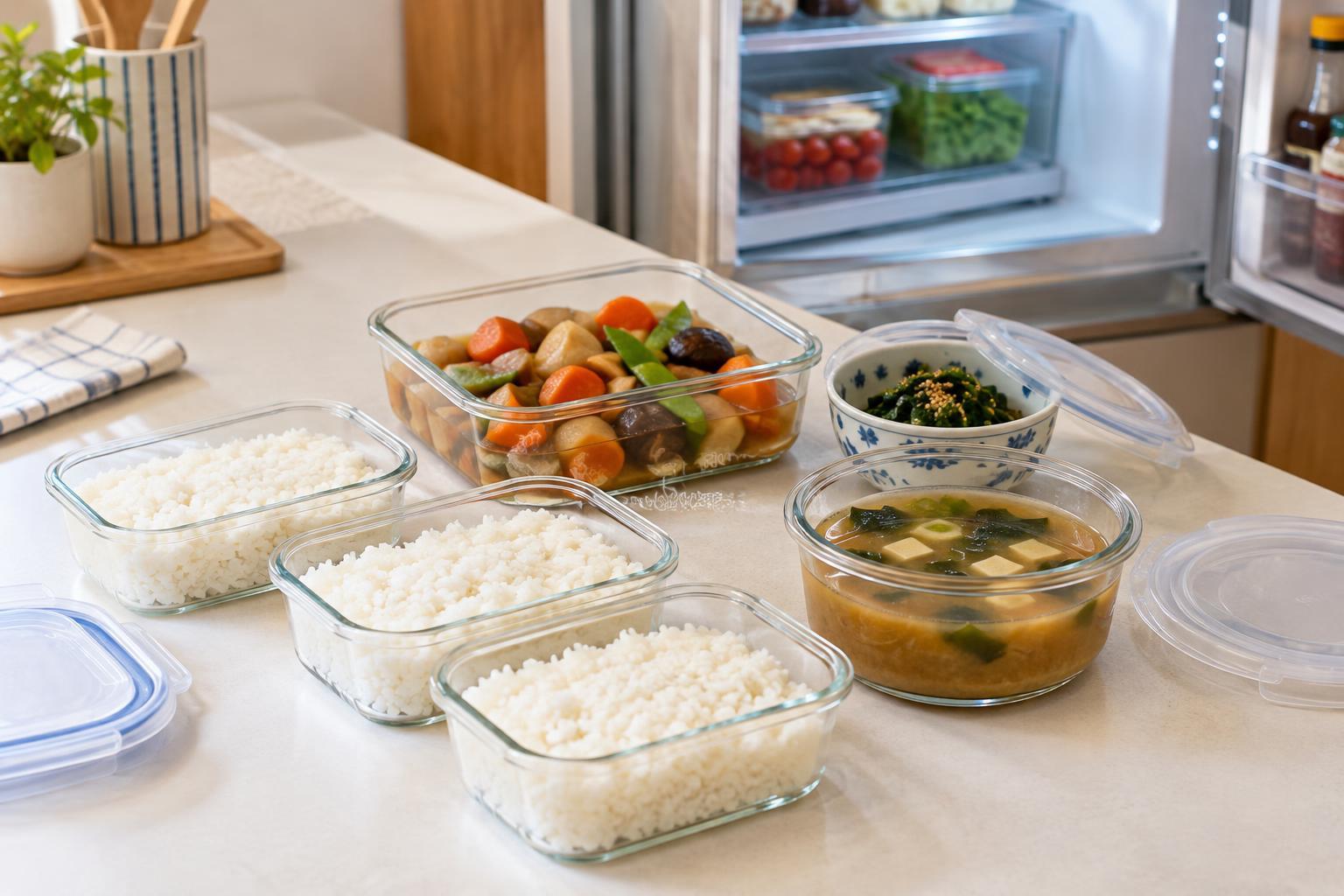
Cooked rice deserves particular attention because harmful bacteria can grow if it sits warm for too long, and reheating will not necessarily make poorly stored rice safe. Fluff leftover rice to release steam, divide it into shallow or meal-sized portions, and refrigerate it promptly. Avoid leaving it in a switched-off rice cooker overnight. If you will not eat it soon, freeze portions instead; they are convenient to reheat for a later meal.
Treat cooked udon, soba, and other noodles as perishable leftovers too. Drain and refrigerate them separately from hot broth when practical. Keeping the components apart makes it easier to cool them quickly and helps prevent the noodles from becoming overly soft. Label a container if its contents or preparation day might be hard to remember.
Give soups and simmered dishes room to cool
Miso soup, curry rice sauce, nikujaga, and other simmered dishes can hold heat in a large pot long after the stove is turned off. Transfer a big batch to several shallow containers rather than placing a tightly covered stockpot in the refrigerator. Leave a little space around the containers so cold air can circulate. Cover them loosely while they are still releasing steam, then close them securely once chilled.
Separate soup into portions if you expect to eat it on different days. This lets you reheat only what you need instead of repeatedly warming and cooling the entire batch. Tofu, greens, and other delicate ingredients may change texture in storage, even when the soup has been handled properly. If you are making extra soup intentionally, you can also keep some ingredients separate and add them when reheating.
Store small side dishes with the same care
A small serving of tamagoyaki, cooked greens, or grilled fish can be easy to overlook among the plates. Move these dishes into clean, covered containers and refrigerate them promptly. Use a clean utensil to portion leftovers, especially if food has been served family-style. Keeping sauces and moist toppings separate where possible can help preserve texture, but it does not replace timely refrigeration.
Pickles and other preserved foods vary widely in how they are made. Do not assume that a homemade quick pickle is shelf-stable simply because it tastes salty or sour. Follow the storage directions for the particular dish, and refrigerate it when in doubt. Leftover raw fish needs different handling from cooked dishes; if you are unsure how it was stored or how long it has been out, do not save it for another meal.
Make tomorrow’s meal easy to manage
Keep the refrigerator at 40°F (4°C) or colder. For most cooked leftovers, plan to eat refrigerated portions within three to four days or freeze them sooner. Use a shorter window when a recipe or ingredient calls for it. A label with the dish name and the day it was cooked makes a crowded refrigerator easier to navigate.
When it is time to eat, reheat leftovers thoroughly; a food thermometer can help you check that they reach 165°F (74°C). Stir soups and saucy dishes so they heat evenly, and reheat only the portion you intend to serve. Smell and appearance cannot reliably tell you whether food is safe. If storage has been uncertain, the safer choice is to discard the leftovers rather than test them with a taste.