Why mix these seasonings ahead?
Soy sauce, mirin, and sake appear together in many Japanese home-style dishes. Soy sauce brings salt and savory depth, mirin adds sweetness and a glossy finish when reduced, and sake contributes flavor and liquid. Keeping a small amount of the three mixed together saves the step of measuring each bottle when you are ready to cook.
Think of the mixture as a starting point, not a finished sauce. It can season a pan of mushrooms, form the base of a quick simmering liquid, or become a glaze for tofu or fish. The amount you use—and whether you add water, stock, or a little extra sweetness—should depend on the ingredients and cooking method.
Make a small, flexible batch
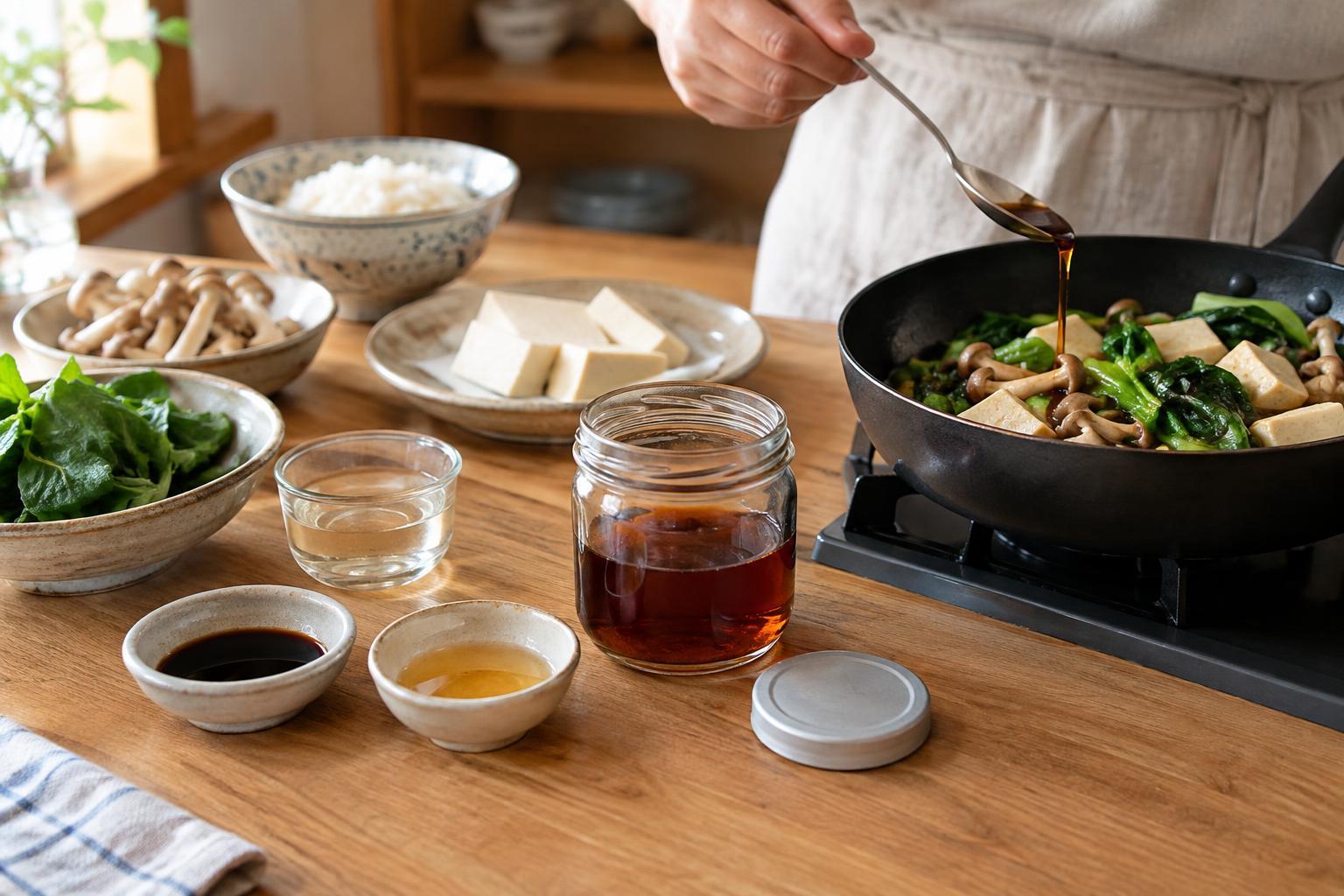
For a simple starting blend, combine equal parts soy sauce, mirin, and cooking sake. Two tablespoons of each makes enough to try across a few meals without committing to a large jar. Stir or shake the mixture in a clean container, then label it so no one mistakes it for plain soy sauce. If you already know you prefer a less salty result, start with less soy sauce and adjust while cooking.
Ingredients sold under similar names can taste different. Hon mirin is a sweet cooking wine, while mirin-style seasonings may have different sweetness, salt content, or alcohol content. Cooking sake may also contain added salt. Taste a drop of your mix before using it, and check the labels if salt or alcohol matters for your household. Avoid adding garlic, ginger, or other fresh ingredients to the whole batch; add those to the pan instead, where you can vary the flavor from meal to meal.
Store it with weeknight use in mind
Although the individual bottled seasonings may keep well according to their labels, do not assume a homemade blend has the same storage life. Make only what you expect to use soon, refrigerate it in a clean, tightly closed container, and use it within a few days. Pour out what you need rather than dipping a utensil into the jar. If the mixture develops an unusual smell or appearance, discard it.
Keep the batch separate from raw meat or fish. Once a portion has touched raw ingredients, do not pour it back into the storage container. For a glaze, reserve clean seasoning before adding any to raw food, then cook the portion used in the pan thoroughly. Heating sake or mirin during cooking does not guarantee that all alcohol is removed.
Adjust the mix to the dish
For a quick vegetable sauté, cook the vegetables first, then add a small splash of seasoning near the end. Toss as the liquid bubbles and coats the food. Start sparingly: soy sauce becomes more prominent as liquid reduces, and you can always add another spoonful. Mushrooms, cabbage, green beans, and onions each bring different amounts of moisture, so the same measure will not behave exactly the same way every time.
For a gentle simmer, dilute the mix with water or unsalted stock before adding tofu, vegetables, or cooked ingredients. This gives the food time to absorb flavor without making the liquid overwhelmingly salty. For a glaze, use less added liquid and let the mixture reduce over moderate heat, turning the food to coat it. Watch closely near the end, because the sugars in mirin can darken as the pan dries.
Keep the convenience, not a rigid recipe
A premixed seasoning is most useful when you treat it like a measuring shortcut. Taste the dish before adding more salt. If it tastes too strong, add a little water and give the ingredients time to cook in the diluted liquid. If it needs brightness, a small squeeze of citrus added after cooking can change the balance without making the whole jar acidic.
As you use the blend, notice which meals call for more sweetness, more liquid, or a lighter hand with soy sauce. You may find that one small jar suits several dinners, while the final adjustment still happens in the pan. That is the advantage of preparing the basics ahead: you can begin cooking quickly without giving up control over the finished dish.