Why a night of rest can help
A pot of Japanese simmered food, or nimono, often tastes different the next day. As the dish cools and rests, its broth has more time to mingle with the ingredients. When reheated, the flavors may seem more rounded and evenly distributed. This is especially welcome in dishes built from sturdy vegetables, soy sauce, sake, mirin and dashi, the savory stock used in many Japanese kitchens.
A rest is not a substitute for seasoning or proper cooking. Ingredients do not all absorb liquid in the same way, and extra time can soften some foods too much. The best make-ahead candidates have pieces large enough to hold their shape and a broth you would happily taste on its own. Refrigerate the finished dish rather than leaving it on the stove overnight.
The strongest candidates: chikuzenni and oden
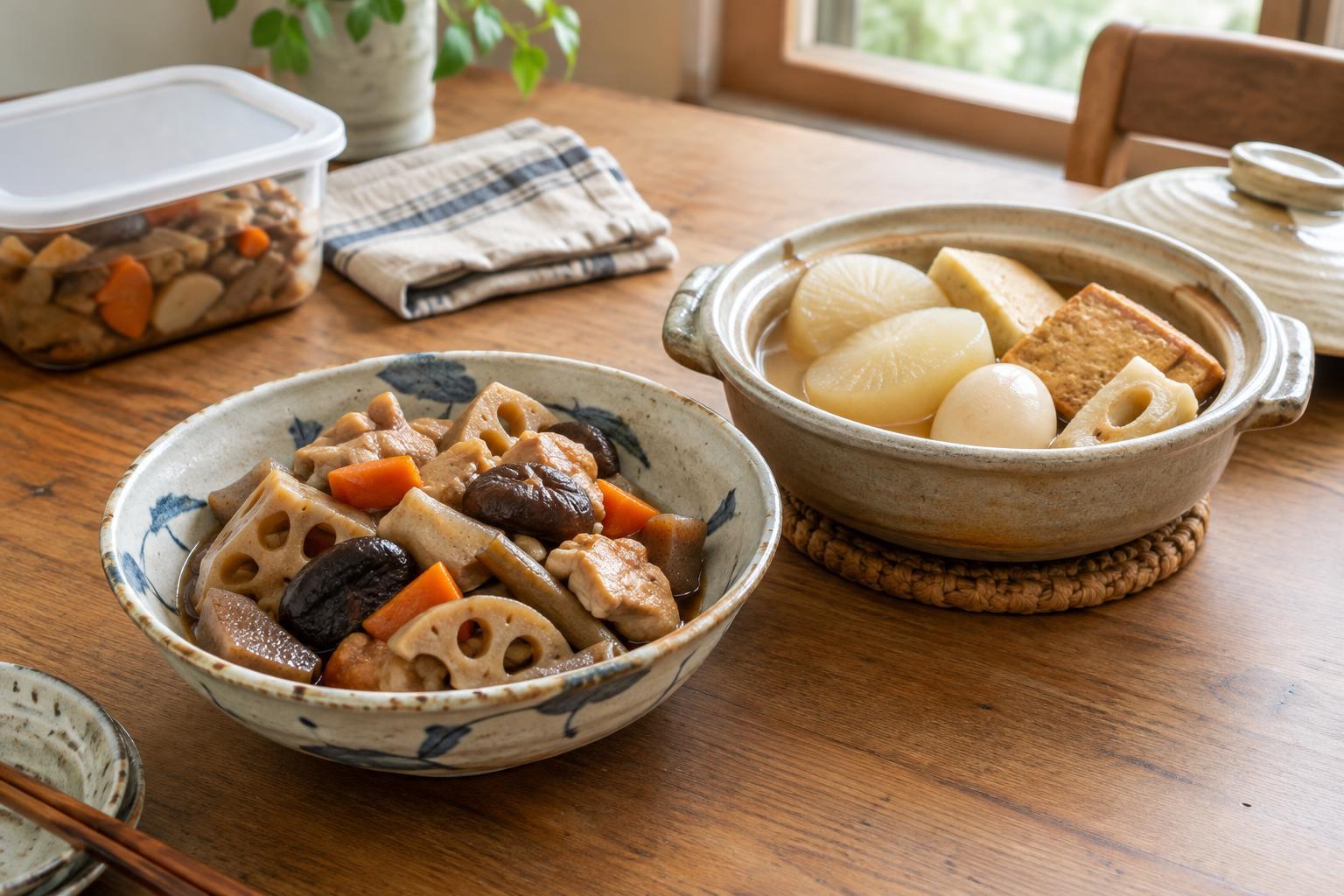
Chikuzenni is a simmered dish commonly made with chicken and sturdy ingredients such as carrot, lotus root, burdock root, shiitake mushrooms and konnyaku, a firm food made from the konjac plant. It is an excellent day-ahead choice because its vegetables retain some bite while the seasoned cooking liquid settles into the dish. Cut the ingredients into substantial, fairly even pieces, and stop cooking while the vegetables still have a little firmness. Warm the dish gently the next day so the chicken does not become tough.
Oden is another natural fit for advance preparation. Daikon radish, boiled eggs, konnyaku and fish cakes simmer in a lightly seasoned broth, with each ingredient contributing its own character. Daikon in particular can taste more thoroughly seasoned after a rest. Keep the broth fairly gentle: if it is already very salty when you turn off the heat, it may taste too strong at the next meal. Fish cakes can expand and soften with prolonged cooking, so reheat oden without a vigorous boil.
Good with care: nikujaga, kabocha and simmered daikon
Nikujaga, a home-style dish of meat, potatoes and onions, can make a satisfying next-day meal. Its sweet-savory cooking liquid coats the ingredients more evenly after resting. The trade-off is texture: potatoes that are cooked until they crumble on the first day may break apart when reheated. Use pieces large enough to survive a second warming, turn them gently and avoid stirring the pot repeatedly. If you like potatoes with distinct edges, cook them just until tender.
Kabocha nimono, simmered Japanese squash, also benefits from time to cool in its cooking liquid. Its dense flesh can hold together well, but the softer parts may fall apart if boiled again. For a tidy presentation, reheat the pieces gently in a shallow pan or serve them cool if that suits the meal. Simmered daikon is similarly convenient to make ahead, particularly when cut into thick rounds; it can be warmed slowly in its broth until heated through.
Dishes that are usually better finished closer to serving
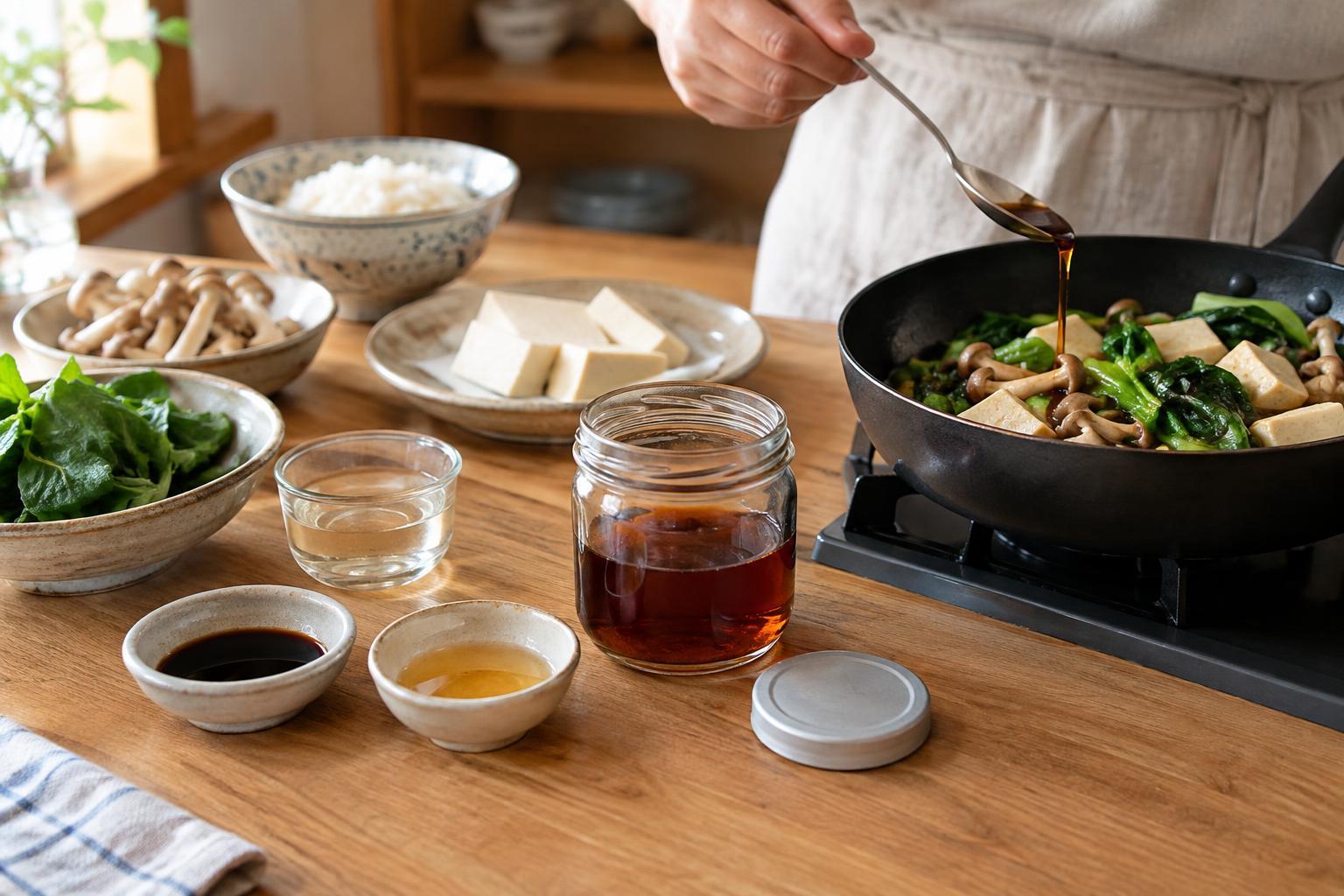
Not every simmered dish improves with an overnight rest. Delicate fish can become firmer or drier when reheated, even if its sauce tastes good. Silken tofu may lose its shape when moved between a storage container and a pan. Leafy greens and tender vegetables can turn dull and overly soft. For these dishes, making the broth or sauce ahead and cooking the delicate ingredient shortly before serving is often a better plan.
You can also separate ingredients within a make-ahead meal. Prepare a pot of oden in advance, then add a particularly delicate fish cake during the final warming. Or make nikujaga the night before and cook a quick green vegetable on the day you serve it. Advance preparation works best when it protects texture as well as saving time.
A simple make-ahead routine
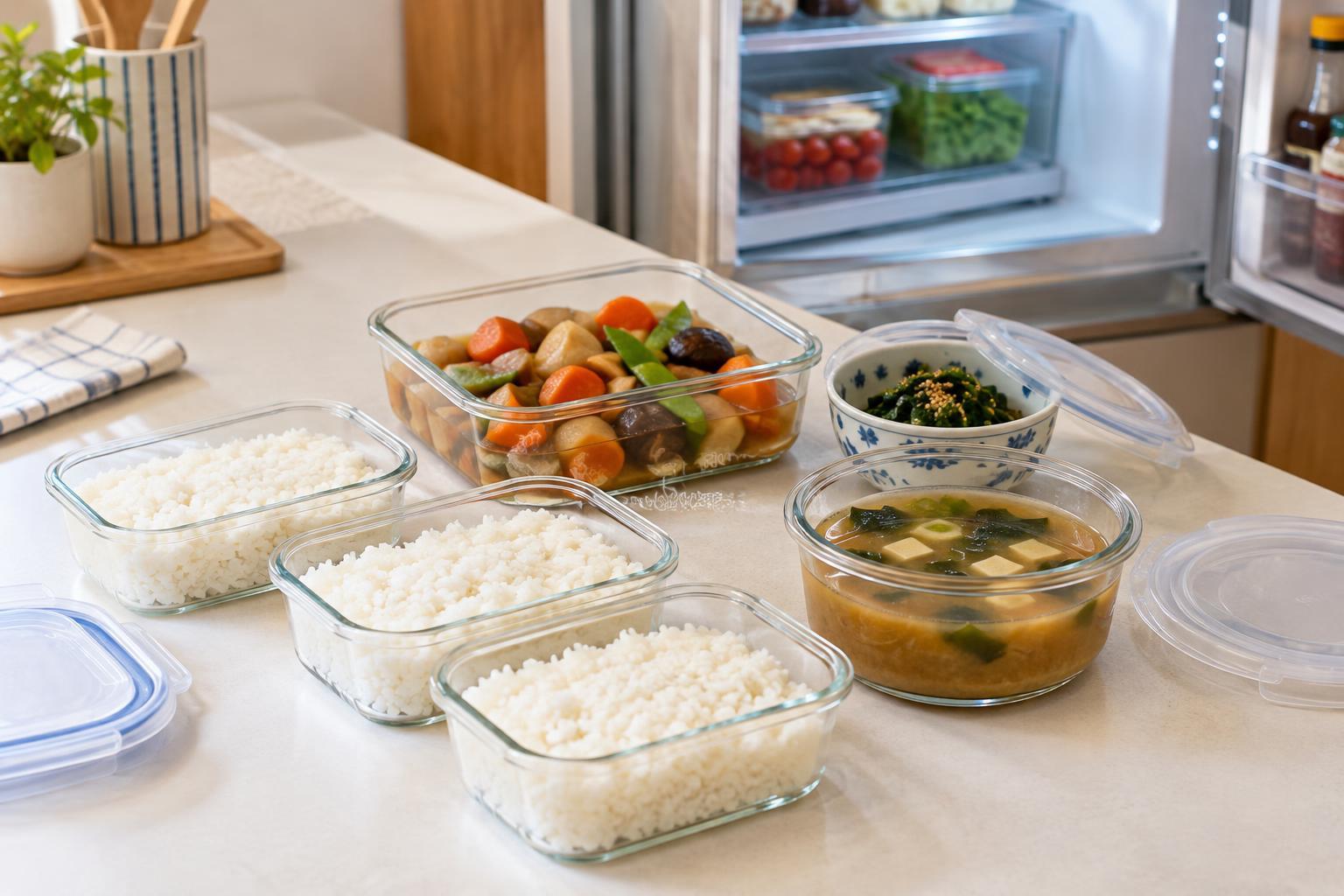
When a simmered dish is done, taste its liquid and adjust it modestly; the goal is a balanced broth, not an intensely seasoned one. Let the pot stop steaming heavily, then transfer the food to shallow containers so it cools promptly in the refrigerator. Keep the ingredients with enough cooking liquid to prevent exposed surfaces from drying out. Store leftovers chilled, and do not rely on smell alone to judge whether food is safe to eat.
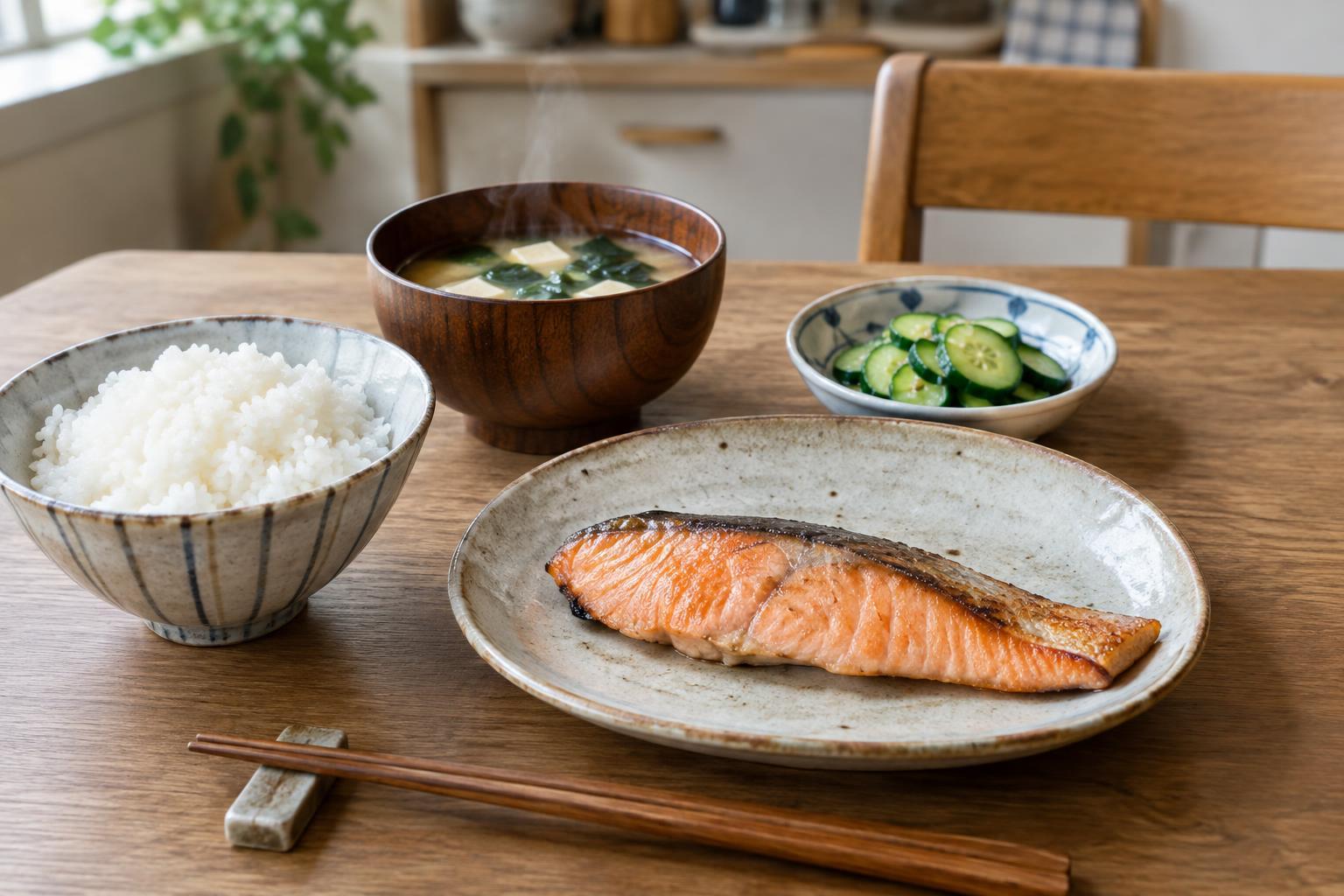
The next day, reheat only the portion you need until it is hot throughout. Use a low or moderate heat, especially for potatoes, squash and fish cakes, and move fragile pieces with a spoon rather than stirring vigorously. Taste again before adding more soy sauce or salt: the broth may seem different after resting. Served with freshly cooked rice and a crisp or lightly cooked side dish, a day-ahead nimono can feel like a meal prepared without a rush.