Prep components, not complete meals
Japanese home cooking often brings together a staple, a main dish and one or two small sides. You do not need to finish all of those dishes on prep day. A container of rice, a few washed vegetables and a versatile seasoning mixture can shorten the work on a busy evening while leaving room to decide what sounds good then.
Before starting, choose two or three meals that can share ingredients. For example, rice can become a bowl topped with tofu and vegetables or accompany a quick grilled fish. Cabbage can go into a stir-fry one night and a soup the next. Keep the plan small enough that you will use what you prepare while it is still fresh. This session works best as a head start, not a promise that every meal is already made.
The first 25 minutes: start rice and vegetables
Spend the first few minutes clearing counter space and setting out clean containers. Start the rice early, following your cooker or pot instructions; it can cook while you handle other tasks. If you do not expect to eat rice soon, make a smaller batch or plan to freeze portions rather than filling the refrigerator with more than you need.
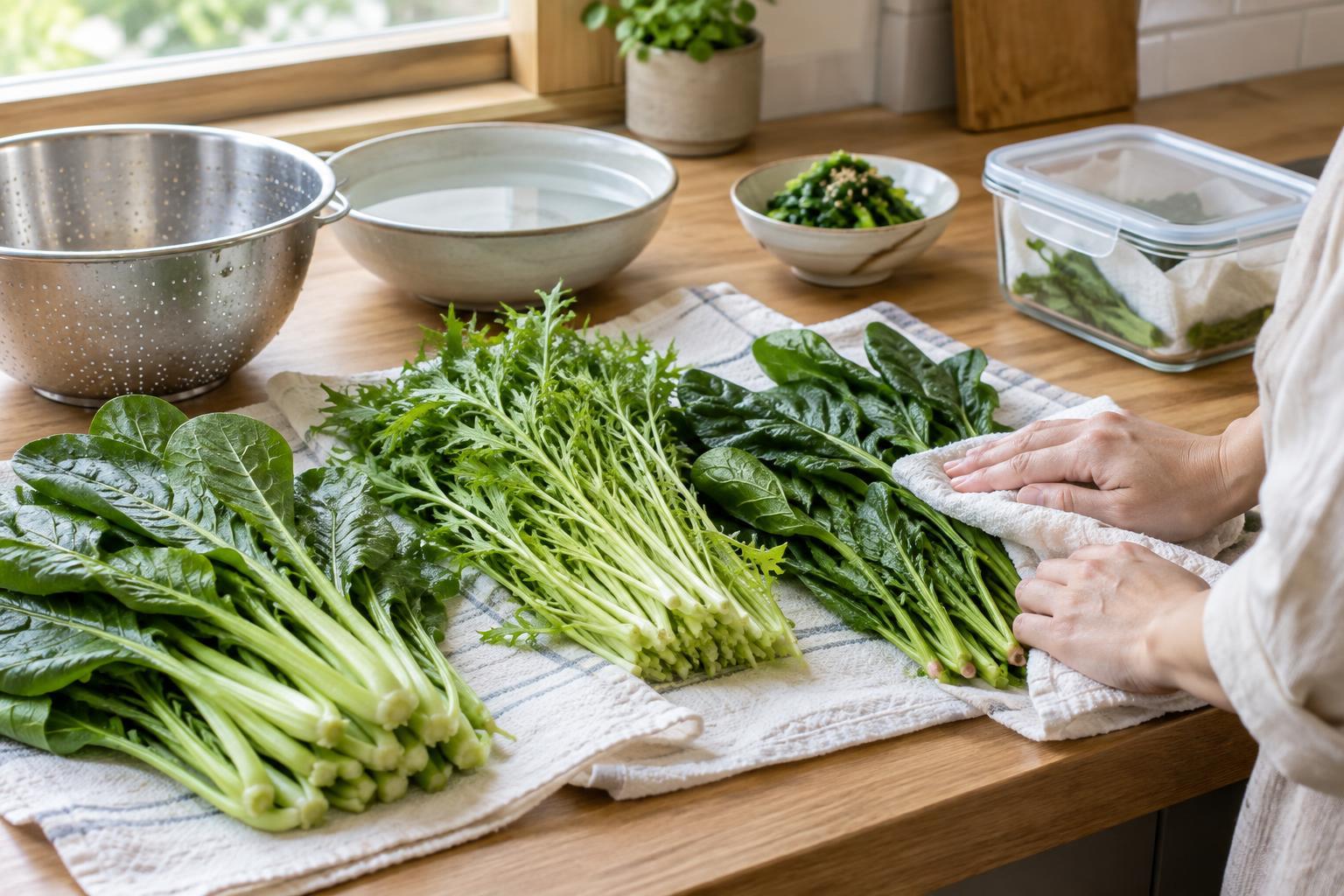
Next, wash vegetables and prepare only the cuts that will save you useful time. Slice a carrot for a quick sauté, cut cabbage for soup or stir-fry, and trim mushrooms so they are ready for the pan. Keep delicate ingredients, such as scallions or leafy greens, dry and loosely wrapped until you need them. If you prefer their texture freshly cut, simply wash them now and leave the chopping for dinner.
The next 25 minutes: make one seasoning and one side
For a flexible seasoning mixture, combine soy sauce, mirin and a little water in a clean jar. Use it as a starting point for a simmered vegetable dish or add a small amount to a hot pan with tofu or mushrooms. Adjust the balance when you cook: soy sauce brings saltiness, while mirin brings sweetness. Label the jar so it does not get mistaken for a ready-to-eat dressing; a mixture intended for cooking should be cooked as part of the finished dish.
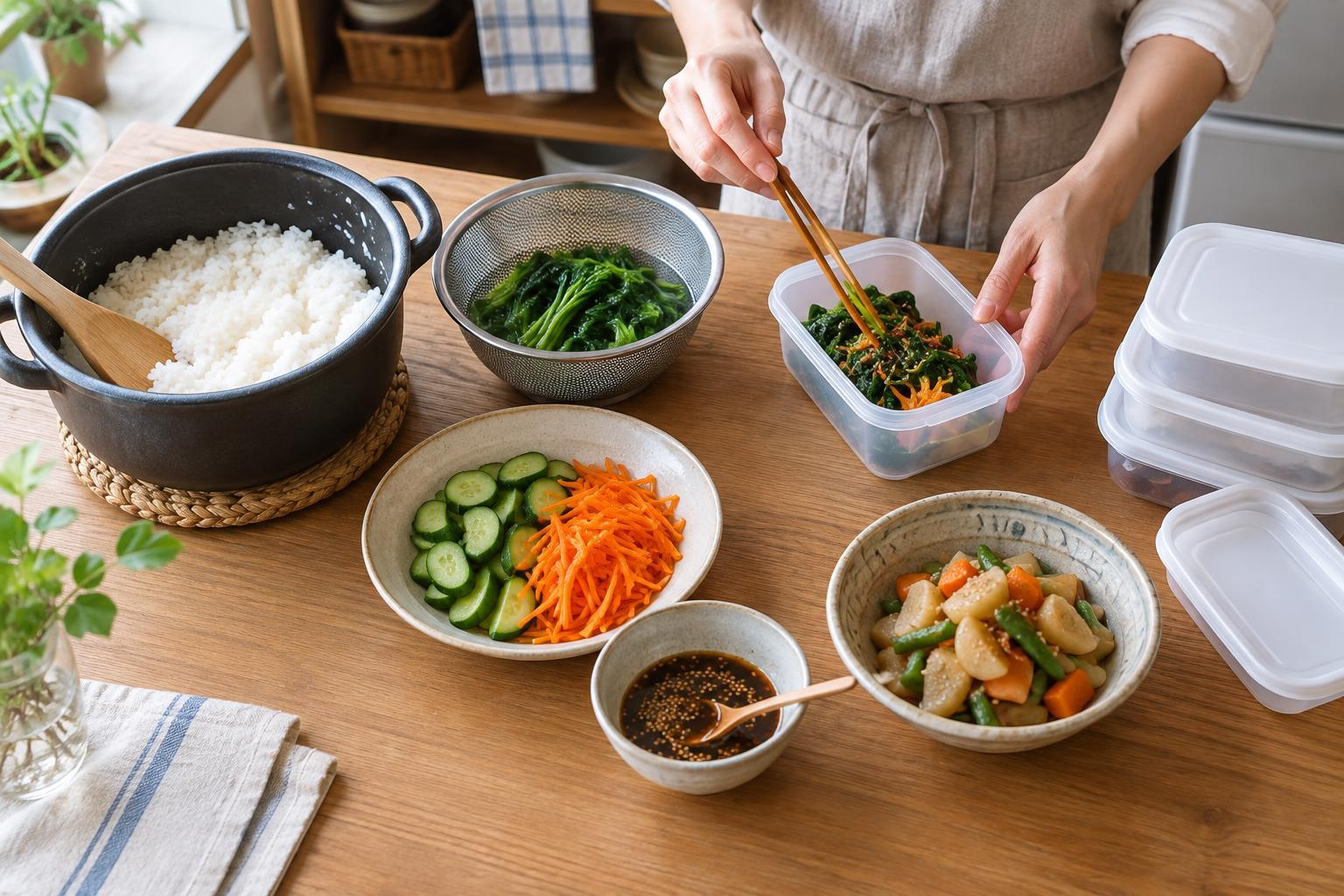
If time allows, make one simple side that tastes good chilled, such as briefly cooked spinach seasoned with soy sauce and sesame. Squeeze out excess water before storing it so the seasoning does not become diluted. Alternatively, skip the finished side and use this time to boil eggs for a rice bowl or noodle dish. Choose one extra task, not three: the value of the session is that it remains manageable.
The final 10 minutes: portion and put things away
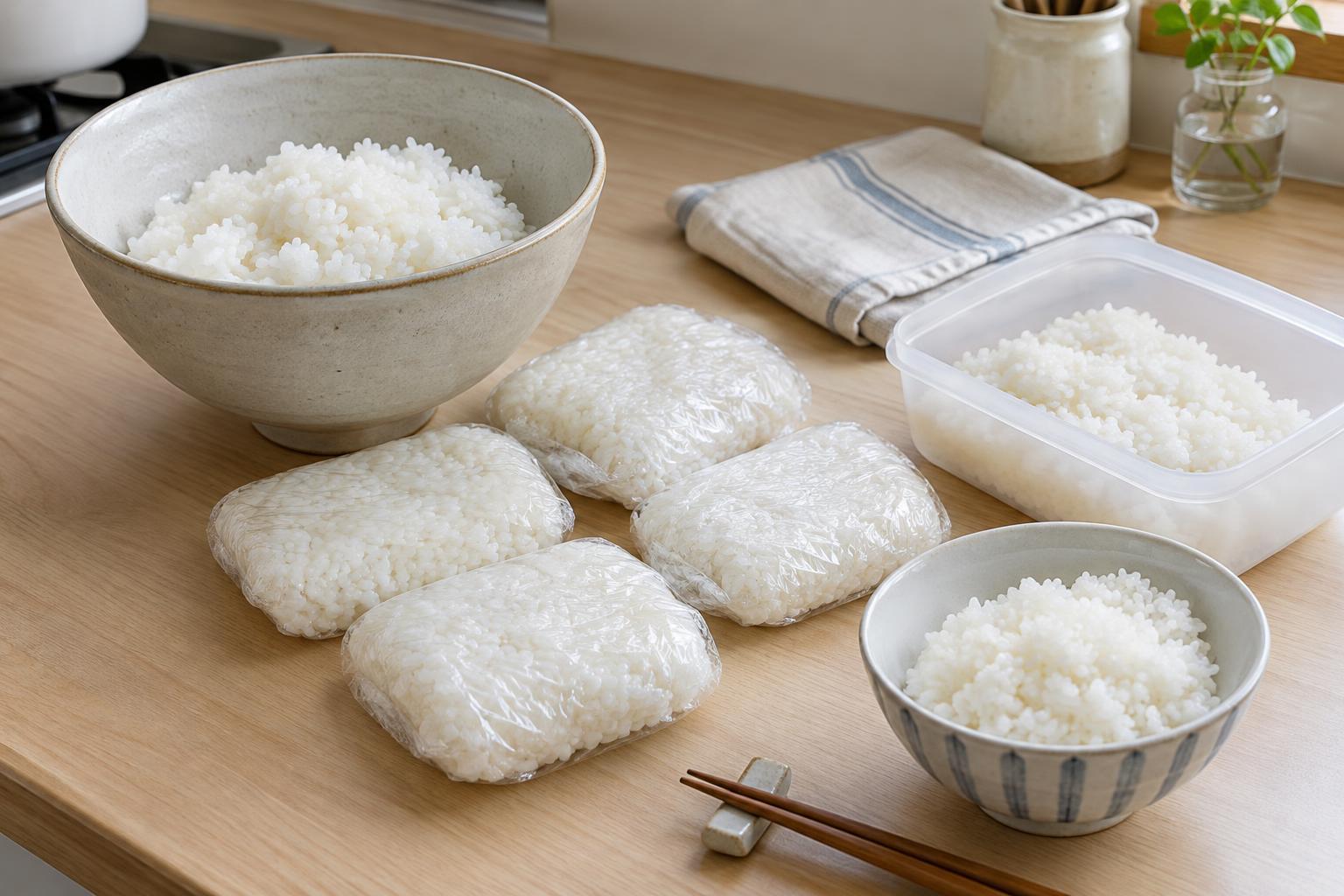
Divide cooked rice into meal-sized portions rather than leaving it in one large pot. Refrigerate it promptly in shallow containers, or freeze portions for later use. Put prepared vegetables and cooked sides into separate, covered containers, and refrigerate perishable foods promptly. Keep raw meat or fish separate from ready-to-eat ingredients if you have included either in your plan, and wash hands, boards and knives after handling them.
A quick label with the contents and preparation day makes the refrigerator easier to navigate. Do not feel obliged to finish every task before the hour is up: safe storage matters more than squeezing in another dish. You can wash the pan tomorrow; you cannot recover the time saved by prep if the ingredients are difficult to find or have been stored carelessly.
Turn the components into different dinners
On one night, warm rice and top it with pan-seared tofu and sautéed mushrooms, then add the prepared greens on the side. On another, simmer cabbage and carrot in broth, add noodles, and finish with an egg or another protein you have on hand. The same vegetables can also accompany a piece of fish or go into a quick fried-rice-style dish made with thoroughly reheated rice.
Treat the prepared ingredients as building blocks rather than a fixed menu. Add fresh toppings such as scallions just before serving, taste the seasoning as you cook, and use refrigerated items while they are in good condition. With a few decisions and repetitive tasks handled in advance, a home-cooked meal can still feel freshly made—even when the evening is short.