Why freeze rice in individual portions?
Freshly cooked Japanese short-grain rice is tender and gently sticky. Once it sits in the refrigerator, its starches firm up and the grains can taste dry, even if the rice is stored in a covered container. Freezing individual portions soon after cooking is a useful way to preserve more of that freshly cooked texture. It also makes a quick bowl of rice available without starting the rice cooker for every meal.
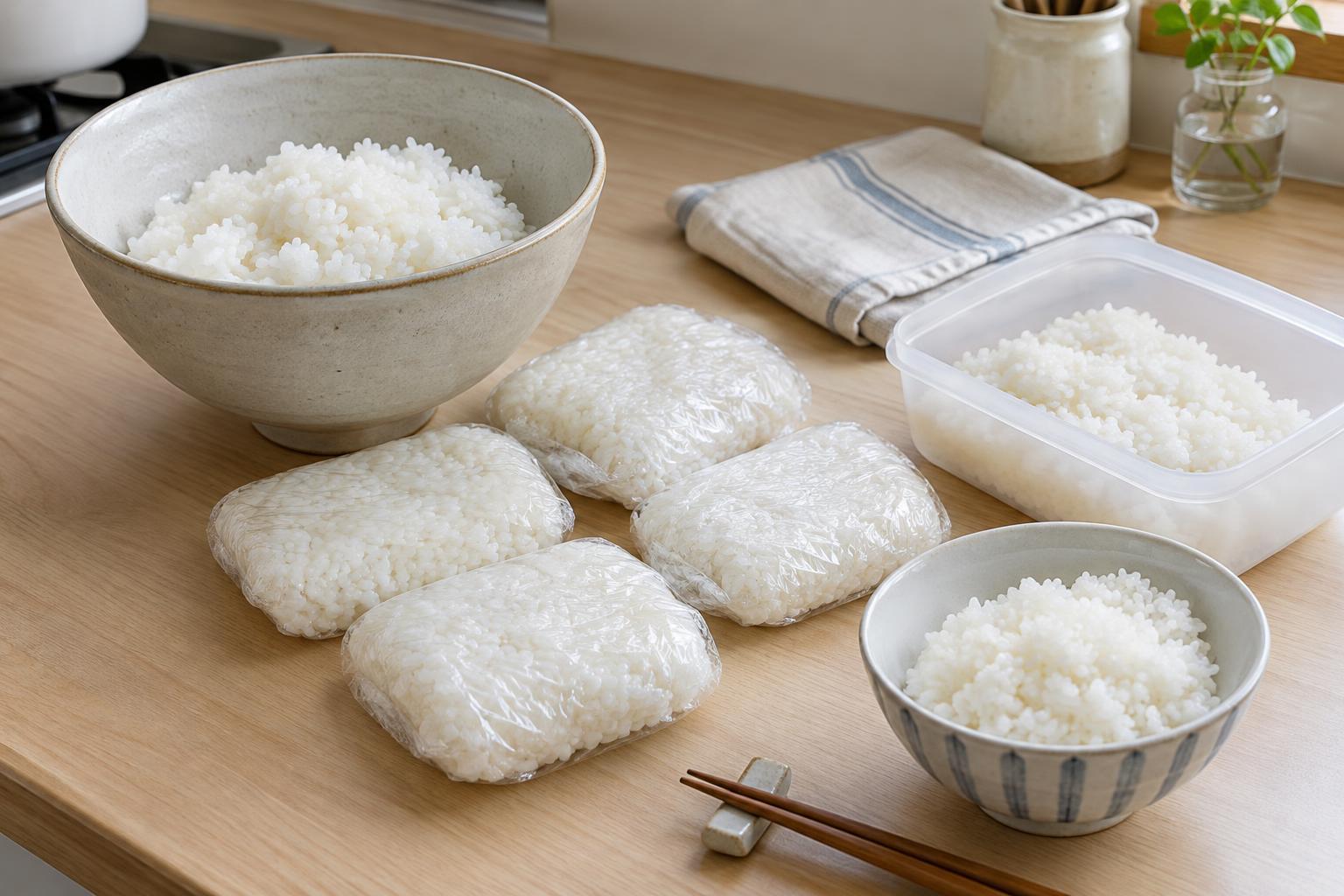
Decide what a portion means in your kitchen before packing the batch. A modest bowlful may suit breakfast or a side dish, while a larger portion may work better under curry or alongside several small dishes. Use the same bowl or measuring cup each time if consistency helps. You can also freeze a few smaller portions for adding to soup or making a quick meal for one.
Cool and pack the rice promptly
Start portioning when the rice has finished cooking and has been fluffed. Do not leave a pot of cooked rice at room temperature for hours while deciding what to do with it. Cooked rice should be cooled and stored promptly because bacteria associated with rice can grow when it spends too long at room temperature. Aim to get it into the freezer as soon as practical, and avoid leaving it out for more than two hours.
Spoon the rice into shallow, meal-sized portions rather than one thick block. A shallow shape cools and reheats more evenly. Pack each portion in a freezer-safe container or wrap it in a flat packet using material suitable for freezing. Keep the rice covered so it does not dry out, but let excess steam escape briefly before sealing a container tightly. If the rice is still very hot, spread the portions out while they cool; do not stack hot packets together.
Label each portion with its contents and the date. Plain rice is easiest to use in different meals, so consider freezing it separately from sauces or toppings. Keep the freezer at its usual freezing temperature, and use the rice within about a month for the best texture. Rice kept frozen longer may still be usable if stored properly, but it is more likely to dry out or pick up freezer odors.
Reheat from frozen for a soft texture
There is usually no need to thaw a portion first. For the microwave, transfer the frozen rice to a microwave-safe covered bowl, or use its container if the manufacturer says it is microwave-safe. Add a small splash of water if the surface looks dry. Cover loosely or leave a vent for steam, then heat until the rice is steaming hot throughout. Stir or turn the portion partway through if the center remains cold. Let it stand briefly before uncovering, taking care with the steam.
A covered pan or steamer also works. Put the frozen rice in a heatproof dish over simmering water, or place it in a pan with a little water and a tight-fitting lid. Heat gently until the center is fully hot, breaking up the portion as it softens. The added moisture helps revive the grains, but too much water can make them mushy.
Reheat only the amount you expect to eat, and avoid repeatedly cooling and reheating the same portion. If rice smells unusual or has been left at room temperature for an extended period, discard it rather than trying to make it safe by reheating.
Put a rice portion to work
A reheated portion can go straight into a rice bowl with cooked vegetables, an egg prepared to your liking, or leftover protein that has been stored and reheated appropriately. It can also accompany miso soup and simple side dishes for a familiar home-style meal. If the rice seems a little firm, serve it with something moist, such as curry or a simmered topping.
For fried rice, a somewhat drier portion can be useful: loosen the grains before they go into the pan and cook the dish until everything is thoroughly hot. For onigiri, freshly cooked rice is generally easier to shape than rice that has been frozen and reheated. Keeping several plain portions in the freezer lets you choose the meal later, without committing the whole batch to one recipe.