Choose a prep method for the greens you have
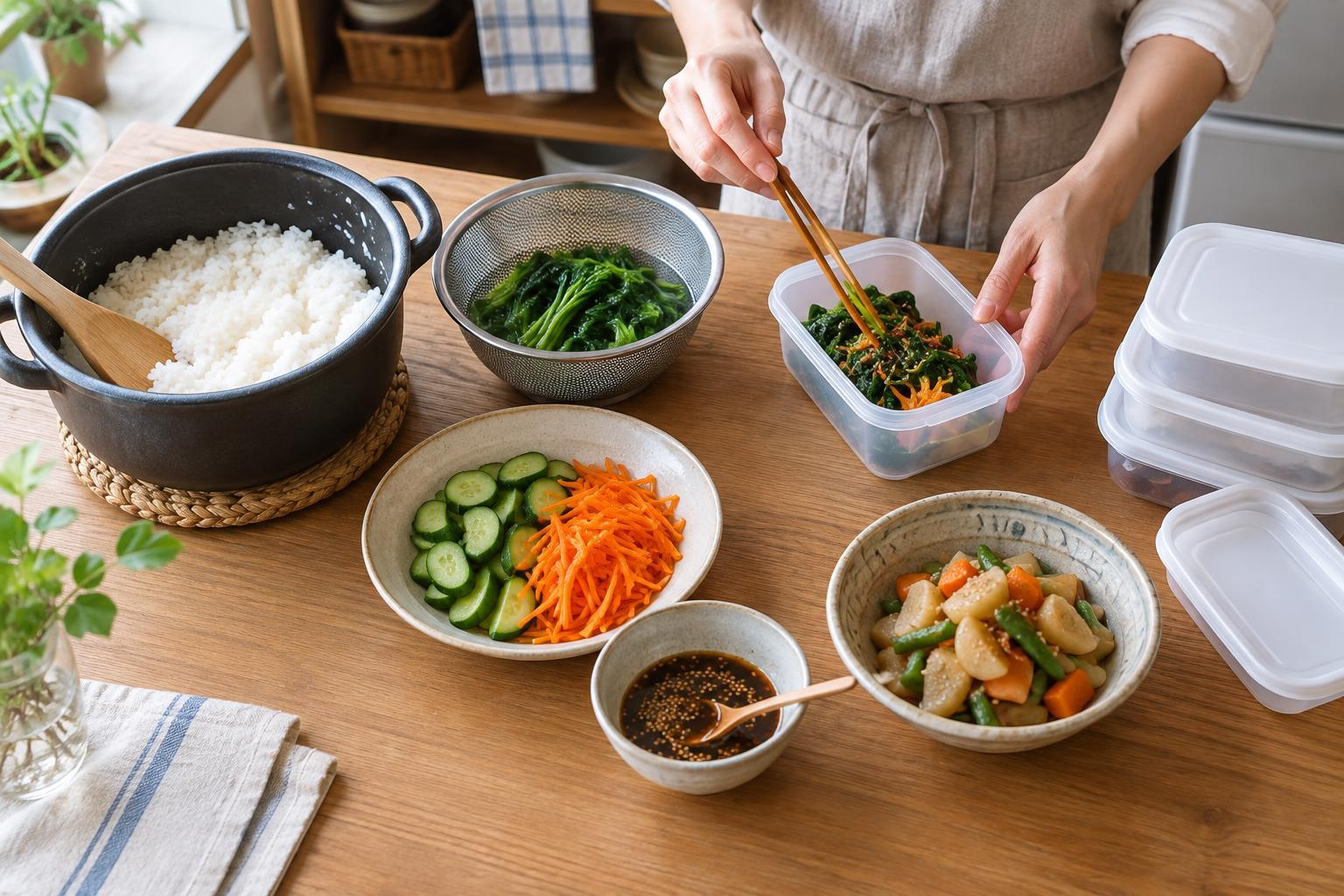
Washed greens can make the difference between cooking a side dish and skipping it. In Japanese home cooking, a small portion of vegetables often sits alongside rice, soup and a main dish. Keeping greens ready to use makes that portion easier to prepare, even when the rest of the meal is simple.
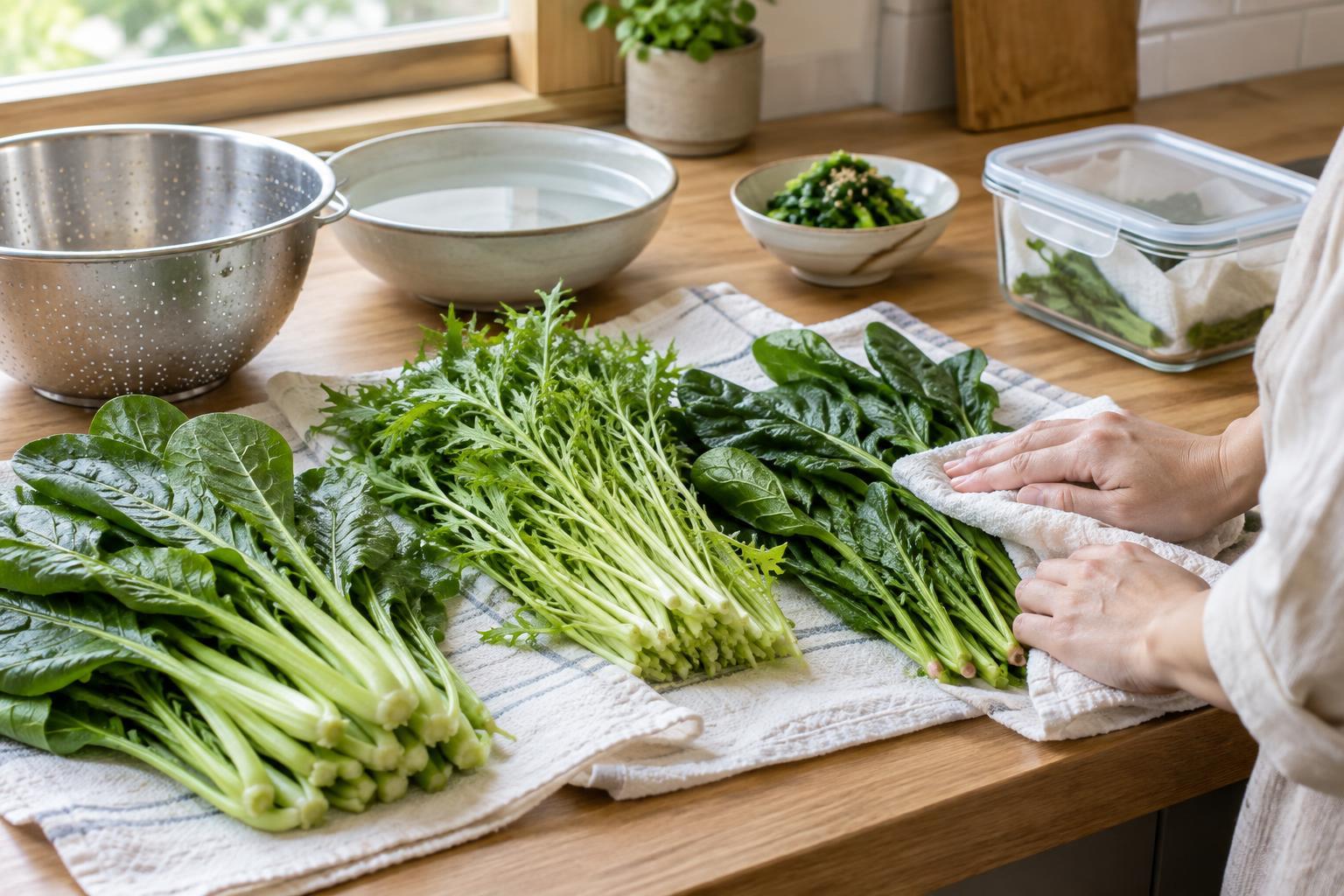
Choose your method according to the leaves. Mizuna has tender stems and leaves that can be used raw or briefly cooked. Komatsuna has sturdier stems and works well blanched or sautéed. Spinach is commonly blanched for Japanese-style dressed sides. Shungiku has a distinctive aroma and tender leaves that need gentle handling. Whatever the variety, remove wilted or damaged leaves before washing, and keep raw greens separate from raw meat and its juices.
Wash thoroughly without bruising
Start with clean hands, a clean sink or bowl, and cool running water. Cut off tough stem ends if needed, but leave enough of each bunch intact to handle it easily. Spread the stems apart under the water, paying particular attention to the base, where grit can hide. For sandy greens, swish them in a bowl of cool water, lift them out, and repeat with fresh water until no grit remains. Lifting the greens out matters: pouring the bowl out over them can put settled sand back on the leaves.
Handle delicate leaves lightly rather than rubbing them. Use water, not soap or produce detergent. If you plan to chop the greens, washing first helps keep loose bits of leaf from drifting around the bowl. After washing, shake off excess water over the sink before moving on to drying.
Dry well, then refrigerate
For greens you may eat raw or add to a hot pan, dryness is useful. A salad spinner removes water without pressing hard on the leaves; work in batches so they can move freely. Without a spinner, lay the greens on a clean kitchen towel, roll it loosely, and pat gently. Spread them out for a few minutes if they still feel wet. Clean paper towels also work.
Store the dried greens in a clean, covered container lined with a dry towel or paper towel. Avoid packing them tightly, and replace the lining if it becomes wet. Refrigerate promptly. If you are preparing greens well ahead rather than for an upcoming meal, leaving them unwashed until closer to use may help them stay in better condition. In either case, check for sliminess, off odors or deterioration before cooking, and discard greens that have spoiled.
Do the cooking prep that actually saves time
Washing ahead is enough for mizuna destined for a quick salad or for komatsuna going into a stir-fry. You can also separate thick stems from leaves after drying: start the stems in the pan first, then add the leaves once the stems begin to soften. Keep cut greens covered and chilled until you are ready to cook.
For a dressed side made with spinach or komatsuna, you can blanch the greens in boiling water, then cool them promptly in cold water. Drain and squeeze them gently in small handfuls. This step is especially important for a dressed dish: excess water dilutes the seasoning. Cut the squeezed greens into easy-to-eat lengths and refrigerate them in a covered container. Prepare only an amount you expect to use soon, and keep the dressing separate until serving so the flavor and texture stay balanced.
Turn the prepared greens into a side dish
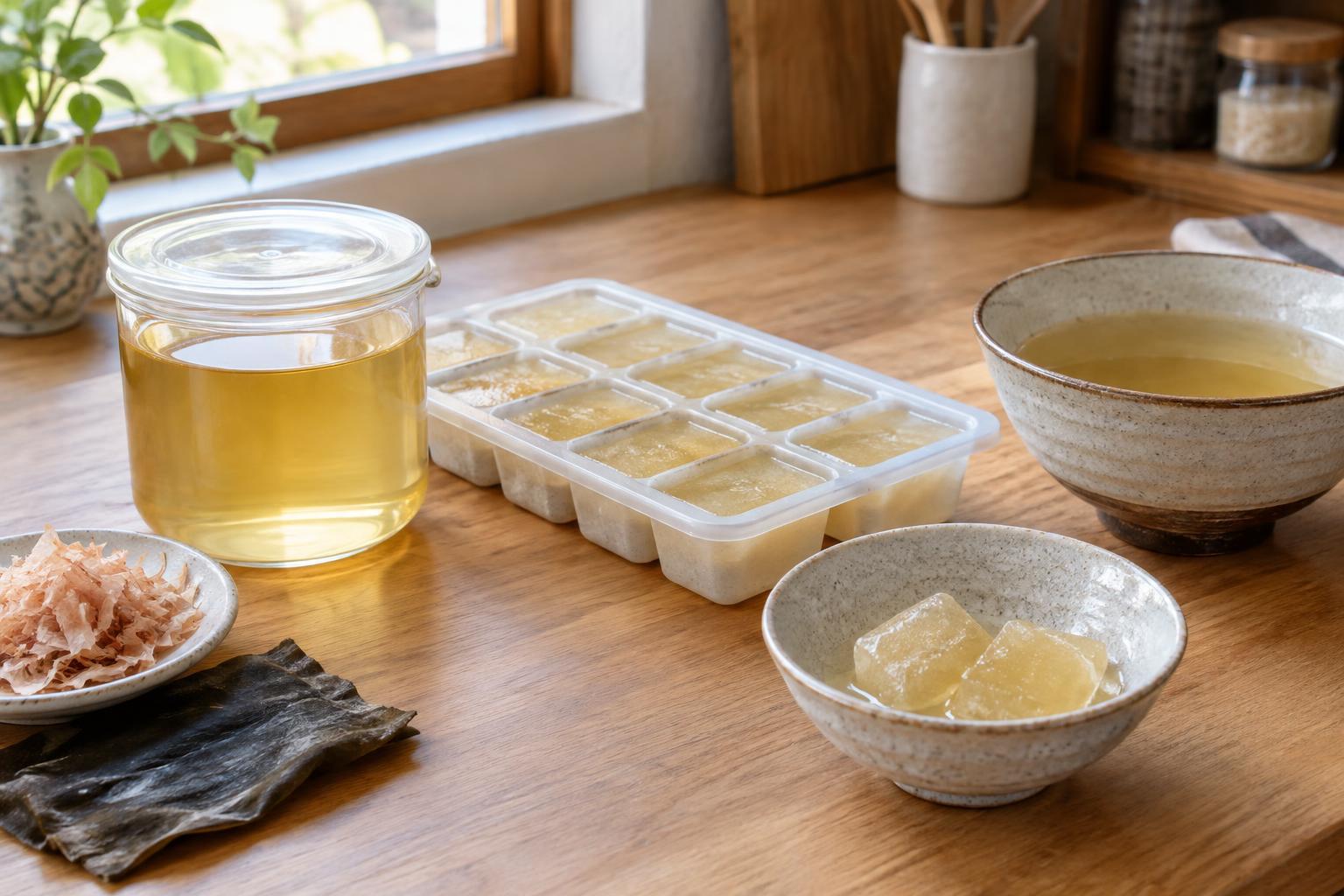
For a simple goma-ae, toss blanched, squeezed greens with ground toasted sesame seeds, a little soy sauce and a touch of sugar. Taste before adding more seasoning: the sesame should be noticeable, but the greens should still taste like themselves. For an ohitashi-style side, place blanched greens in a small bowl with a little dashi and soy sauce. If you have bonito flakes, add them just before serving. Mizuna can instead be tossed at the last minute with a light soy-based dressing.
For a warm side, sauté dry komatsuna stems in a little oil, add the leaves, and cook until tender. Finish with a small splash of soy sauce. The same prepared greens can go into miso soup near the end of cooking. These are flexible starting points, not recipes that demand exact quantities: once the washing and drying are done, you can choose the dish that fits the meal.