The difference starts with thickness
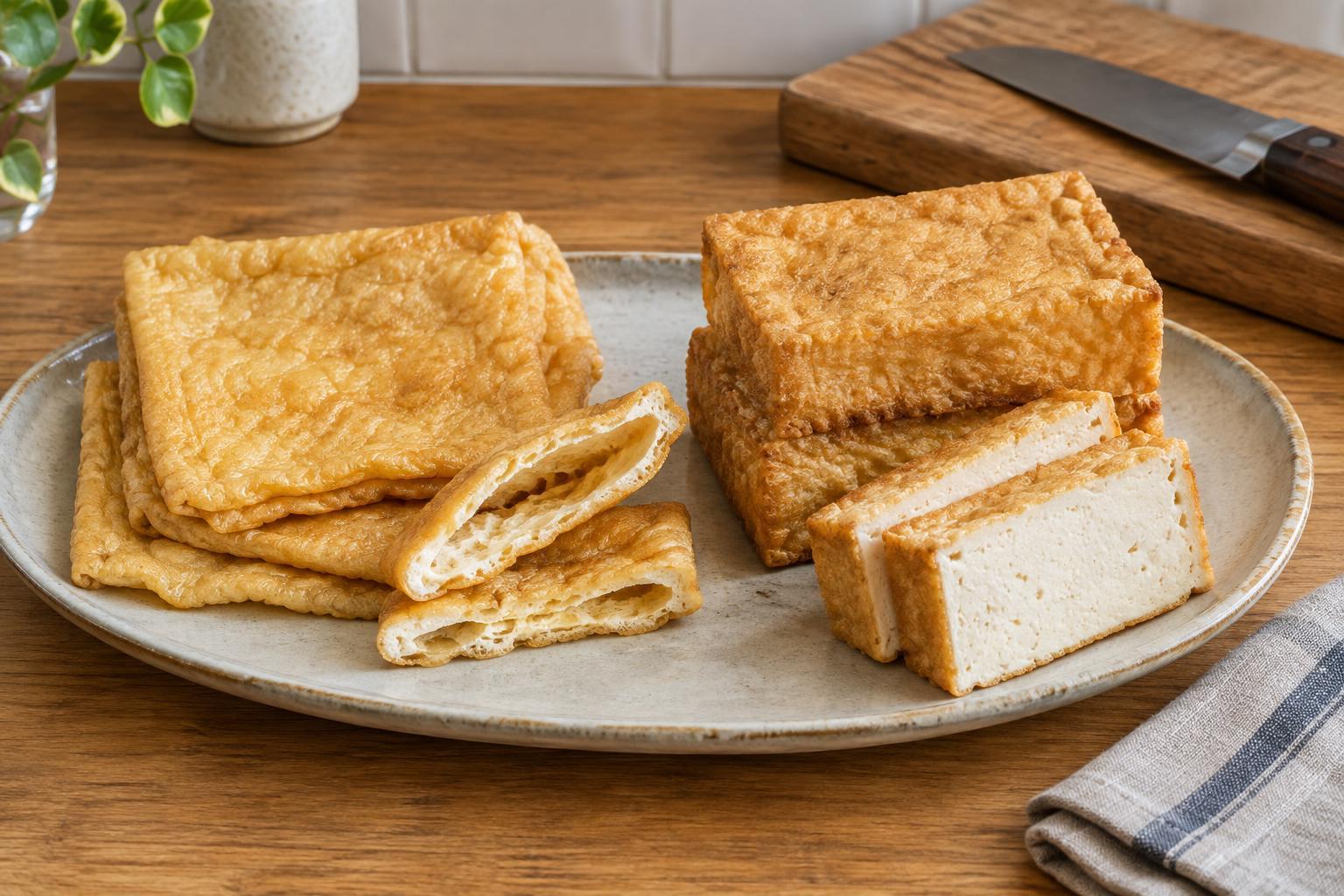
Aburaage and atsuage are both tofu that has been fried, but they are not two names for the same ingredient. Aburaage is thin and light, often sold as flat rectangular sheets. Frying gives it a flexible, slightly chewy texture, and some pieces can be opened into pockets. Atsuage is a thick block of fried tofu. Its outside is browned, while the center retains a tender tofu texture.
That distinction makes a useful shopping shortcut: choose aburaage when you want a thin ingredient that soaks up broth or can be tucked around a filling. Choose atsuage when you want substantial pieces that can stand alongside vegetables as the main part of a dish. Shapes and sizes vary by product, so the package and the tofu itself are better guides than a single expected measurement.
What aburaage brings to a meal
Aburaage is especially good at carrying flavor. Cut into strips, it adds small, savory bites to miso soup or simmered vegetables. Sliced into squares, it can be cooked with rice so its flavor spreads through the pot. In a gentle simmer, the sheets absorb some of the surrounding liquid while keeping a pleasant chew.
The pockets can also be filled. Inari sushi uses seasoned fried tofu pockets around sushi rice; the sweet-savory seasoning is part of that preparation, not a property of every plain package of aburaage. If you are shopping for a recipe, check whether it calls for plain sheets or pre-seasoned inari pockets. They are not automatically interchangeable, especially when the recipe supplies its own seasoning.
To prepare plain aburaage, you can leave it as sold or briefly rinse it with hot water and pat it dry. This step is sometimes used to remove surface oil and help a simmering liquid reach the tofu more readily. It is a choice rather than a requirement: skipping it may be convenient when you want a little of that richness in a soup or stir-fry.
What atsuage brings to a meal
Atsuage has more contrast in each bite. Its fried surface can take on sauce, while the thick, soft center remains distinctly tofu-like. Cut into cubes or slabs, it works well in simmered dishes, quick pan-cooked meals, and simple plates with a sauce or garnish. Because the pieces have some heft, atsuage is useful when tofu should feel like a central ingredient rather than a small accent.
For a straightforward preparation, pat the block dry, cut it into portions, and warm it in a pan until the surface is lightly crisp. Serve it with a modest amount of soy sauce and sliced scallions, or add the pieces to a vegetable simmer and give them time to heat through. A brief hot-water rinse is an option if the surface seems oily, but drying the tofu afterward helps it brown if you plan to pan-cook it.
Can you substitute one for the other?
Sometimes, but expect the dish to change. In a soup or simmer, strips of aburaage disperse throughout the bowl and take on broth quickly. Cubes of atsuage make fewer, larger bites with a soft center. If either will suit your meal, use what you have and adjust the cut: slice atsuage smaller for a soup, or cut aburaage into wider pieces when you want it to be more noticeable.
Other substitutions are less convincing. A thick block of atsuage cannot replace an aburaage pocket for stuffing, and thin aburaage will not provide the substantial center of a grilled atsuage dish. Seasoning matters too. Taste the cooking liquid before adding extra salt or soy sauce if you have substituted pre-seasoned pockets for plain tofu.
Buying and keeping fried tofu
Look for both ingredients in the refrigerated tofu section of a Japanese or broader Asian grocery store; packaging and product names may vary. Identify aburaage by its thin sheets and atsuage by its thick blocks. Check whether an aburaage product is plain or seasoned, and follow the storage and preparation guidance on its package.
Keep refrigerated products chilled and use opened packages promptly according to their instructions. Freezing may be possible, but it can change the texture, especially the tender center of atsuage. If you are new to both ingredients, try plain aburaage in a familiar soup and pan-warmed atsuage as a side dish. Those simple preparations make their different textures easy to appreciate.