Start with the form, not just the name
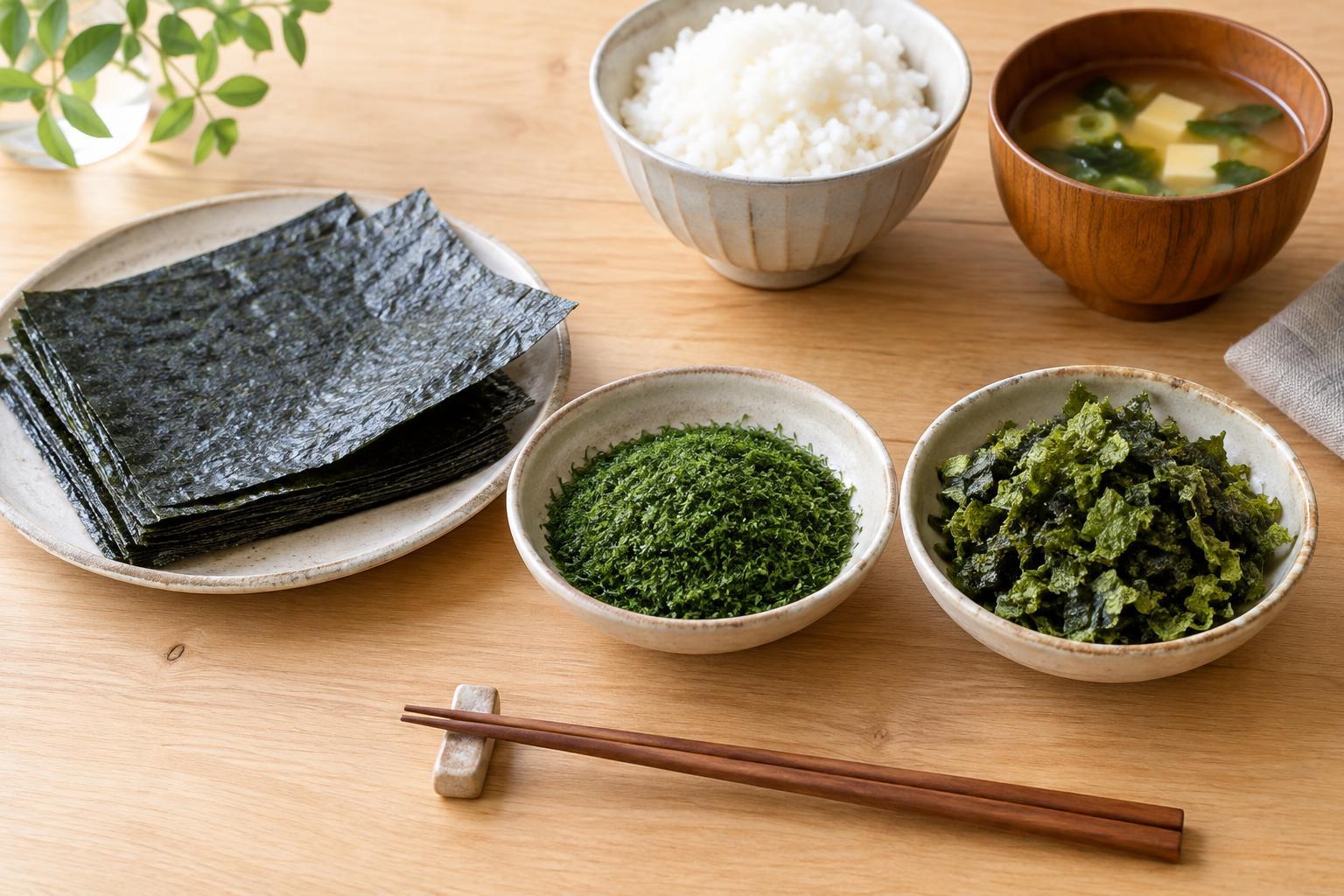
The seaweed shelf can be confusing because packages show several names, shapes, and shades of green. For everyday cooking, the quickest way to choose is to ask what you want the seaweed to do. Do you need a sheet that can wrap rice? A fine sprinkle for a savory topping? Or tender pieces that will sit in a bowl of soup? Those questions usually lead you to nori, aonori, and aosa, respectively.
These names do not describe three interchangeable products. Nori is commonly made from red algae and processed into thin sheets. Aonori and aosa are green seaweeds, often sold dried in loose form. Naming and labeling can vary by producer and region, and some packages use broad terms for mixed or processed products. If a recipe depends on a particular texture, check what is inside the package as well as the name on its front.
Nori: the sheet for wrapping and crisp finishing
Nori is the familiar dark sheet used around onigiri and sushi rolls. You may see yaki nori, which is toasted and ready to eat, or ajitsuke nori, which is seasoned. Plain toasted nori is a flexible choice when you want to control the salt and seasoning yourself. A sheet should feel dry and crisp when you open a fresh package; damp nori bends rather than snapping.
Use whole or cut sheets when structure matters. A strip of nori can wrap an onigiri so it is easier to hold, while smaller pieces can accompany rice at breakfast. For a quick topping, cut a plain sheet into thin strips and scatter them over noodles or a rice bowl just before serving. Packages of pre-cut strips may be labeled kizami nori. Add nori at the end if you want it crisp; in hot liquid, it will soften quickly.
Aonori: a fine, fragrant sprinkle
Aonori is often sold as fine green flakes or powder. Its small pieces cling to food, making it useful when you want seaweed flavor in nearly every bite rather than a distinct wrapper or garnish. It is a familiar finishing touch for dishes such as okonomiyaki and yakisoba, and it works just as well on simple home-cooked potatoes, eggs, or buttered corn.
A little can be enough to change a dish, so start with a light sprinkle and taste before adding more. Put it on after cooking, especially when the food is hot: that warmth helps bring out its aroma without burying the flakes in a long simmer. If the package contains a blend rather than pure aonori, its flavor and color may differ. Read the ingredient list when you are trying to match a recipe closely.
Aosa: loose pieces for soups and soft textures
Aosa is commonly sold as dried, loose pieces. Depending on the product, the pieces may look like small flakes or larger, airy fragments. Compared with a fine aonori sprinkle, aosa is often chosen when you want seaweed you can notice in the spoonful. It softens in liquid, making it an approachable addition to miso soup or a clear broth.
Follow any preparation directions on the package. Some dried aosa can be added directly to hot soup near the end of cooking; other products may call for a brief rinse or soak. Either way, use a modest amount at first, because dried pieces expand as they absorb water. Taste the broth before adding extra salt or miso, particularly if the seaweed product contains added seasoning.
How to choose, substitute, and store
At the shop, match the package to the job. Choose plain nori sheets for wrapping, aonori for an even green dusting, and aosa when you want soft pieces in soup. If you can buy only one, nori sheets are particularly versatile: they can remain whole or be cut into strips. They will not, however, behave like fine aonori on okonomiyaki or like loose aosa in broth.
Substitution works best when texture is not the point of the dish. Torn nori can add seaweed flavor to soup, though it will look and feel different from aosa. Aosa may make a pleasant topping if crumbled finely, but it may not distribute as evenly as aonori. When substituting, add a small amount, taste, and adjust rather than measuring one product against another by volume.
Moisture is the enemy of all three dried products. Close the package promptly, keep it in an airtight container if the original seal is unreliable, and use a dry spoon or clean hands. Store it away from steam and strong-smelling foods. For the clearest flavor and best texture, add crisp nori and aromatic aonori just before eating, while letting aosa soften only as much as your dish requires.