One ingredient, two familiar shapes
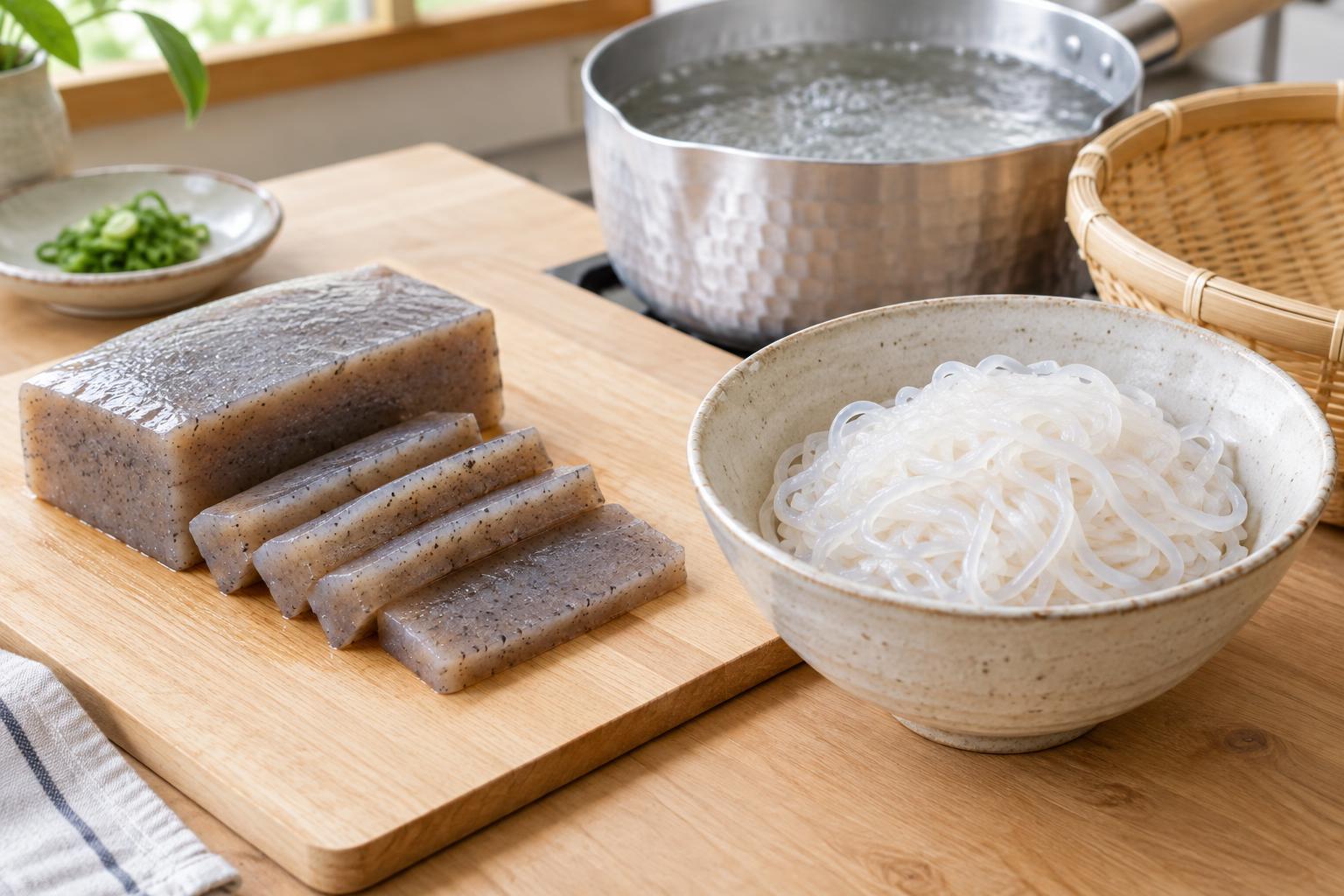
Konnyaku is a firm, springy food made from the corm of the konjac plant. The corm is processed into a mixture that sets into a gel. In Japanese grocery stores, konnyaku is commonly sold as a block, while shirataki is made into thin strands. You may also see shirataki labeled “konnyaku noodles.” Both have a mild flavor and are valued largely for their chewy texture and their ability to take on the character of a dish.
Blocks may be gray and speckled or pale and nearly translucent. The speckles often come from added seaweed. Shirataki can likewise be white or gray. Color alone does not tell you how to cook either product, so check the package for preparation and storage directions. You may also encounter a softer product labeled tofu shirataki, which contains tofu and can behave a little differently from traditional shirataki.
What to expect when you open the package
Konnyaku and shirataki are often packed in liquid. When you open the bag, you may notice a distinctive smell. That does not necessarily mean the food is spoiled; rinsing and a brief boil usually make it less noticeable. Drain the packing liquid, rinse the konnyaku or shirataki well under cool water, and follow any cooking directions on the label. If the package is damaged or the contents seem unusual in a way rinsing does not resolve, do not use them.
Neither product cooks like a wheat noodle or a potato. Shirataki strands stay slippery and pleasantly resilient rather than turning soft and starchy. A konnyaku block holds its shape through simmering and offers a firm bite. Those qualities make both useful in dishes where broth and other ingredients provide most of the flavor.
How to prepare a konnyaku block
After rinsing the block, cut or tear it into pieces suited to your dish. Slices are easy to arrange in a simmered meal, while bite-size pieces can be stirred among vegetables and other ingredients. Tearing pieces by hand creates uneven surfaces that can catch a little more seasoning. For a simple decorative cut, make a short slit in the center of a thin slice and pull one end through it to form a twist.
Blanch the pieces in boiling water for a few minutes, then drain. This step helps tame the packaged smell. For a dish with a concentrated sauce, you can briefly heat the drained pieces in a dry pan before adding liquid; this removes some surface moisture. Konnyaku will not soak up broth like a sponge, but simmering it with seasoned ingredients gives its surface time to pick up flavor. Try it in oden, where it shares a light broth with other ingredients, or in a vegetable simmer seasoned with soy sauce.
How to prepare shirataki
Drain and rinse shirataki thoroughly. Some packages say the strands are ready to eat after rinsing; others recommend boiling. A brief blanch is a useful default when the label allows it, especially if the packing liquid has a strong smell. Drain well afterward. If the strands are long, snip them into shorter lengths with kitchen scissors so they are easier to serve and eat.
For a stir-fried or lightly sauced dish, place the drained shirataki in a dry pan over medium heat and turn the strands until excess surface water has cooked away. Then add your seasonings and other ingredients. This prevents leftover packing water from diluting the sauce. For a brothy dish, add the prepared strands directly to the pot and let them warm through with the other ingredients. Shirataki works well in sukiyaki-style meals and simple vegetable-and-broth preparations, where its texture offers a contrast to tender greens.
Choosing, serving, and storing them
Choose a block when you want substantial, individual pieces in a simmered dish; choose shirataki when you want strands that mingle with vegetables or sit alongside other ingredients in a hot pot. Their mildness is an advantage, but it also means they benefit from a well-seasoned broth or sauce. Taste the finished dish rather than relying on the konnyaku or shirataki to bring flavor of its own.
Konnyaku has a notably firm, bouncy texture, so cut blocks into manageable pieces and chew them well. After opening a package, follow its storage instructions and use the contents promptly. If you are new to either ingredient, start with a small portion in a familiar simmered dish. A good rinse, an optional blanch, and enough time with flavorful companions will show you what these everyday Japanese ingredients do best.