Choosing white or black sesame
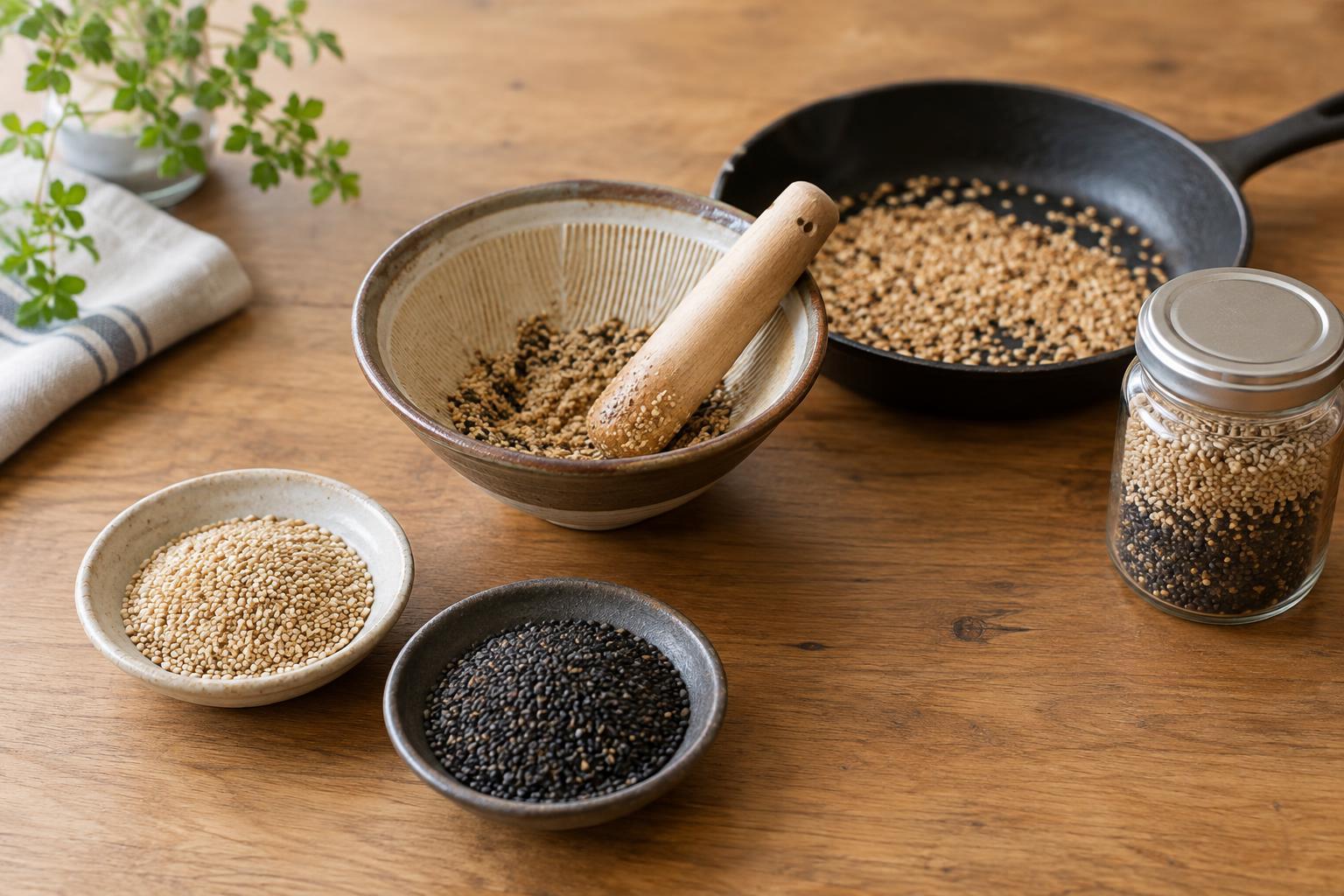
Sesame seeds appear throughout Japanese home cooking, from a final sprinkle over rice to the ground-seed dressing on a vegetable side dish. White sesame is a versatile choice when you want a gentle, nutty flavor. Black sesame gives a dish a darker, more noticeable finish and can taste more robust. The difference is not absolute: freshness, variety, and whether the seeds have been toasted can affect their flavor as much as color does.
Packages may contain raw or pre-toasted seeds. In Japanese food shops, you may see irigoma for toasted sesame and surigoma for ground sesame. Those terms tell you how the seeds have been prepared, not whether they are white or black. Some sesame seeds are hulled and others retain their outer layer, so color alone does not tell you everything about their texture. If you are following a recipe, check the package rather than assuming all sesame seeds will behave alike.
Toast gently for a fresher aroma
Toasting helps bring out sesame’s aroma. If your seeds are already toasted, taste a few before heating them again; they may be ready to use. For raw seeds, put a thin, even layer in a dry skillet over low to medium-low heat. Shake the pan or stir often so the seeds heat evenly. Work in small batches, which are easier to watch and remove promptly.
Use your senses rather than a strict timer. The seeds may begin to smell nutty and make faint popping sounds. White sesame may turn a little more golden; that color cue is less useful with black sesame. As soon as the aroma is noticeable, pour the seeds onto a cool plate. Leaving them in the hot pan can continue the toasting and make them bitter. Keep the heat modest: sesame is small and can go from fragrant to scorched quickly.
Grind only as much as you need
Whole seeds add a delicate crunch, but grinding releases more of their flavor and helps them mingle with other ingredients. A suribachi, the ridged Japanese mortar, makes it easy to prepare a small amount: move the pestle around the ridges until the seeds are partly crushed and aromatic. An ordinary mortar and pestle works too. For larger amounts, a clean spice grinder can help, though short pulses give you more control than a long run.
The best texture depends on the dish. For a vegetable dressing, try grinding most of the seeds while leaving a few partly whole for texture. Mix the ground sesame with seasonings before adding cooked, well-drained greens or other vegetables; excess water can dilute the dressing. For a garnish, a quick, coarse crush may be enough. If you keep grinding, the seeds can start to clump as their oils are released. That can be useful for a thicker sauce, but it is less convenient when you want a light, even sprinkle.
Make sesame useful across everyday meals
A small jar of sesame can serve several purposes. Scatter whole toasted seeds over rice, noodles, or a simple vegetable dish just before serving. Add coarsely ground sesame to a dipping sauce for extra body, or combine it with soy sauce and a little sweetness to dress cooked greens. White and black seeds can be used separately or together; a mixture offers visual contrast without requiring a different technique.
Start with a modest amount and adjust to taste. Ground sesame can become the main flavor of a dressing, while whole seeds used sparingly may provide mostly texture. Because sesame is an allergen for some people, check with anyone you are cooking for before adding it, especially when it is ground into a sauce and may not be obvious.
Store seeds away from heat and moisture
Sesame contains oils that can develop stale or unpleasant flavors over time. Keep whole seeds in a tightly closed container in a cool, dark cupboard, away from the stove. If your kitchen is warm or you buy a large package, refrigeration can be a useful option. Protect the container from moisture and let chilled seeds come to room temperature before opening it if condensation is a concern.
Ground sesame exposes more of the seed to air, so it is especially worth making in small batches. Store any extra in a sealed container in the refrigerator and use it while its aroma is still appealing. Before using sesame that has been sitting for a while, smell and taste a little. Seeds with a harsh, paint-like, or otherwise off flavor will not improve in a finished dish. Buying an amount you can use regularly is often the simplest way to keep sesame at its best.