What’s the difference?
Wakame is a tender seaweed used in Japanese home cooking, often in miso soup, salads and small vegetable dishes. At the store, you are likely to encounter it in two forms: dried wakame and salted wakame. Both need attention before they go into a dish, but not the same kind.
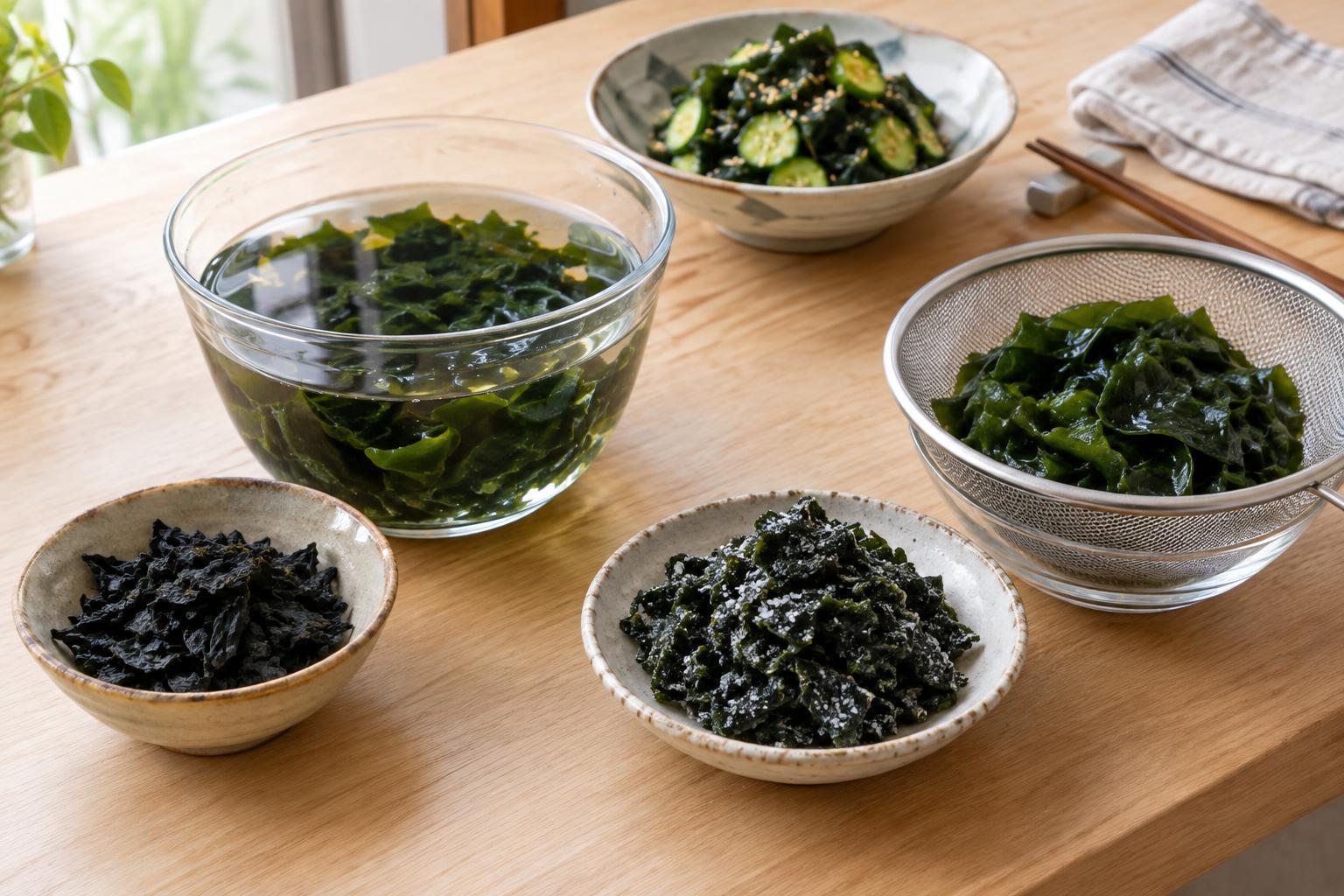
Dried wakame has had much of its moisture removed. It is light, compact and often sold as small cut pieces. Salted wakame retains more moisture and is packed with salt for preservation; it may be sold in larger pieces. Check the package for storage and preparation directions, especially if its instructions differ from the general steps below.
The most useful distinction at home is simple: dried wakame needs water to expand, while salted wakame needs its excess salt washed away. Either type can become overly soft if left soaking long after it is ready.
How to prepare dried wakame
Put a small amount of dried wakame in a bowl and cover it generously with cool water. It expands considerably, so start with less than you think you need. Let it stand until the pieces are fully opened and tender, typically a few minutes for small cut wakame. Larger pieces may take longer; use the package directions and the texture as your guide.
Lift the wakame from the water and drain it well. A gentle squeeze helps keep a salad dressing from becoming watery. If the pieces are large, cut them into bite-size lengths after rehydrating. Rehydrating separately also makes it easier to see how much wakame you have before adding it to a dish.
For a soup, some packages of small cut wakame suggest adding it directly to the pot. If you do this, add a modest amount near the end of cooking and allow room for it to expand. Preparing it in a separate bowl gives you more control over the portion and prevents the wakame from sitting in hot soup for too long.
How to prepare salted wakame
First, shake or brush off any loose salt, then rinse the wakame under cool running water. Place it in a bowl of fresh cool water and soak it briefly until it relaxes and tastes pleasantly seasoned rather than distinctly salty. The time needed varies with the thickness of the pieces and how heavily they are salted. If it still tastes too salty, change the water and soak it a little longer.
Drain and gently squeeze out the excess water. Cut away any unusually tough sections if needed, then slice the wakame to suit the dish. Larger salted pieces are handy when you want visible, ribbon-like pieces in a salad or dressed side dish.
Taste before seasoning the finished dish. Even after rinsing, salted wakame may contribute some salt, so you may need less soy sauce or other salty seasoning than you would use with dried wakame.
Choosing a type for your meal
Dried cut wakame is convenient when you use a little at a time. Its compact form is easy to keep on hand for miso soup or a quick cucumber salad. Measure sparingly until you know how much your preferred brand expands.
Salted wakame can be a good choice when texture and shape matter, particularly in a simple side dish where the seaweed is easy to see and taste. Its larger pieces may require more trimming, and rinsing takes an extra step. Neither form is automatically better: the cut, thickness and preparation can matter as much as whether it was dried or salted.
For either type, aim for a tender bite that still has some body. Add prepared wakame to hot soup near the end, just long enough to warm it through. For a cold dish, drain it thoroughly before tossing it with cucumber, a light dressing or other ingredients.
Storage and a simple kitchen routine
Keep unopened and opened wakame according to its package directions. Dried wakame generally benefits from a tightly closed container away from moisture. Salted wakame may have different storage needs, so do not assume it belongs in the same cupboard as the dried kind.
The easiest routine is to prepare only what you plan to use: soak dried wakame until expanded, or rinse and briefly soak salted wakame until the salt level suits your dish. Drain, cut if necessary, and add it near serving time. Those few steps make wakame easy to fit into everyday cooking without letting it turn limp or overwhelm a meal.