What makes chawanmushi smooth
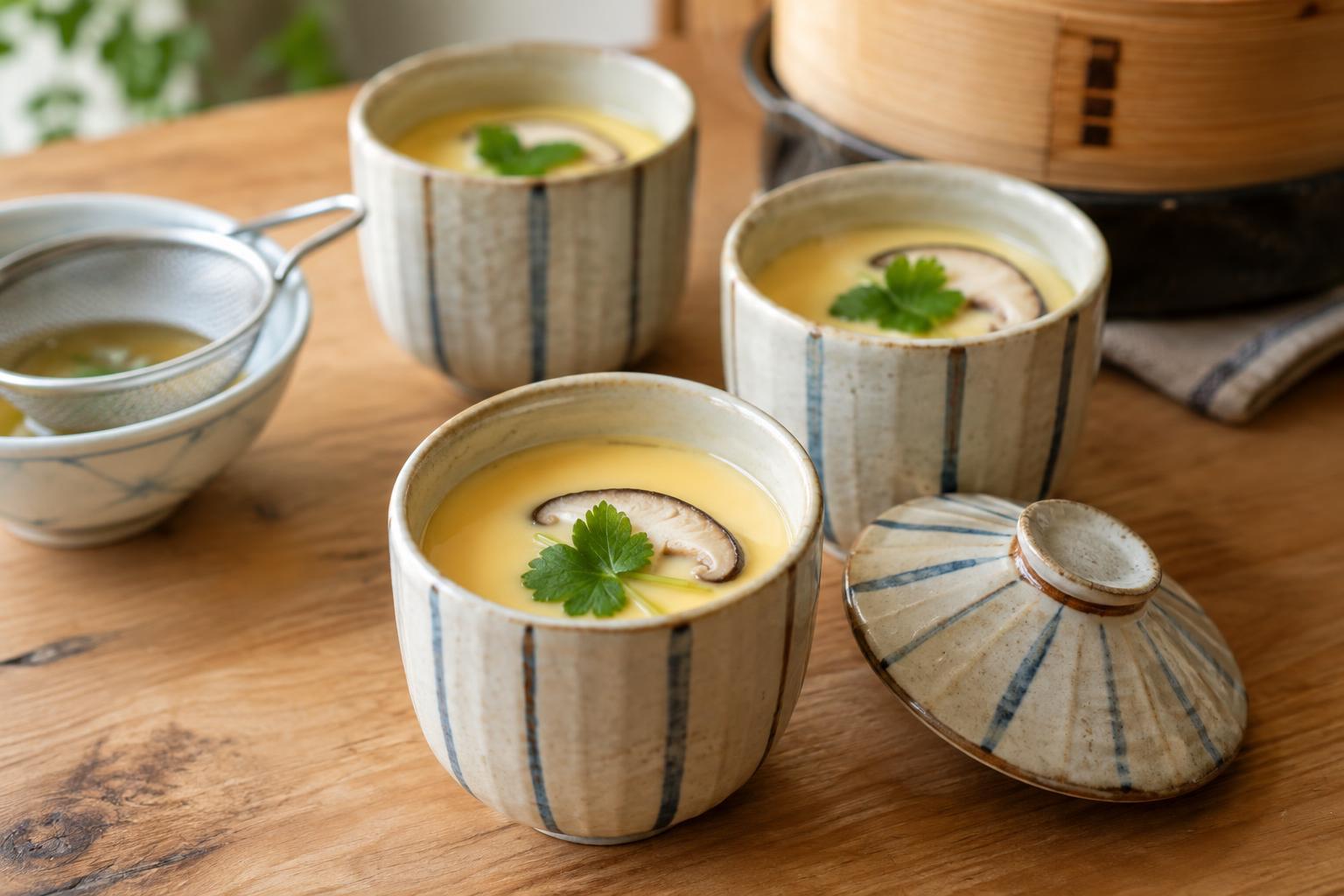
Chawanmushi is a savory egg custard steamed in individual cups. Unlike a firm baked custard, it should be delicate enough to scoop with a spoon. Dashi gives it a gentle savory base, while small pieces of ingredients tucked inside make each serving a little different.
The most common obstacle is too much heat. When the egg mixture cooks rapidly, it can puff up and form holes, leaving a spongy texture rather than a smooth one. Whisking in lots of air has a similar effect on the surface. The aim is to combine the eggs without frothing them, then let the custard set slowly in gentle steam.
Ingredients and equipment for three small cups
For three small servings, use 2 large eggs and about 300 ml cooled dashi. Add 1 teaspoon light soy sauce or regular soy sauce, 1 teaspoon mirin, and a small pinch of salt. The eggs and dashi should be close to a 1:3 ratio by volume; a little variation is fine. If your dashi is already well seasoned, taste the mixed liquid before adding all the salt.
Choose a few fillings rather than packing the cups: thinly sliced mushrooms, small pieces of cooked chicken or cooked shrimp, or blanched greens all work well. You will also need three heatproof cups, a fine-mesh strainer, foil or small lids for the cups, and a pot deep enough to hold them with its lid on. A folded kitchen towel or a steamer rack under the cups helps keep them steady.
Mix and portion the custard
Prepare the fillings first. Keep them in small, bite-size pieces so they warm through without crowding the custard. Divide them among the cups, leaving plenty of room for the egg mixture. If using leafy greens, squeeze out excess water so it does not dilute the custard.
Crack the eggs into a bowl and stir gently with chopsticks or a fork until the whites and yolks are combined. Avoid beating the mixture into a foam. Stir in the cooled dashi and seasonings, then pour everything through a fine-mesh strainer into a jug. Straining catches strands of egg white and helps create an even texture. Pour the mixture slowly into the cups, stopping below the rims. If bubbles remain on top, lift them off with a spoon or touch them with the corner of a paper towel. Cover each cup loosely with foil or its lid to keep condensation from dripping onto the surface.
Steam gently and check the set
Place the cups on a rack or folded towel in the pot. Add hot water until it reaches roughly a third to halfway up the sides of the cups, taking care not to splash water into them. Bring the water to a gentle simmer, cover the pot, and turn the heat down to low. The water should move quietly, not boil hard. If your stove runs hot, leaving the pot lid slightly ajar may help moderate the steam.
Begin checking after about 12 minutes; small cups often take around 12 to 18 minutes, but depth, cup material, and heat all affect the timing. Carefully lift a lid or foil cover, watching for escaping steam. The custard is ready when the center gives a soft wobble rather than a liquid ripple. A skewer inserted near the center should come out with no runny egg mixture. Remove the cups carefully and let them stand for a few minutes before serving.
Troubleshooting and serving
If the custard has many little holes, lower the heat next time and make sure the water is only gently simmering. A thick, rubbery result usually points to overcooking. If the center is still liquid while the edges are set, cover the cup again and steam for a few more minutes over low heat. For a cleaner top, remember to strain the mixture, remove surface bubbles, and keep condensation out of the cups.
Chawanmushi is pleasant warm, when its delicate texture and dashi aroma are easy to appreciate. Serve it in its cup with a spoon, either alongside a larger home-cooked meal or as a small dish on its own. Once you are comfortable with the basic method, change the fillings with the season while keeping the cups lightly filled and the steam gentle.