Start with the result you want
Simmering, grilling, and frying can turn similar ingredients into very different dishes. Simmering brings liquid and seasoning into close contact with food, producing tender textures and a sauce or broth to serve alongside it. Grilling emphasizes the ingredient’s surface, adding browning while leaving its center relatively plain. Frying creates a crisp exterior that contrasts with the food inside. The best choice is often the one that supplies a texture your meal does not already have.
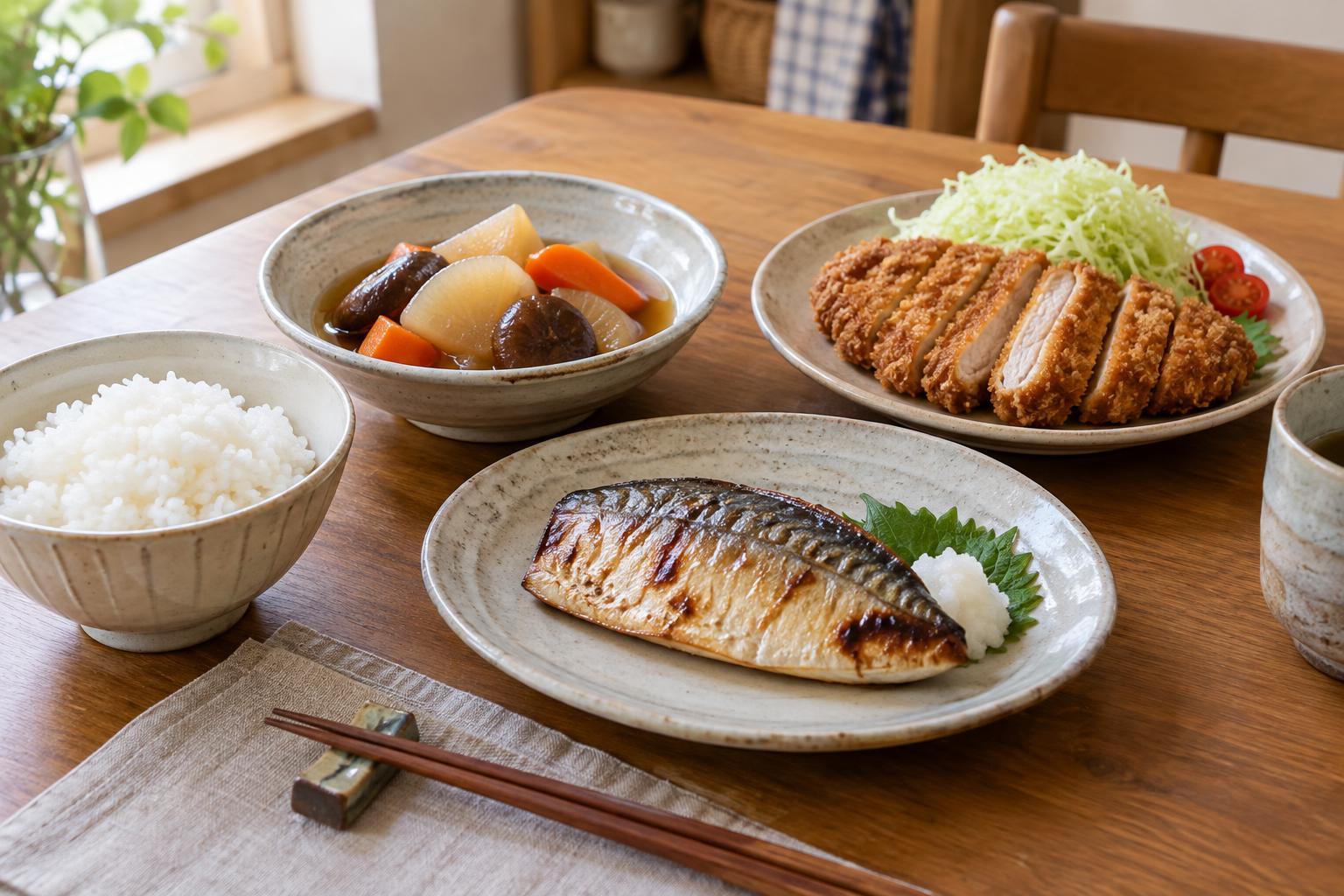
Think about the rest of the table before choosing a method. If you have rice, miso soup, and a soft vegetable side, grilled fish can provide a firm, savory centerpiece. If the side dishes are crisp and lightly dressed, a simmered main dish may feel more balanced. Frying makes a satisfying centerpiece, but it also asks for more attention at the stove, so simple accompaniments are especially useful.
Simmer for tenderness and shared flavor
In Japanese home cooking, simmered dishes are often called nimono. Vegetables, tofu, meat, or fish cook in a modest amount of seasoned liquid, sometimes including dashi, soy sauce, mirin, or sake. The ingredients need not be fully submerged. A gentle simmer gives them time to soften without breaking apart and lets the cooking liquid become part of the finished dish.
Choose simmering for firm vegetables such as daikon, carrots, or potatoes, or when you want to cook several ingredients together. Cut pieces to sizes that will finish at roughly the same time, adding quicker-cooking items later if needed. Keep the liquid at a quiet bubble rather than a vigorous boil, and taste it as it reduces: a well-seasoned broth can become too salty if cooked down too far.
A simmered dish is convenient when you want some flexibility at serving time. Many hold well for a short rest after cooking, giving you time to prepare rice or a fresh side. The trade-off is texture: if every dish on the table is soft, add something crisp, such as sliced cucumber or lightly cooked greens.
Grill for a distinct surface and simple seasoning
Grilling is a good choice when you want the flavor of the main ingredient to stay prominent. Fish, chicken, eggplant, and mushrooms can all benefit from direct heat. In a home kitchen, this might mean a grill, a broiler, or a grill pan. Each cooks a little differently, but the aim is similar: brown the outside without drying out the inside.
Pat surfaces dry so they brown more readily. Salt may be enough for fish or vegetables; a sauce can be served alongside rather than added early, when its sugars might scorch. Turn the food as needed and use doneness, not just color, as your guide. For chicken, check that it is thoroughly cooked. If you are cooking fatty fish under a broiler, watch it closely because drips and high heat can cause smoking.
Grilled food is often best served soon after cooking, while its surface still has character. That makes it a useful last step in a meal built around sides prepared ahead of time. A small squeeze of citrus or a spoonful of grated daikon can add freshness without covering up the grilled ingredient.
Fry for crunch, with a plan for the oil
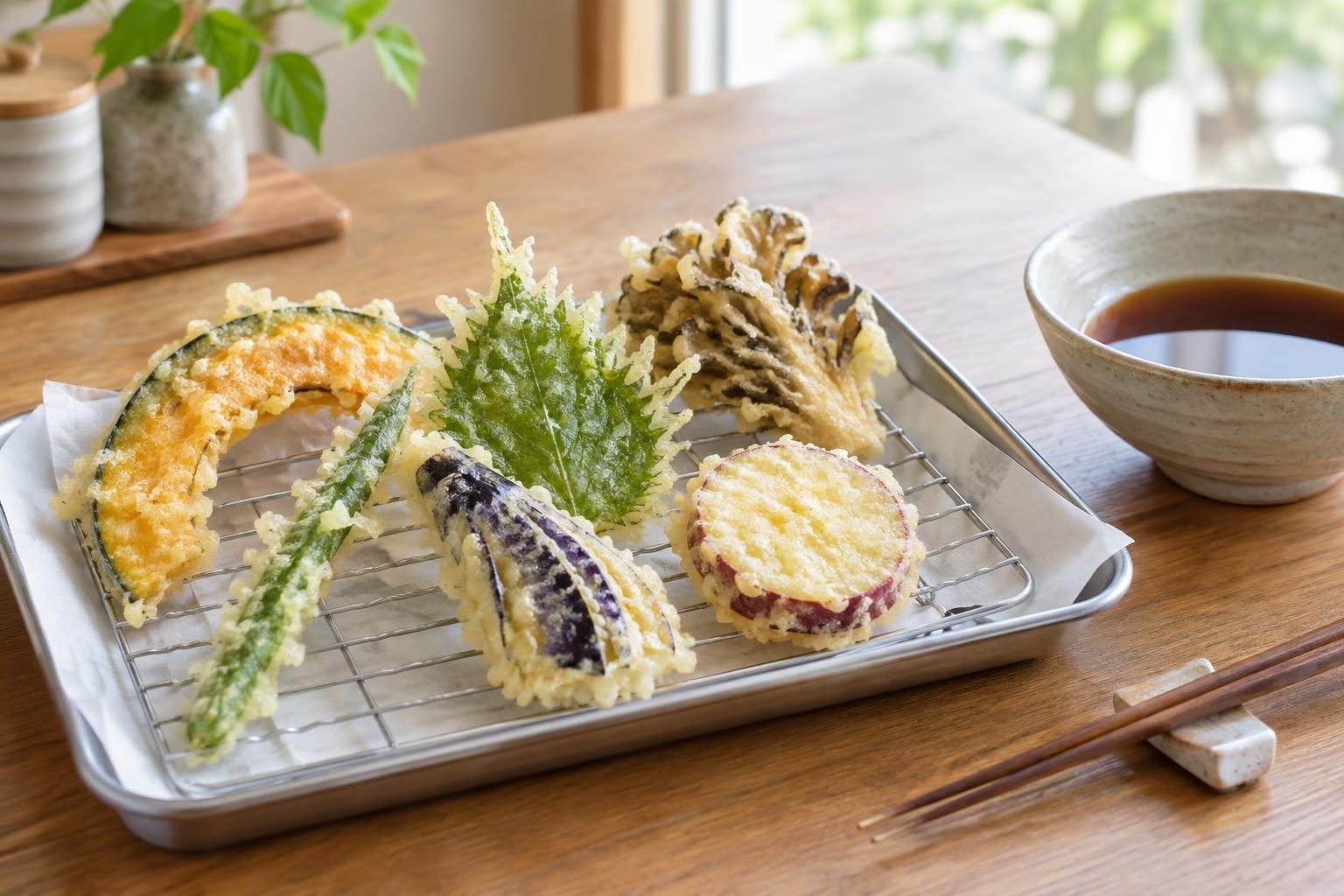
Frying is the method to choose when crispness is the point. Tempura uses a light batter around vegetables or seafood; katsu uses a breadcrumb coating around meat or other fillings. These are different dishes, but both depend on hot oil setting the coating before it absorbs too much oil or falls away. Frying in small batches helps keep the oil temperature steadier and gives each piece room to cook.
Set up a landing place before you begin: a rack or a paper-lined tray, plus a plate for serving. Dry ingredients before coating them, lower pieces into the oil carefully, and keep water away from the pan. Use a deep, stable pot with enough space above the oil to reduce the risk of overflow. Never leave heating oil unattended, and let it cool fully before handling or storing it.
Because frying requires active attention, keep the rest of the meal uncomplicated. Shredded cabbage, rice, and a quickly dressed vegetable make natural partners for a crisp main dish. Serve fried food promptly when possible; covering it tightly can trap steam and soften the coating.
Choose for the whole meal, not just the main dish
You do not need three elaborate techniques at one dinner. Pick one method for the centerpiece and let the other dishes supply contrast with minimal work. A simmered main might go with raw or lightly dressed vegetables; grilled fish with a soft simmered side; fried food with something fresh and tart. This way, the methods work together even when you use only one at the stove.
When deciding, ask three questions: How much time can I give the dish? What texture is missing from the meal? Will it still taste good when everyone is ready to eat? Simmering offers a forgiving serving window, grilling rewards careful timing, and frying delivers crunch when served quickly. Matching those strengths to your evening is more useful than treating any one method as the default.