Start with vegetables that will cook evenly
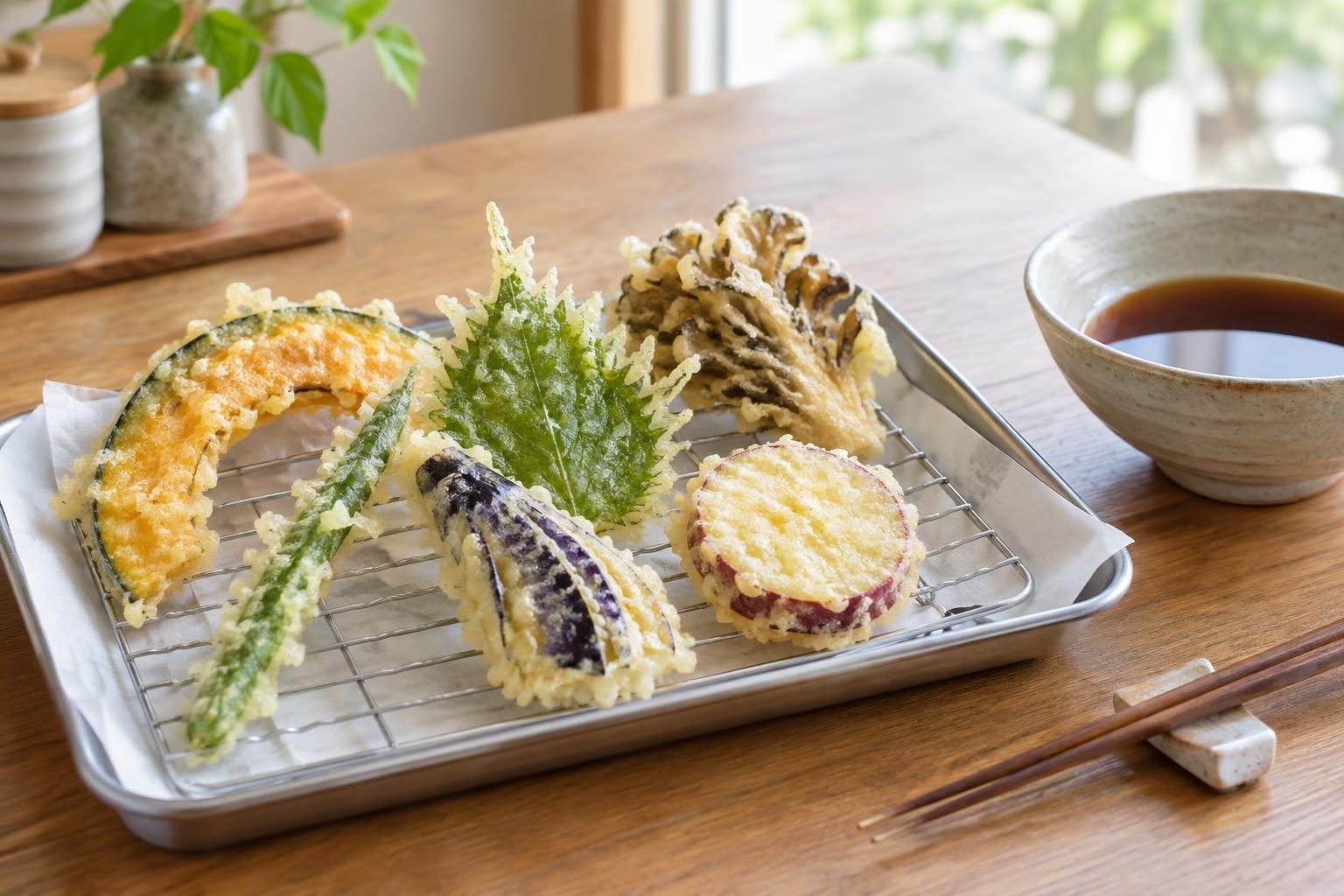
Vegetable tempura is at its best when the coating is delicate enough to let the vegetable remain the focus. A few varieties are plenty for a home meal: try thin slices of sweet potato, wedges of kabocha squash, green beans, mushrooms, or slices of eggplant. Cut each type into pieces of similar thickness so you can fry them in batches without guessing which piece will finish first. Dense vegetables need thinner cuts than tender ones.
Moisture on the surface can make batter slide off and cause the oil to sputter. Wash vegetables ahead of time, drain them well, and pat them dry just before coating. Wipe mushrooms rather than soaking them. If you slice eggplant in advance, dry its cut surfaces again before frying. Keep the prepared vegetables close to the stove so you can coat each piece immediately before it goes into the oil.
Mix a batter that stays loose
For a small batch, begin with about one cup of all-purpose flour and one cup of very cold water. If you like, replace a few spoonfuls of the flour with potato starch or cornstarch for a more delicate coating. An egg is common in some home batters but is not essential; if using one, beat it lightly into the cold water before adding the flour. These proportions are a starting point, not a rule: add a little water if the mixture seems too thick to coat a vegetable thinly.
Make the batter only when the oil and vegetables are ready. Stir the flour into the liquid briefly with chopsticks or a fork. Small lumps are fine. Thorough mixing develops gluten and can make the coating feel heavier; resting the batter for a long time also gives it a chance to warm up. Aim for a mixture that clings to a piece without burying its shape. You can dust a particularly smooth or damp vegetable lightly with flour before dipping it.
Give the oil room to do its work
Use a sturdy, deep pot with enough neutral-tasting oil for pieces to float freely, leaving generous space above the oil. Heat it over medium heat. Around 170–180°C (340–355°F) is a useful range for many vegetables. A thermometer makes this easier to judge, but the important habit is to watch how the batter behaves: a drop should bubble promptly and rise rather than sink quietly or brown at once. Keep water away from the pot, and lower pieces in gently.
Dip each vegetable, let excess batter drip away, and fry only a few pieces at a time. Crowding cools the oil and can leave the coating oily instead of crisp. Turn pieces as needed for even cooking, adjusting the heat between batches if the oil becomes too cool or the batter darkens quickly. Thin, tender vegetables may finish before dense slices. Look for a pale golden coating and a vegetable that is tender when tested; do not rely on one frying time for everything.
Drain and serve without trapping steam
Lift finished pieces out with chopsticks, tongs, or a slotted utensil, pausing over the pot to let excess oil fall back in. Set them on a wire rack or a paper-lined tray in a single layer. Stacking hot tempura traps steam and softens the crust. Skim loose batter bits from the oil between batches so they do not burn and cling to the next pieces.
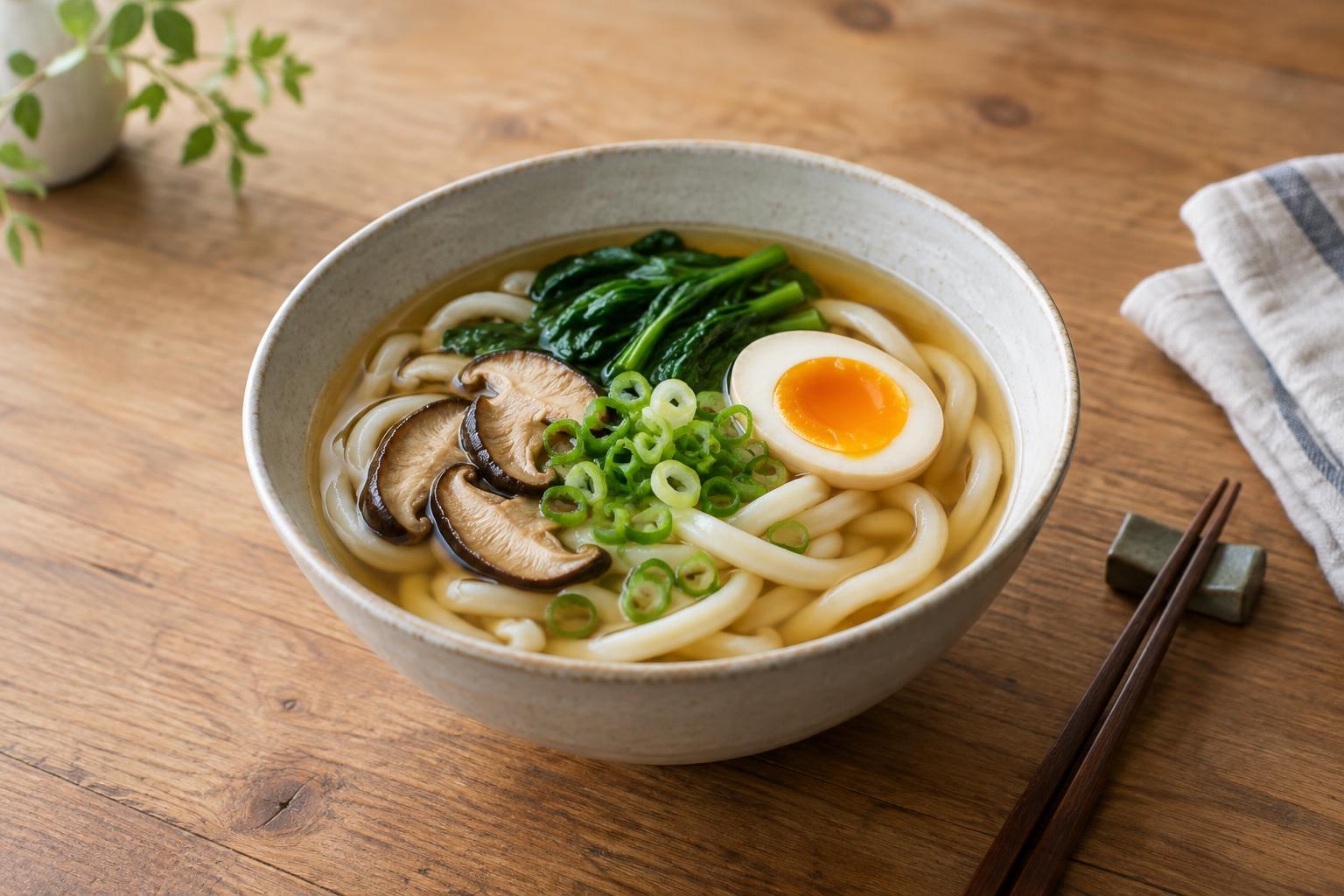
Tempura is most enjoyable soon after frying. A simple way to serve it is to put out a little salt for dipping, or offer tentsuyu, a dipping sauce commonly made with dashi, soy sauce, and mirin. For an uncomplicated meal, pair the vegetables with rice and a bowl of soup. If you are cooking for a group, fry in small batches and bring each batch to the table as it is ready rather than waiting to build one large platter.
Troubleshoot the next batch
If the coating seems thick and bready, thin the remaining batter with a little cold water and stir only enough to combine it. If it falls away from the vegetables, check that their surfaces are dry and try a light dusting of flour. Greasy tempura often means the oil cooled when too many pieces went in; give the next batch more space and let the oil recover first. If the outside browns before a dense vegetable softens, cut the next pieces thinner or lower the heat slightly.
Crisp tempura comes from a series of small choices rather than one secret ingredient: dry vegetables, a thin and lightly mixed batter, steady heat, and prompt serving. Once those habits feel familiar, changing the mix of vegetables becomes an easy way to make the meal your own.