A hamburger steak made for the dinner plate
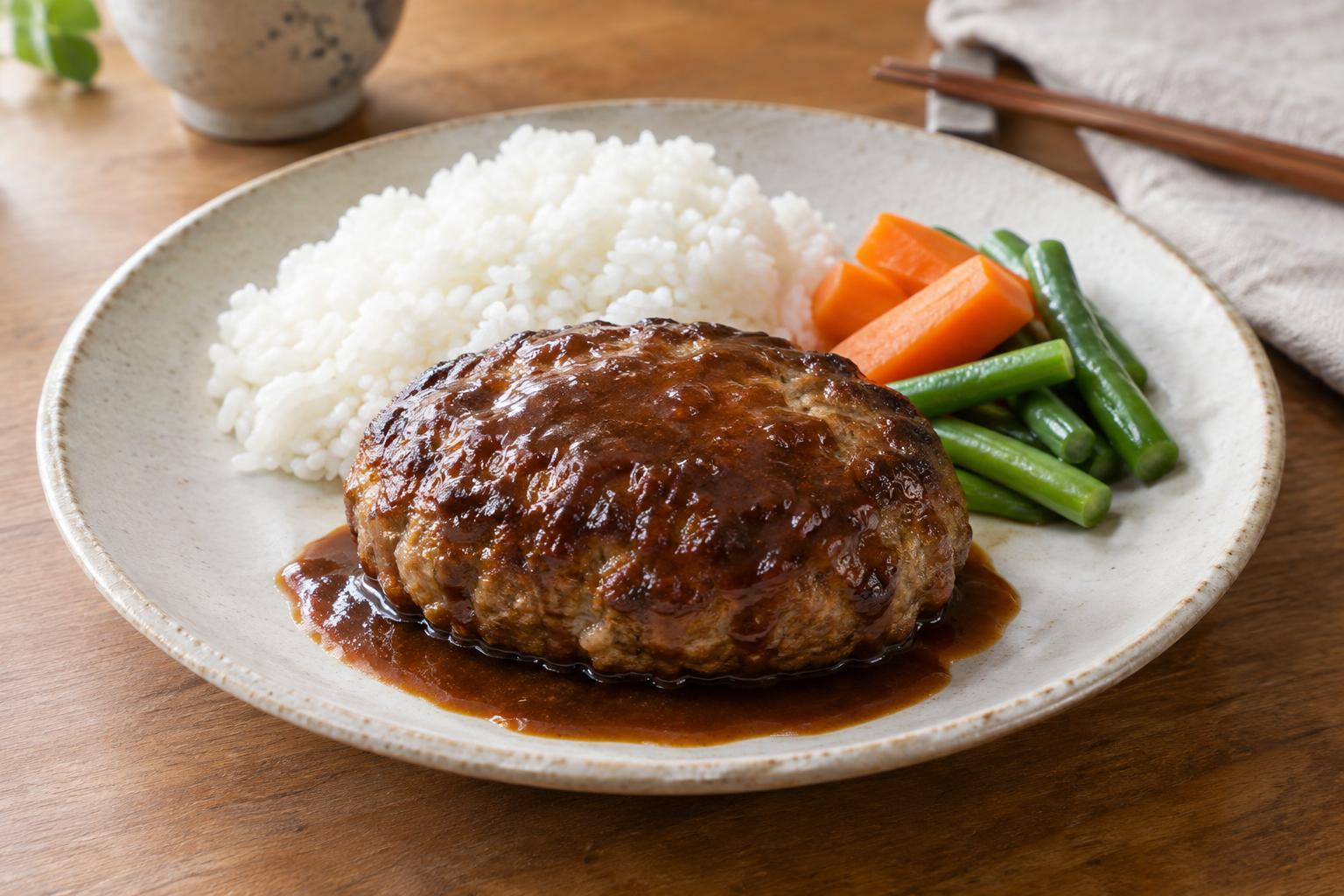
Hambagu is a Japanese-style hamburger steak served as a main dish rather than tucked into a bun. Its appeal is the contrast between a browned exterior and a soft, juicy center, usually finished with sauce. At home, it fits easily beside steamed rice and a simple vegetable, making it a satisfying meal without many separate preparations.
Recipes vary, but a familiar approach combines ground meat with cooked onion, breadcrumbs, milk, and egg. The onion brings sweetness, while the moistened breadcrumbs help the patties stay tender. A mixture of beef and pork works well: beef gives a hearty flavor, and pork adds richness. If you use all beef, choose meat with some fat rather than an especially lean grind.
Ingredients for four small patties
For the patties, gather 400 g (about 14 oz) ground beef and pork combined, one small onion, 1/3 cup panko breadcrumbs, 3 tablespoons milk, one egg, 3/4 teaspoon salt, and a little black pepper. You will also need a small amount of neutral oil for the pan. A roughly equal mix of beef and pork is a useful starting point, but the exact balance is flexible.
For the sauce, set aside 3 tablespoons ketchup, 2 tablespoons Worcestershire sauce, and 3 tablespoons water. This makes a tangy, lightly sweet sauce that uses the browned bits left in the skillet. Taste it at the end: a splash more water can soften a sauce that seems too strong, while a little more ketchup can round out a particularly sharp one.
Prepare and shape the patties
Finely chop the onion. Heat a little oil in a skillet over medium heat and cook the onion, stirring, until softened and lightly golden, about 8 to 10 minutes. Transfer it to a plate and let it cool. Cooking the onion first mellows its flavor and removes some moisture; cooling it keeps the raw meat mixture from warming as you work.
While the onion cools, stir the panko and milk together in a large bowl. Add the meat, egg, salt, pepper, and cooled onion. Mix with clean hands or a spoon just until the ingredients hold together. Divide into four portions and shape each into a thick oval. Passing a portion gently between your hands a few times helps remove large air pockets, but prolonged kneading can make the finished hambagu dense. Press a shallow indentation into the center of each patty so it is less likely to bulge as it cooks.
Brown, then cook gently
Wipe out the skillet if the onion left any scorched pieces, then add a thin film of oil and heat it over medium heat. Place the patties in the pan with space between them. Cook without moving them until the undersides are browned, roughly 3 to 4 minutes. Turn them carefully and brown the second side for about 2 to 3 minutes. If the pan is darkening rapidly, lower the heat; a deep brown crust is welcome, but burned drippings will give the sauce a bitter taste.
Add 2 tablespoons water to the skillet, cover, and reduce the heat to low. Let the patties cook gently until their centers reach 71°C (160°F) on a food thermometer. This may take several more minutes, depending on their thickness and your pan. Checking the center is more reliable than judging by color or cooking time alone. Transfer the cooked patties to plates and keep them warm while you make the sauce.
Make the pan sauce and serve
Pour off excess fat from the skillet, leaving the browned bits behind. With the pan over low to medium heat, add the ketchup, Worcestershire sauce, and water. Stir and scrape the bottom of the pan to dissolve the flavorful browned residue. Simmer briefly, just until the sauce is smooth and thick enough to coat a spoon. If it thickens too much, stir in water a teaspoon at a time.
Spoon the sauce over the hambagu and serve it hot. Rice is a natural companion because it catches the extra sauce; steamed broccoli, green beans, or a crisp cabbage salad can balance the rich patties. For a tidy weeknight workflow, cook the onion and measure the sauce ingredients before handling the raw meat. Once the patties are shaped, the rest of dinner comes together in one skillet.