Start with the shape of the bowl
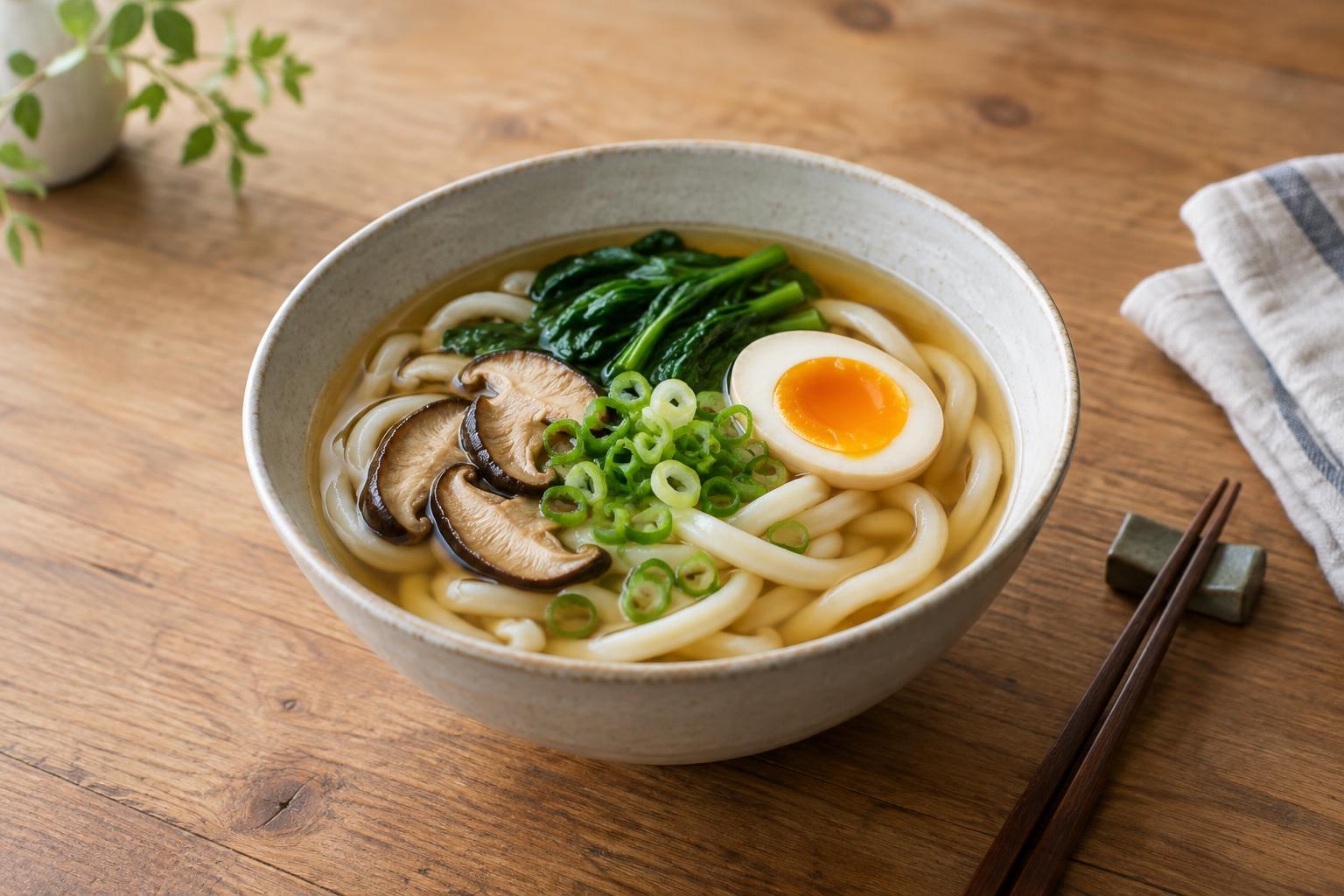
Hot udon is a useful home-cooking template rather than a single fixed recipe. Thick wheat noodles sit in warm broth, while toppings add color, texture or enough substance to make the bowl a meal. For a simple serving, plan on one portion of udon, about 1½ to 2 cups of broth and a small handful of toppings. You can scale that up without changing the method.
Choose noodles according to what is available. Frozen udon often has a pleasantly springy texture and can usually be heated straight from the freezer. Shelf-stable, refrigerated and dried udon are convenient too, but their cooking times differ. Follow the package directions, then taste a strand before serving. The goal is a noodle that is tender and easy to slurp without becoming mushy.
Make a broth that supports the noodles
For two bowls, begin with about 3 to 4 cups of dashi, the savory stock used in many Japanese dishes. Prepared dashi is the quickest option; follow its package directions if it is concentrated. You can also make a gentle stock by steeping a piece of kombu, a dried seaweed, in water, removing it before the water reaches a rolling boil, then briefly steeping bonito flakes and straining. For a plant-based bowl, use kombu with dried shiitake mushrooms instead of bonito.
Warm the dashi and season it gradually with soy sauce and a little mirin, a sweet rice seasoning. As a starting point for 3 cups of stock, try 2 tablespoons of soy sauce and 1 tablespoon of mirin. Simmer briefly, taste and adjust. A splash of water will soften a broth that tastes too salty; a little more soy sauce or a pinch of salt can sharpen one that tastes flat. The broth should taste satisfying on its own but not so strong that it overwhelms the noodles.
If you do not have dashi ingredients, a mild vegetable or chicken stock can make a good everyday bowl, although its flavor will be different. Season it lightly at first, particularly if the stock already contains salt. Keep the broth hot while you prepare the noodles and toppings, rather than reducing it for a long time.
Cook the noodles separately
Cooking udon in its own pot of water helps keep the serving broth clear and makes its seasoning easier to control. Heat or boil the noodles as directed on the package, loosening them gently once they soften. Drain them well. If the package calls for rinsing, rinse to remove excess starch, then give the noodles a brief dip in hot water before they go into the bowl.
Set out two deep bowls and divide the hot noodles between them. Ladle over enough broth to surround the noodles without burying every topping. Working in this order keeps the noodles warm and lets you see whether each bowl needs more liquid. Serve promptly: udon left sitting in hot broth will continue to soften.
Choose toppings with a purpose
A good topping combination does not need to be elaborate. Thinly sliced scallions bring freshness; cooked spinach or blanched greens add a soft, leafy contrast. Sliced mushrooms can be simmered in the broth until tender. A pinch of shichimi togarashi, a Japanese seven-spice blend, adds warmth at the table. Add these in modest amounts so the noodles remain the center of the bowl.
For a more filling meal, try pieces of cooked chicken, tofu or a fully cooked egg. Add chilled cooked toppings to the hot broth long enough to warm through before serving. Fried tofu pouches, often sold as aburaage, are another option; cut them into strips and warm them in the broth. If using a salty or sweet prepared topping, taste the finished soup before adding extra seasoning.
Think about timing as well as flavor. Simmer firm mushrooms or raw greens that need cooking before you assemble the bowls. Add scallions and spices at the end so they stay lively. You can prepare several toppings in advance, then let everyone finish their own bowl at the table.
Build a repeatable weeknight routine
Once you know the basic sequence, hot udon is easy to adapt: warm and season the broth, cook the noodles, prepare one or two toppings, then assemble. A particularly simple combination is frozen udon with dashi broth, scallions and spinach. For a heartier version, add mushrooms and tofu while the broth heats.
Keep extra broth and noodles separate if you are preparing food ahead. Store them chilled in suitable containers, then reheat the broth until hot and heat the noodles just before serving. This small step protects the udon’s texture and gives you a bowl that feels freshly made, even when much of the work is already done.