Start with the lunch you actually pack
A bento box is a container for a packed meal, often with rice or another staple alongside small portions of other foods. It does not need a particular shape or an elaborate arrangement. Before choosing one, picture an ordinary lunch: how much you eat, whether you pack foods with sauce, and whether you carry the box upright in a bag. A compact box that works well for rice and dry side dishes may be frustrating if your usual lunch includes soup or a large salad.
Check the box’s outside dimensions as well as its stated capacity. A tall box may fit neatly in a narrow bag but be awkward to eat from; a wide one may be easy to fill but take up more desk space. If you use a lunch bag, utensils, or a cold pack, make sure they can travel together comfortably. Capacity figures are a starting point, not a guarantee that a particular meal will fit.
Compare materials by how you will use them
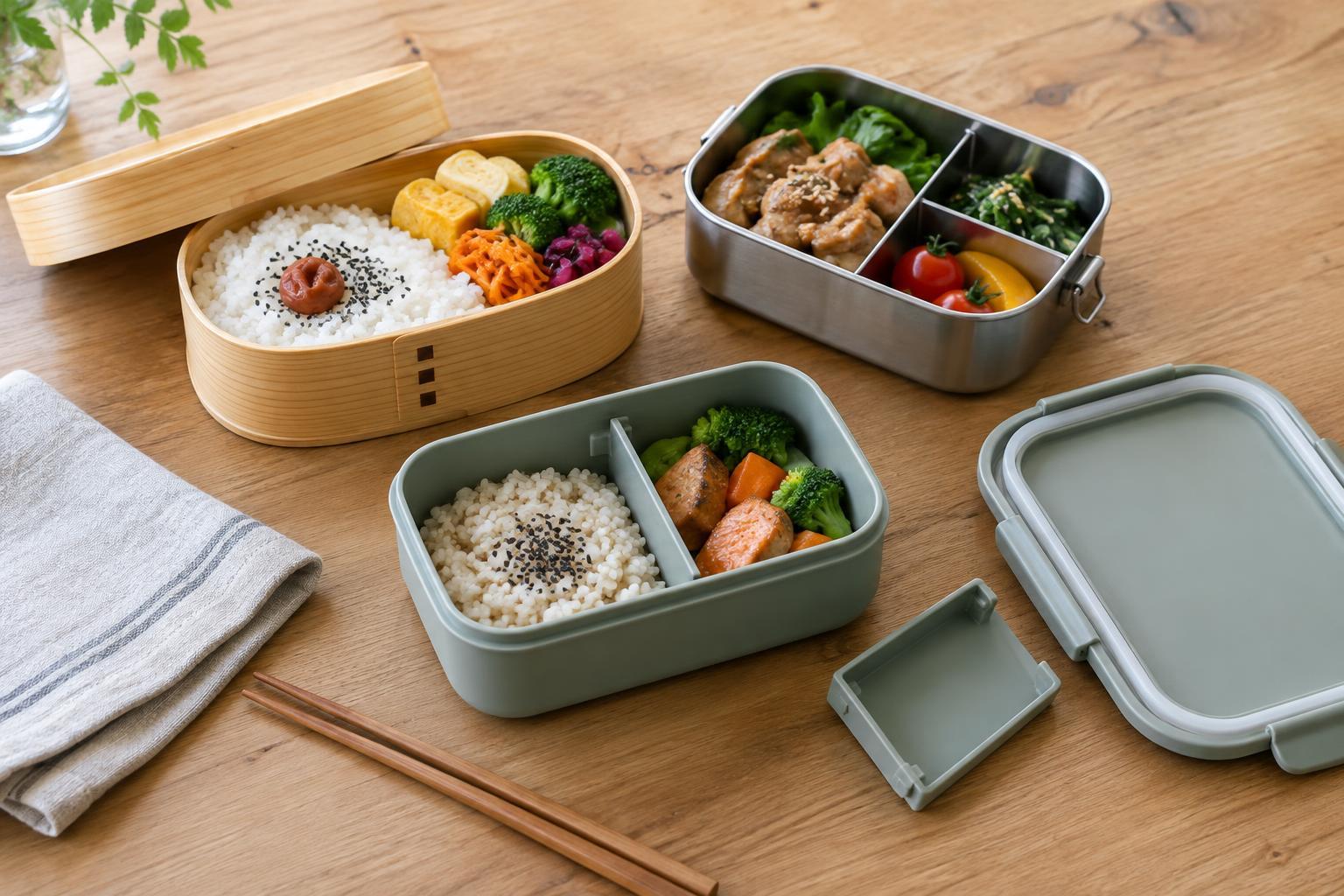
Plastic bento boxes are often light and available in many shapes, including stackable designs. They can be convenient for a commute, but plastic parts may retain odors or stains from strongly seasoned foods. Do not assume every plastic box is microwave- or dishwasher-safe: the lid, body, dividers, and seals may have different care instructions. Check the maker’s guidance for each part before heating or washing it.
Stainless steel is sturdy and generally straightforward to wash. It can be a good choice for someone who does not plan to reheat food in the container. A conventional stainless steel box should not go in a microwave, and a metal lid or snug fit does not necessarily make a box leakproof. Glass resists staining and lets you see what is inside, but its weight and risk of breakage may make it less appealing for a crowded bag.
Wooden boxes, including the curved wooden style known as magewappa, bring a distinctive feel to a meal. They usually call for more attentive care than everyday plastic or steel: prompt hand-washing, thorough drying, and storage in a ventilated place. Finishes vary, so follow the instructions for the specific box rather than assuming all wooden containers can be treated alike.
Decide how much separation you need
Compartments are useful when you want to keep flavors and textures distinct. A fixed divider can hold rice on one side and side dishes on the other, while removable dividers offer more flexibility for sandwiches, noodles, or leftovers. Small reusable cups can help corral a portion of vegetables or fruit without committing the whole box to a rigid layout.
Separation is not the same as a watertight seal. Juice from cut fruit or a saucy dish may move between sections when a box is tipped. If you regularly pack dressing, pickles with liquid, or a soft dessert, consider a small separate container with a secure lid. For mixed meals that are meant to be eaten together, one open compartment may be easier to fill and clean than several small ones.
Look closely at the lid and seals
A lid should be easy to close fully and easy for the intended user to open. Clips can feel reassuring, but they may add corners to wash; an elastic band can help keep a simple lid in place without turning it into a liquid-tight container. If you expect the box to ride sideways, look for a design specifically intended to resist leaks, and test it at home with water before trusting it with a saucy lunch.
Removable gaskets deserve particular attention. They can improve the fit of a lid, yet crumbs and moisture may collect beneath them. Check whether the seal can be taken out and put back without difficulty. A box with fewer parts may be the better everyday choice if you value quick cleanup over a tight seal.
Make cleaning part of the buying decision
Think through the entire washing routine before you buy. Can you reach every corner with a sponge? Are there tiny hinges, narrow channels, or several pieces that need separate drying? After use, wash the box and removable parts according to their care instructions, paying attention to lid grooves and seals. Let everything dry fully before reassembling and storing it, especially if the box will sit closed between uses.
Finally, match the container to your food-handling routine. A bento box organizes a lunch, but it does not keep perishable food cold on its own. Use an appropriate cold pack or other temperature control when needed, and avoid relying on a sealed lid as a substitute. The best box is one you can fill, carry, empty, and clean comfortably on an ordinary day.