What a hangiri does
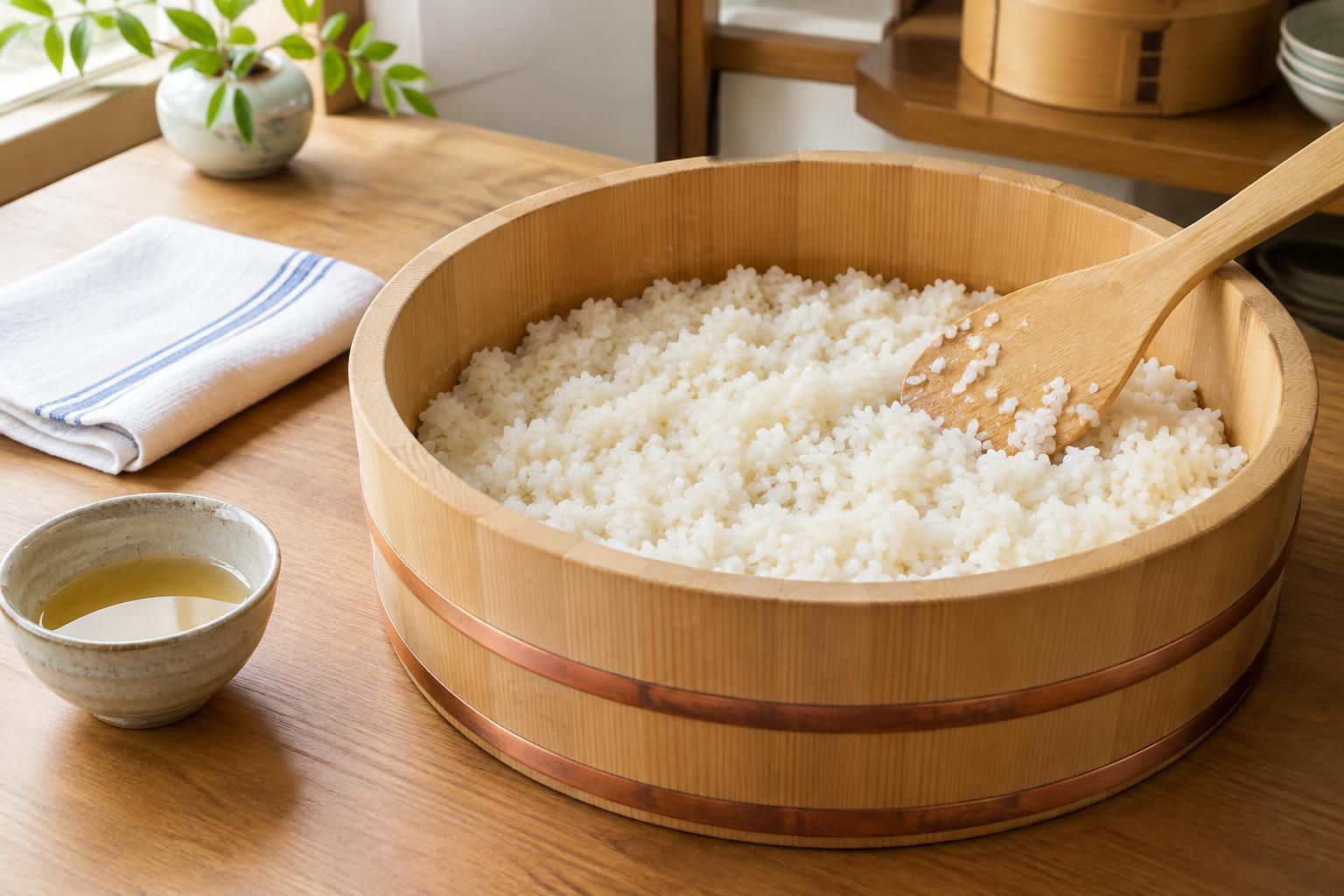
A hangiri is a wide, shallow wooden tub used to mix cooked rice with seasoned vinegar, especially when making sushi rice. You may also see it called a handai. Its broad surface gives hot rice room to spread out, making it easier to distribute the seasoning without pressing the grains into a dense mass. The wood absorbs a little surface moisture, while the open shape lets steam escape.
A hangiri is a mixing vessel, not a rice cooker or a serving requirement. The rice is cooked first, then transferred while hot and seasoned. A rice paddle, or shamoji, is commonly used to turn the rice with gentle cutting and folding motions. Fanning the rice as it is mixed can help it cool and develop a glossy finish, but careful mixing matters more than owning a particular fan.
When is it worth having one?
A hangiri makes the most sense if you prepare sushi rice regularly or often season enough rice that a deep bowl feels cramped. The extra space helps you reach the grains at the edges and turn them evenly. It can also make the process more pleasant: you can see where the seasoning has landed and where the rice still needs a gentle fold.
If you make sushi rice only occasionally, you can start with a wide, shallow, nonreactive bowl or tray. Choose one large enough to spread the rice without piling it high, and use a paddle or broad spatula to fold rather than stir. The result depends heavily on how the rice is cooked, seasoned and handled; a hangiri is helpful, but it will not correct rice that is overcooked or vigorously mashed.
Before buying, think about both batch size and storage space. The tub should comfortably hold your usual amount of rice with room to move a paddle. An oversized tub can be awkward to wash and dry in a small kitchen, while one that is too small loses the advantage of its shallow shape.
How to use a hangiri without damaging the rice
For an untreated wooden hangiri, briefly wet the inside with clean water before adding hot rice, then pour away any standing water. This helps keep grains from clinging to the wood. There is no need to leave the tub soaking. Transfer the rice promptly after cooking, spread it loosely, and add your prepared sushi seasoning across the surface rather than in one spot.
Work the paddle through the rice with slicing motions, then lift and fold portions over. Avoid grinding the paddle against the bottom or stirring in tight circles. If you fan the rice, aim for steady airflow while you turn it so excess steam can leave. Stop mixing once the seasoning is distributed and the rice has cooled enough for its intended use; repeated handling can break the grains.
Check the maker’s directions if your tub has a finish or other special construction. Traditional unfinished wood and finished wooden products may call for different preparation and cleaning methods.
Washing, drying and storing the tub
Wash a hangiri soon after use so rice does not harden in the grain of the wood. Remove loose grains with your hands or a soft brush, then rinse with warm water and gently scrub any stuck-on spots. If water alone does not remove residue, use a small amount of mild, unscented dish soap and rinse thoroughly. Avoid abrasive pads and strongly scented cleaners, which can mark the surface or leave an unwanted smell.
Do not put a wooden hangiri in the dishwasher or leave it submerged in a sink. Prolonged water exposure and harsh drying can encourage warping or cracking. After washing, wipe away excess water and stand the tub where air can reach its inside and outside. Let it dry completely before putting it in a cupboard; avoid a hot radiator or prolonged direct sun as a shortcut.
Some hangiri have metal bands around the outside. Wood naturally changes slightly as it gains and loses moisture, so a band may feel different from season to season. Handle the tub by its wooden body rather than relying on a loose band. Store it in a dry, ventilated place, and inspect it before the next use for lingering odor, trapped moisture or damage.
A useful tool, not a prerequisite
The value of a hangiri is straightforward: it gives seasoned rice a broad wooden surface on which to cool and be folded gently. If that solves a problem you encounter often, it may earn its space in the kitchen. If not, a roomy bowl and a light touch are enough to begin learning the technique. Either way, treat the rice gently and give any wooden tool time to dry fully after use.