What a makisu does
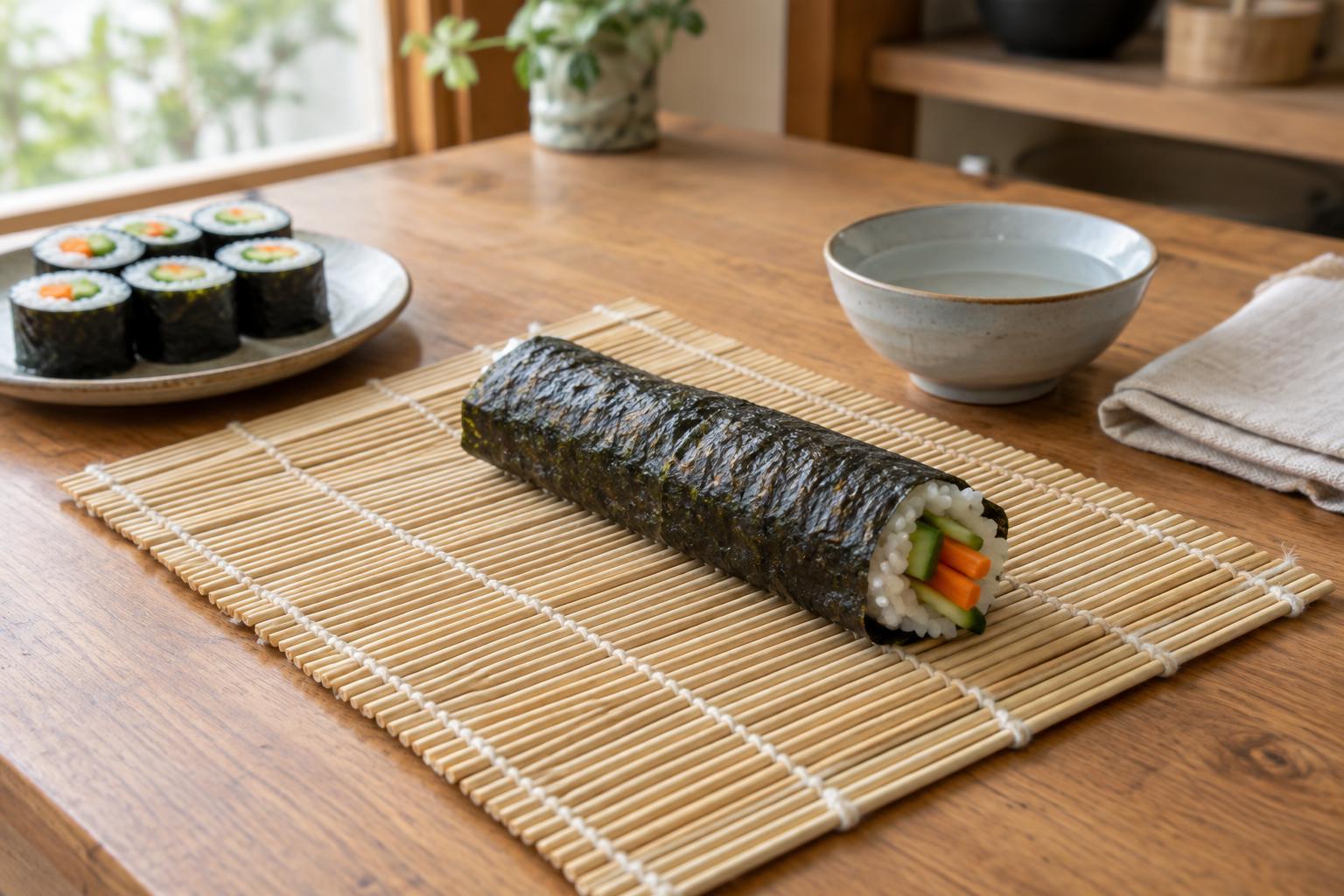
A makisu is a flexible mat made from narrow bamboo slats tied together with string. It is best known for shaping makizushi, or rolled sushi. As you lift and curve the mat, it supports the nori and its fillings across the full width of the roll. Your hands provide the pressure; the mat helps you apply it evenly.
The mat is a shaping tool, not a required ingredient or a shortcut to a perfect roll. Rice that is spread too thickly, an overfilled center, or fillings that slip around can make rolling difficult even with a good makisu. For a first attempt, a modest amount of filling and a little space at the far edge of the nori make the tool easier to understand.
Choosing a mat for your kitchen
Look for a mat that lies reasonably flat and bends smoothly without loose or splintering slats. Check that the strings hold the slats securely and that their ends are not coming undone. A mat large enough to accommodate a standard sheet of nori is a versatile choice for home rolls. Very small mats may be handy for narrow rolls, but they leave less room for learning where to place your hands.
Some makisu have flatter slats; others have a more rounded surface. Either can work for everyday rolling. A fairly flat surface may feel easier to press evenly, while the gaps between rounded slats can be a little more noticeable when rice touches the mat. What matters most is that the mat is comfortable to handle and easy for you to clean. If you plan to make rice-on-the-outside rolls, choose a mat you can cover securely with food-safe plastic wrap so the rice does not lodge between the slats.
Setting up and rolling
Place the makisu on a clean work surface with its strings running from left to right, so it curls away from you. Set a sheet of nori on top, with the rougher side facing up. Spread prepared sushi rice in a thin, fairly even layer, leaving a narrow strip of nori uncovered at the far edge. Slightly damp hands can keep the rice from sticking to your fingers; try not to wet the nori unnecessarily.
Arrange a modest line of fillings across the rice near the edge closest to you. Lift that edge of the mat with your thumbs while using your fingers to keep the filling in place. Bring the near edge of the nori over the filling and tuck it into a compact cylinder. Then pull the mat forward and away from the roll before continuing to turn the roll; otherwise, you may roll the mat into the sushi. Apply gentle, even pressure through the mat to shape the roll without crushing the rice.
Let the roll rest briefly with its seam underneath before slicing it with a clean, sharp knife. Wiping the blade between cuts can help keep the pieces tidy. If the roll bulges or falls apart, try less filling or a thinner layer of rice next time. Small adjustments usually help more than pressing harder.
When to cover the mat
For a roll with nori on the outside, the nori normally sits directly on the makisu. For a rice-on-the-outside roll, cover the mat with food-safe plastic wrap before starting. Smooth the wrap around both sides of the mat so it stays in place as the mat bends. The wrap creates a barrier between the sticky rice and the spaces around the bamboo slats.
A cover can also make cleanup simpler when working with especially sticky ingredients. It does not replace cleaning the mat: moisture or bits of food can still reach an exposed edge. Before switching between ingredients, keep the work surface and your hands clean, and avoid using a soiled mat with ready-to-eat food.
Cleaning, drying, and storing
Clean the makisu soon after use, before rice dries onto the bamboo and string. Remove any plastic wrap, then rinse or wipe away visible food. If needed, use a small amount of mild dish soap and a soft brush to clean gently along and between the slats. Rinse thoroughly. Avoid long soaking, harsh scrubbing, or a dishwasher unless the mat’s maker specifically says it can handle one; prolonged moisture and rough treatment can be hard on bamboo and its ties.
Shake off excess water and stand or lay the mat open where air can reach both sides. Check the spaces between slats and around the string before storing it. A fully dry mat is less likely to develop unwanted odors or visible mold. Store it flat or loosely rolled in a dry place, and replace it if its strings fail, the bamboo splinters, or it cannot be cleaned well.