Start with the work your board needs to do
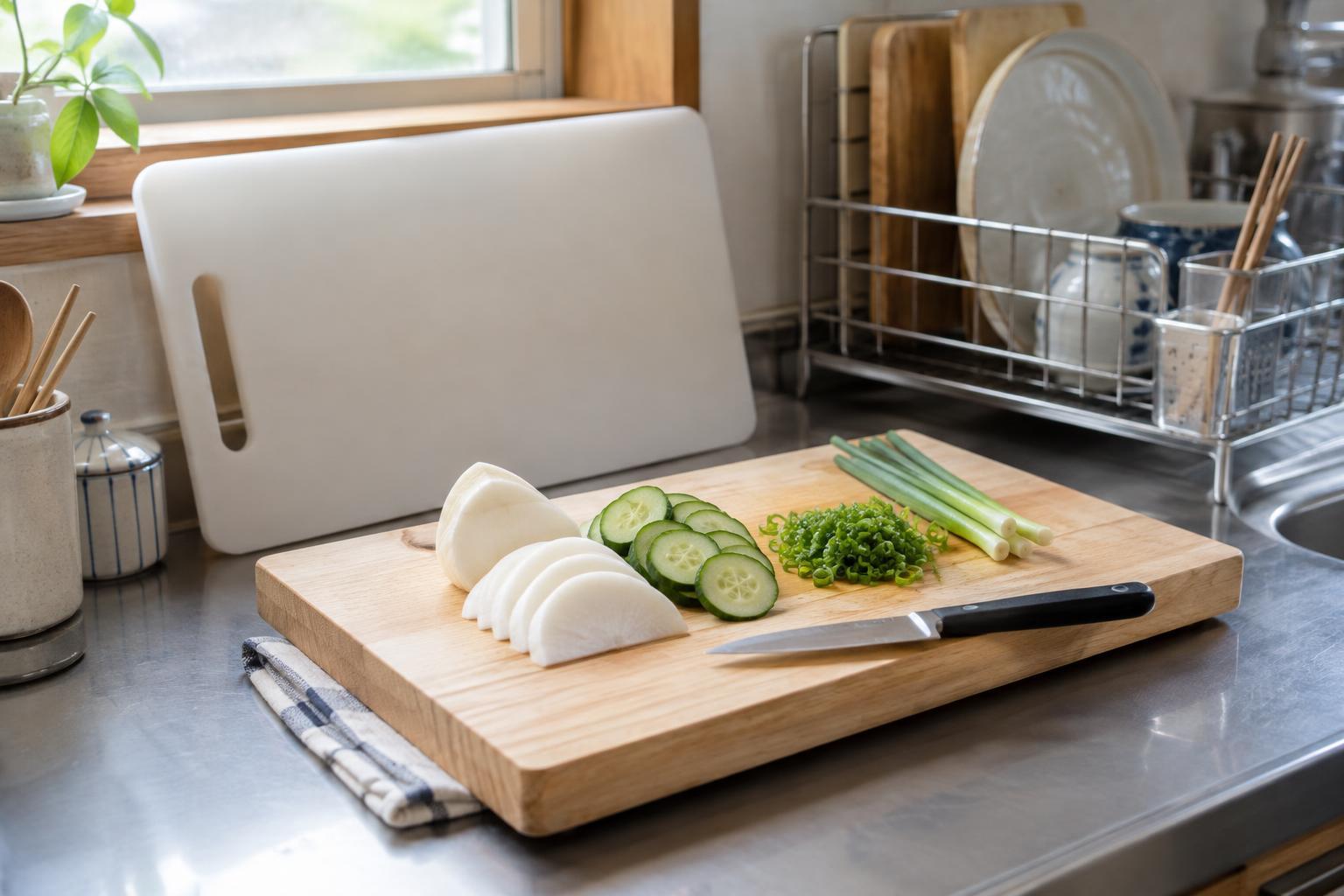
Japanese home cooking often involves several small cutting tasks in one meal: slicing scallions for a garnish, cutting cabbage for a side dish, portioning tofu, and preparing ingredients for soup. A useful board gives you enough room to keep the food you are cutting separate from the pile you have finished. It should also fit flat on your counter and be easy to carry to the sink.
Choose the largest board you can use and wash comfortably, rather than the largest one that fits in a cupboard. A board that feels cramped can make long vegetables awkward to handle, while an oversized board may become a chore to clean. Thickness and weight matter, too. A light board is convenient to lift, but it must stay put while you work. If a board slides, place a clean, damp cloth or a nonslip mat beneath it before cutting.
How wood and plastic compare
Wood has a pleasant feel under a knife and can be a good choice for frequent vegetable preparation. Some Japanese-style wooden boards are made from relatively soft woods, which may feel gentle on a knife edge. Wood boards vary considerably, however: a dense, hard board may feel different from a softer one. When shopping, consider how the surface feels, how heavy the board is, and whether you can store it where air can circulate.
Plastic boards are often lighter and easier to move between tasks. Many can be washed thoroughly with dish soap and water, and some are dishwasher-safe if the maker says so. Plastic can be especially convenient when you want a separate board for raw meat or fish. Over time, knife cuts can leave grooves that are difficult to clean; replace a plastic board when its surface becomes deeply scored or damaged.
You do not need an elaborate collection. One comfortable main board and a smaller second board can cover many households’ needs. For example, you might use the main board for vegetables and cooked foods and the second for raw proteins. The material matters less than having a workable routine for cleaning the board and keeping raw juices away from foods that are ready to eat.
Match the board to the knife and ingredient
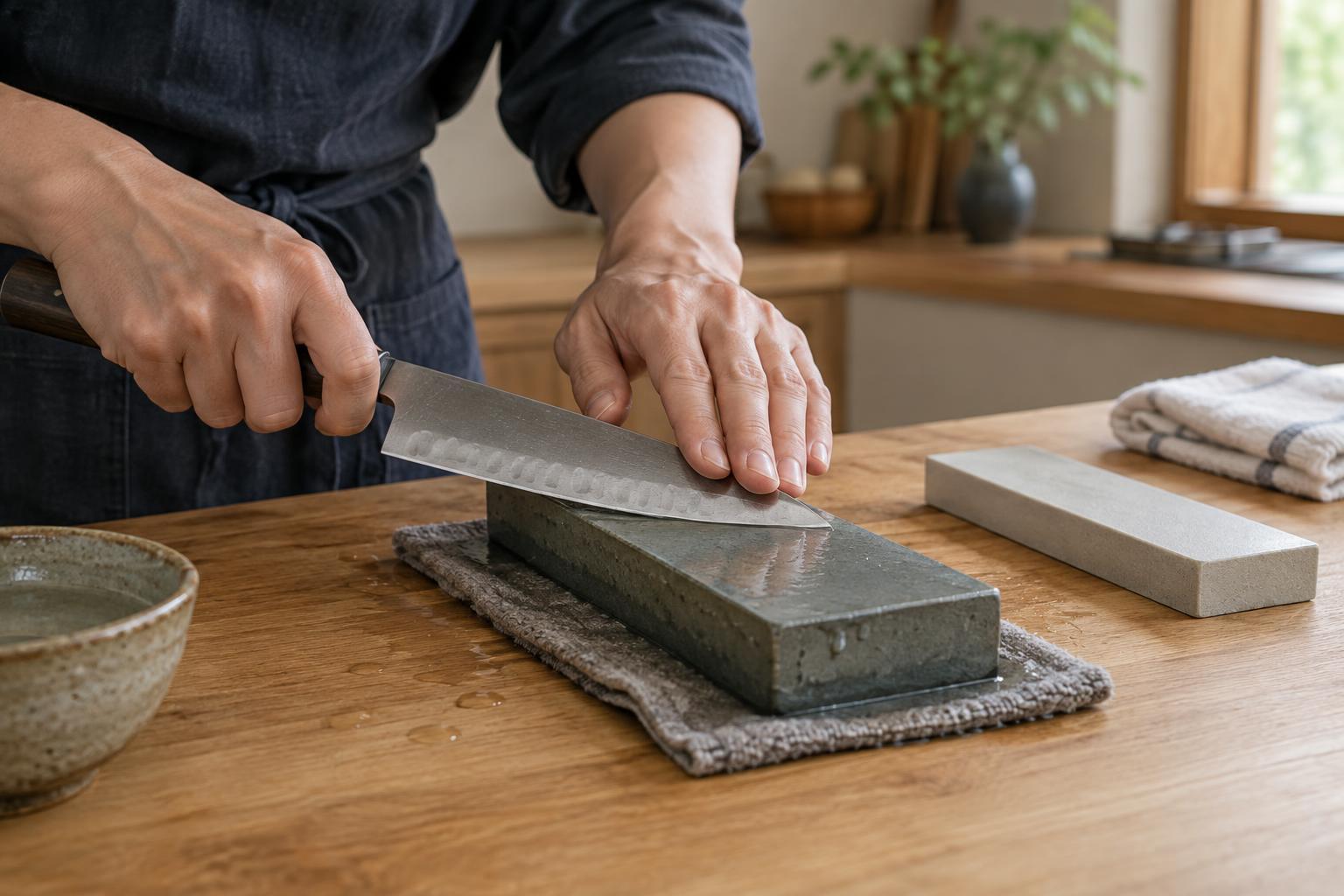
A broad board is helpful when using a nakiri-style vegetable knife or making repeated, even cuts for a stir-fry or simmered dish. Check that the board leaves room for both the ingredient and your guiding hand. A smooth, steady surface also makes delicate work, such as slicing scallions thinly, more controlled. Cutting boards are not meant to compensate for a dull knife: if cutting starts to require extra force, check the knife’s edge.
For fish, keep the preparation area simple. Set out a clean board, a towel for your hands, and a place to put trimmings before you begin. If you use the same board for other ingredients, wash it thoroughly after handling raw fish and before preparing garnishes or other ready-to-eat foods. Separate boards can make that sequence easier, especially when several dishes are being prepared at once.
Avoid cutting directly on plates, stone counters, or glass boards if you want to protect a knife edge. Likewise, do not use a cutting board as a surface for heavy chopping unless both the board and the knife are suited to it. Everyday slicing and forceful chopping place different demands on a work surface.
Clean, dry, and store it well
Wash a board promptly after use with dish soap and water, paying attention to the sides and any handle grooves. Follow the maker’s directions for cleaning and sanitizing, particularly after raw meat or fish. Do not assume that wood needs no washing or that plastic stays clean simply because it can go in a dishwasher. A board with persistent odors, cracks, or deep damage may be ready for replacement.
Drying is especially important for wood. Wipe off standing water and let the board dry with air reaching both faces; leaving one side wet against a counter can encourage warping. Do not soak a wooden board or put it in a dishwasher unless its maker specifically permits it. Some wooden boards benefit from occasional conditioning, but the right product and schedule depend on the board’s finish and care instructions.
Store either type of board clean and fully dry. If you stand it upright, make sure it cannot slip or fall. The best cutting board is ultimately the one you will use safely, clean properly, and reach for without hesitation when it is time to start dinner.