Start with the cup and the water lines
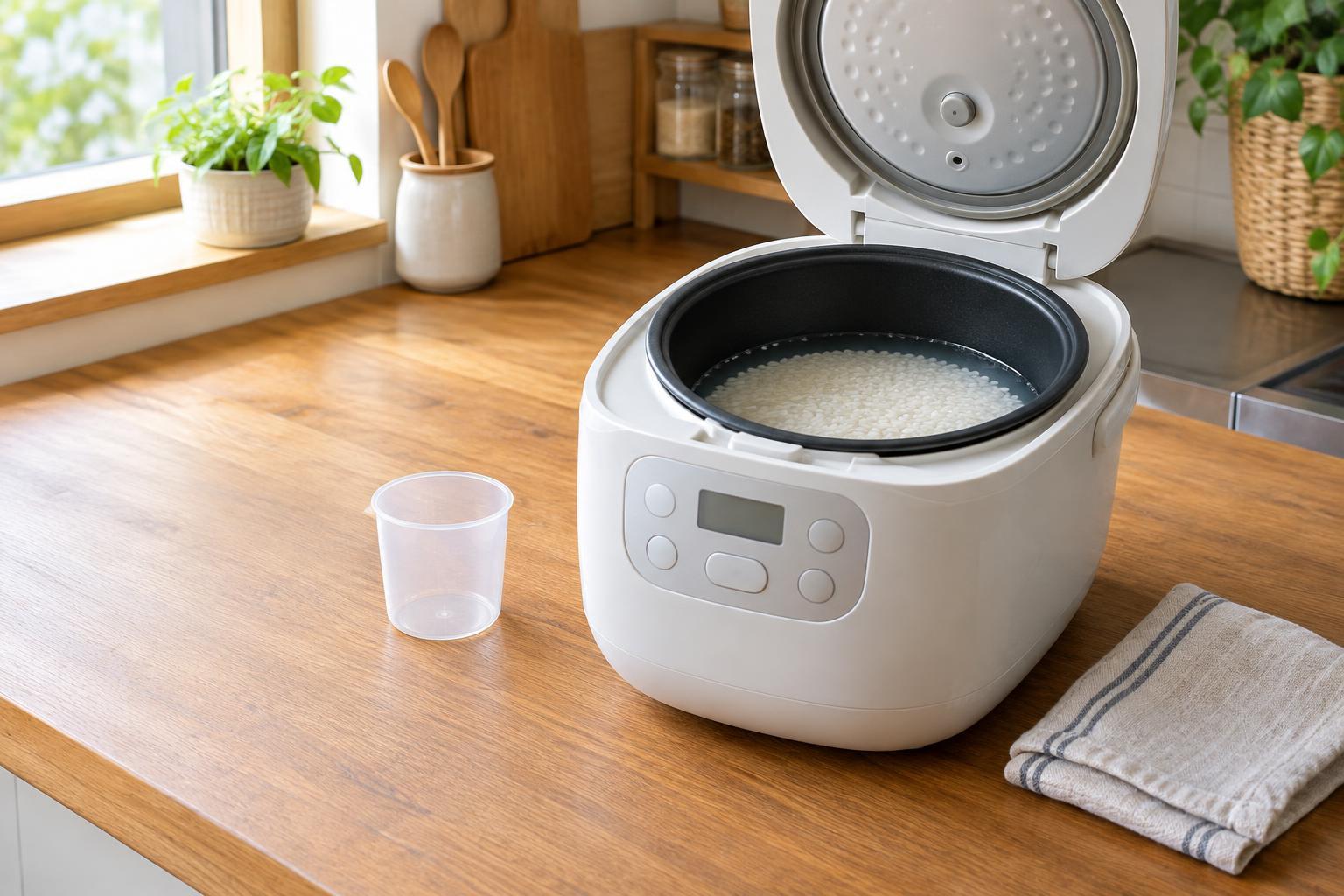
A rice cooker is designed to manage heat and timing while rice absorbs water and steams. For Japanese home cooking, that makes it a convenient way to prepare plain rice alongside soup, vegetables, fish, or other dishes. The most important first step is to use the measuring cup supplied with the cooker. It may be smaller than a standard kitchen cup: many rice cooker cups hold about 180 milliliters. The water lines inside the pot are generally calibrated to that cup, not to an arbitrary mug.
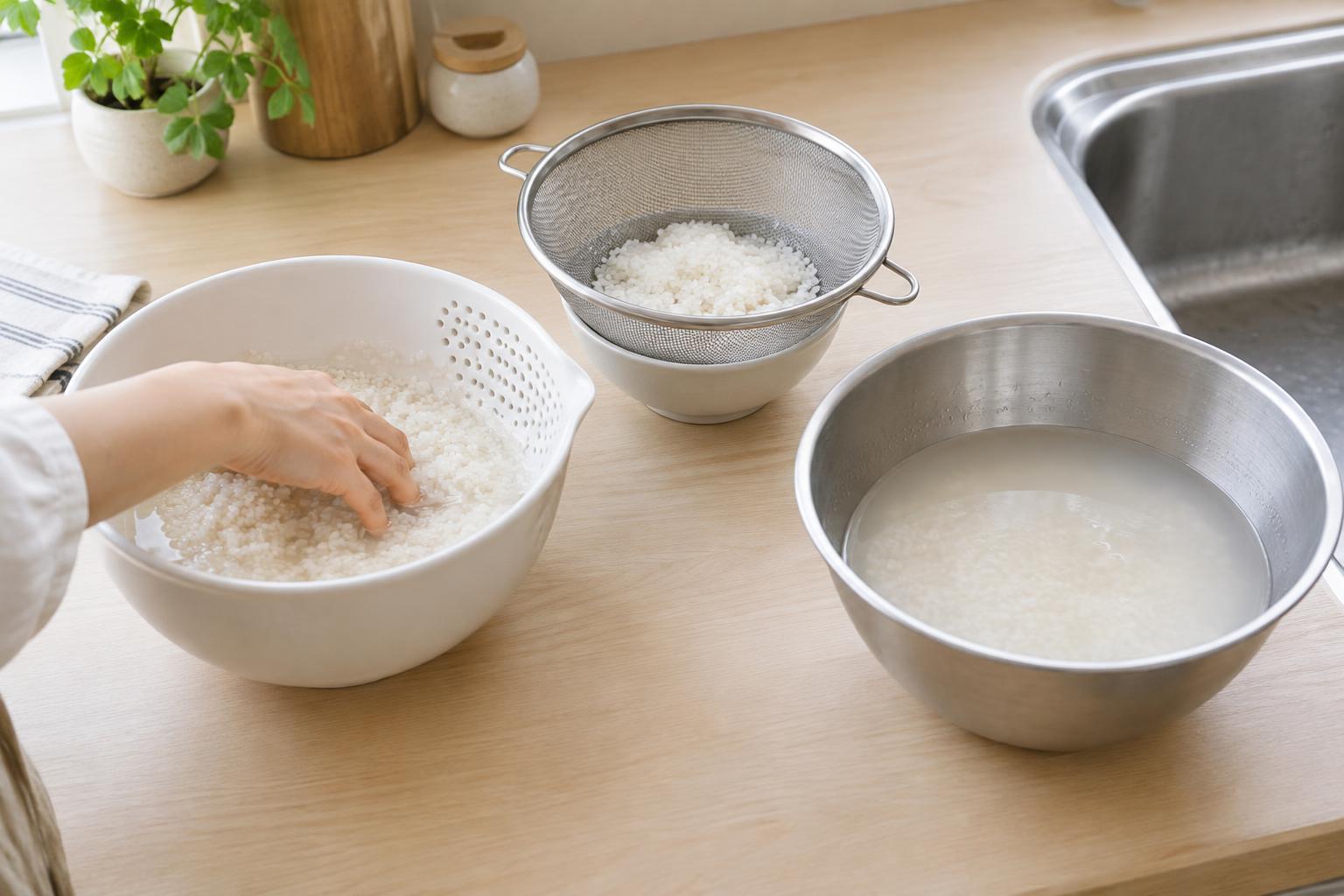
Measure the uncooked rice, rinse it if appropriate for the type of rice and the package directions, then drain it before adding fresh cooking water. Place the inner pot on a level surface and fill to the line that matches both the amount of rice and the chosen setting. For example, a line marked for two cups of white rice is intended for two cooker cups of uncooked white rice. If the rice is consistently firmer or softer than you like, make a small water adjustment next time rather than a large change all at once.
Wipe the outside and bottom of the inner pot dry before putting it into the cooker. Water or stray grains between the pot and the heating surface can interfere with good contact. Check that the pot sits properly, close the lid, and select the setting before starting.
Choose a setting for the rice you are making
A basic white rice setting is a sensible starting point for ordinary Japanese short-grain white rice. Some cookers offer a quick setting, which can be useful when time is short, though the finished texture may differ from the regular cycle. If your model has separate settings for brown rice, mixed rice, or porridge, use the one that matches the dish. These cycles may use different soaking, heating, or resting patterns; the labels and instructions for your particular cooker take priority.
Porridge, called okayu in Japanese, uses substantially more water than a bowl of plain rice. Do not fill to a white rice line and assume the porridge button will make the adjustment for you. Likewise, when cooking rice with seasonings or other ingredients, follow your cooker’s limits for mixed rice. Ingredients can take up space and may affect how evenly the rice cooks.
Many cookers switch to keep warm when cooking ends. That function is handy if dinner is not quite ready, but it is not a substitute for proper storage. Serve rice promptly when possible, follow the manufacturer’s guidance on keep-warm time, and refrigerate leftovers promptly in shallow containers rather than leaving them in a switched-off cooker.
Understand capacity before buying or filling
Rice cooker capacity usually refers to the number of supplied cups of uncooked rice it can cook, not the volume of finished rice. Rice expands as it cooks, so a cooker described as a five-cup model is not meant to hold five standard cups of cooked rice. Look for both the maximum and minimum amounts listed for the settings you expect to use. A large cooker may not be the best fit if you usually make a very small batch.
Think about your typical meal rather than choosing by the biggest number on the box. How many people eat rice, and do you want leftovers for another meal? Check that the cooker fits your counter and that you can open its lid beneath any cabinets. Never fill the pot above the marked maximum for the food or setting you are using. Foamy starchy liquid needs room to rise, especially during porridge cooking.
Clean the parts that touch rice and steam
Once the cooker has cooled and is unplugged, remove the inner pot and wash it with a soft sponge and mild dish soap. Avoid metal utensils and abrasive scrubbers if the pot has a nonstick coating. Rice left around the rim can dry into a crust, so wipe that area as well. If your cooker has a removable inner lid, steam vent, or condensation collector, take those pieces off as directed in the manual and clean them regularly.
Use a damp cloth to wipe accessible surfaces on the cooker body, keeping water away from electrical connections and controls. Let washed parts dry before reassembling them. A quick check for trapped grains around the lid and pot seat helps the cooker close and heat as intended. With the right cup, an appropriate setting, and a few minutes of cleaning, a rice cooker becomes a straightforward tool for everyday meals.