What a rinsing tool needs to do
Rinsing rice is a small task that can feel awkward when grains escape into the sink. For many types of white rice used in Japanese home cooking, a brief rinse helps wash away loose surface starch. The tool’s main jobs are to hold the grains, let you move water through them gently, and make draining easy. It does not need to scrub the rice.
Before choosing a bowl or sieve, check the rice package. Some rice is sold as no-wash rice and is intended to be cooked without the usual rinsing. Other products, including some enriched rice, may have package directions worth following. The best tool is the one that helps you handle the rice you actually buy without adding unnecessary steps.
Rice-washing bowls: convenient draining in one vessel
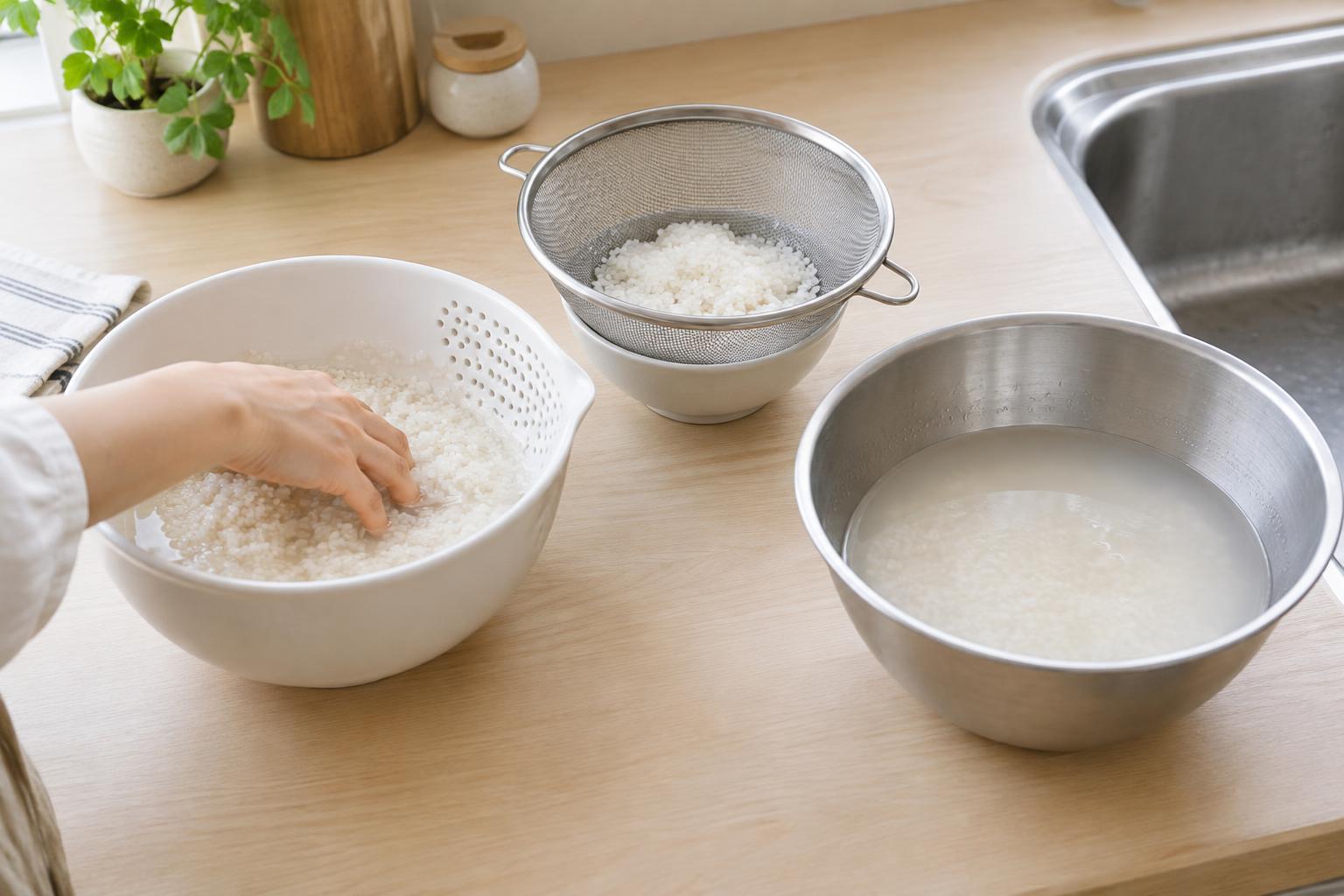
A rice-washing bowl usually has small drainage holes or slots along one side or near the base. You can add water, stir the rice lightly with your hand, then tilt the bowl to pour the cloudy water away while the grains stay inside. Some versions have a solid base, so the same bowl can hold water between drains. This can be especially comfortable if you often prepare the same amount of rice.
Pay attention to the openings rather than the product name. Slots should be small enough to keep your grains in, including any smaller grains you regularly use. A bowl that drains too slowly may be frustrating; one that drains too freely can let water run out before you have finished rinsing. Check that its capacity leaves room to swish the rice without splashing.
Rice-washing bowls are available in different materials. Plastic is often light and easy to lift, while stainless steel can feel sturdy and is less likely to retain odors. Whatever the material, look for smooth edges and drainage holes you can clean thoroughly. A specialized bowl is handy, but it is not essential if it takes up space you do not have.
Sieves and colanders: versatile, with a few cautions
A fine-mesh sieve can rinse rice and drain it quickly, and it earns its storage space by handling other ingredients too. Choose one wide enough that the rice is not packed into a deep mound. Fine mesh retains small grains better than a standard colander, whose holes may be large enough to lose rice. A stable rim or handle also makes the sieve easier to manage over a sink or a larger bowl.
The trade-off is that water passes straight through a sieve. If you prefer to swish rice in a pool of water, set the sieve inside a mixing bowl, add water, and gently move the grains. Then lift the sieve to drain. This pairing gives you the control of a bowl without having to pour water past the rice. Avoid pressing grains against the mesh, which is unnecessary for an everyday rinse and can make cleanup harder.
Look closely at how the mesh joins the rim. A sieve with crevices can trap grains, while a coarse metal colander may catch them around its holes. If the tool is tedious to wash after a small batch, it may not be the convenient choice, even if it drains well.
The ordinary bowl still works
A plain mixing bowl is enough for rinsing rice. Add water, move the grains gently, and pour off most of the water while holding the rice back with your hand. A lid held slightly ajar or a plate can help with draining, provided it is secure and easy to control. Work slowly until you know how far you can tilt the bowl without losing grains.
This approach requires no new equipment and gives you a clear view of the water. Its main drawback is the pour: draining several times can be fiddly, particularly with a heavy bowl or a large batch. A lightweight bowl with a comfortable rim may make more difference than any special feature.
A simple routine and an easy choice
For rice that calls for rinsing, measure it into your chosen vessel and add cool water. Stir gently with your fingers, drain promptly, and repeat as needed. The water may become less cloudy without turning perfectly clear. Follow any soaking or water-measurement directions for your rice and cooker after rinsing; rinse water is not automatically part of the cooking-water amount.
If you cook rice frequently and dislike careful pouring, a rice-washing bowl can remove a minor daily annoyance. If you want one tool for many kitchen jobs, a fine-mesh sieve used with a bowl is a flexible choice. If you make rice only occasionally, start with the bowl you already own. In each case, a secure grip, reliable draining, and easy cleaning matter more than a tool’s label.