What a tamagoyaki pan does
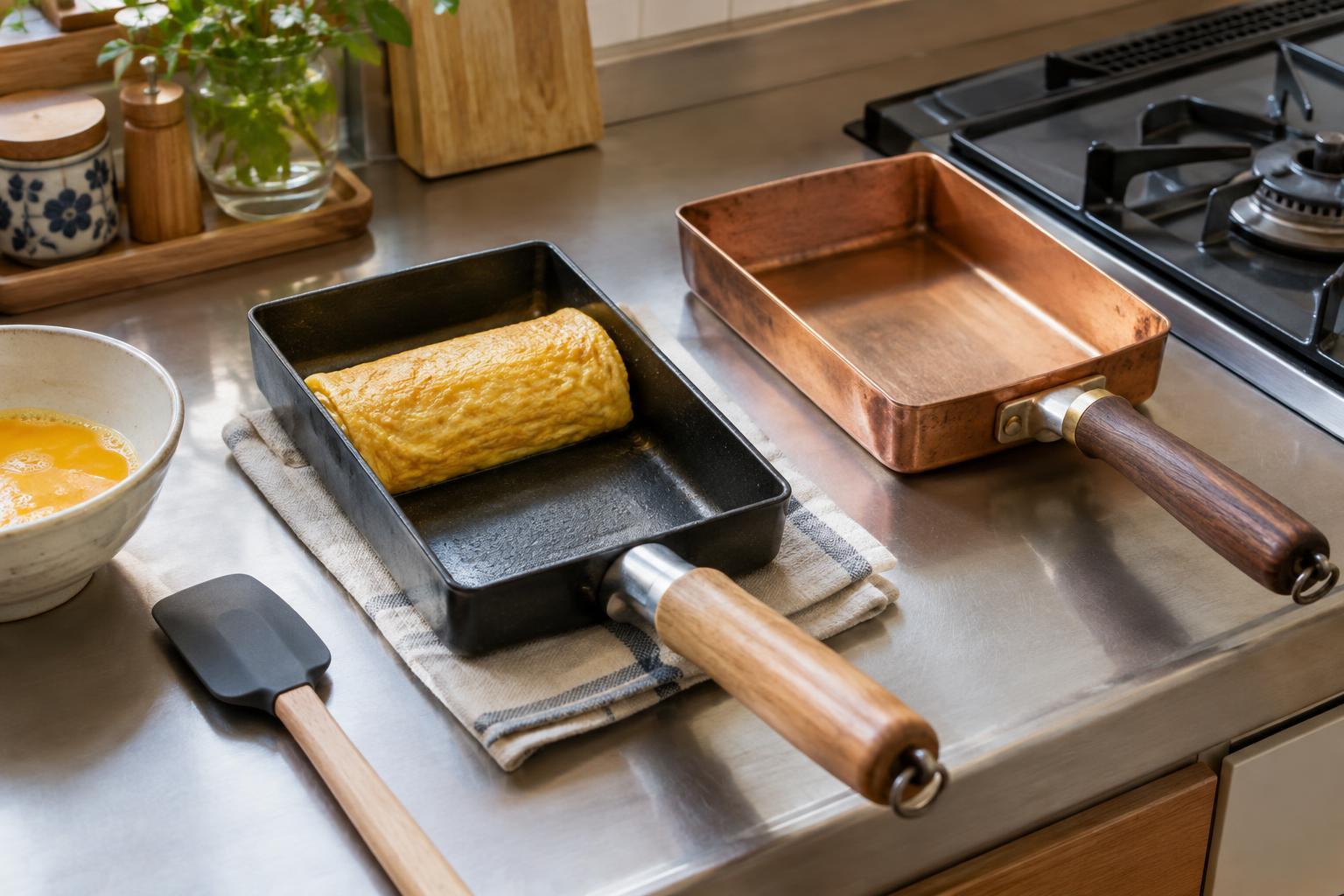
Tamagoyaki is a rolled omelet made by cooking thin additions of beaten egg and folding or rolling each layer over the last. A tamagoyaki pan, often called a makiyakinabe, gives those layers straight sides and a fairly even width. Its shape helps you build a tidy roll, but it does not do the rolling for you. Temperature, a lightly oiled surface, and the timing of each fold matter just as much.
A dedicated pan is useful if you make tamagoyaki regularly or want slices with a consistent shape for a meal or lunch box. If you are trying the dish for the first time, a small round nonstick skillet can still make a good rolled omelet. The result may have tapered ends, which you can trim or simply serve as they are.
Choose a shape and size that suit your stove
Tamagoyaki pans are usually rectangular or nearly square. A longer rectangular pan gives you room to roll the egg along its length and can produce a longer finished omelet. A squarer pan makes a shorter roll and may feel easier to maneuver in a compact kitchen. Neither shape is inherently better; think about how many portions you usually make and whether the pan will sit securely over your burner.
Pan size affects the thickness of each egg layer. The same amount of egg spreads more thinly in a larger pan, so you may need more mixture to build a substantial roll. A very small pan, on the other hand, leaves less space for a spatula or chopsticks. Before buying, check the cooking surface dimensions rather than judging by the outside edge, and look at the handle length if storage space is limited.
The flat base should also work with your stove. On an electric or induction cooktop, good contact between the base and the cooking zone helps with steady heating. On a gas stove, flames that extend up the sides can overheat the edges. For induction, confirm that the particular pan is labeled compatible; material names alone do not always tell you how its base is constructed.
Compare cooking surfaces and materials
A nonstick-coated pan is a forgiving choice for beginners. Thin layers of egg release more readily, and cleanup is usually simple. Use utensils recommended for the coating, avoid heating an empty pan excessively, and follow the maker’s care instructions. If the surface becomes scratched or loses its release, rolling can become frustrating even when your technique is sound.
Copper pans are associated with traditional tamagoyaki cooking because copper responds quickly to changes in heat. That responsiveness can be helpful once you know how the egg behaves, but it calls for close attention at the stove. Copper pans may have a lining that needs particular care, and compatibility with induction varies by construction.
Other options include aluminum, cast iron, and stainless steel. Aluminum is often light and heats readily, though its cooking surface depends on any coating or treatment it has. Cast iron holds heat well but is heavier and slower to respond when you lower the burner. Uncoated stainless steel is durable, yet keeping delicate egg from sticking takes more practice. When comparing pans, consider the actual cooking surface and weight, not just the material named on the packaging.
Look for control, not just a neat shape
A comfortable handle makes it easier to tilt the pan so each fresh addition of egg reaches the corners and runs beneath the partly cooked roll. Check that the handle feels secure and keeps your hand at a comfortable distance from the heat. Low, accessible sides can help you lift an edge with a spatula, while corners that are easy to reach make oiling and cleanup less awkward.
Even heating is useful, but tamagoyaki does not require high heat. Start around low to medium heat and adjust to your stove and pan. The egg should set enough to roll without turning dry or deeply browned. If it browns before you can spread and fold a layer, reduce the heat or briefly lift the pan away from the burner. A small amount of oil between additions helps prevent sticking, including in many nonstick pans.
A practical way to decide
For an occasional home cook, a modestly sized nonstick pan that fits the stove is often the simplest starting point. If you already enjoy making tamagoyaki and want a particular style of roll, shape and material become more meaningful choices. Pick up a candidate pan if possible: a weight you can tilt easily and a handle you can grip confidently may matter more in daily use than a specialty finish.
Whichever pan you choose, expect a little practice. Pour in just enough egg to cover the base thinly, roll it while it is still flexible, move the roll aside, and add the next layer. A few imperfect folds will still make a satisfying omelet. The best pan is one that lets you repeat those small movements comfortably and control the heat as the layers build.