What is an otoshibuta?
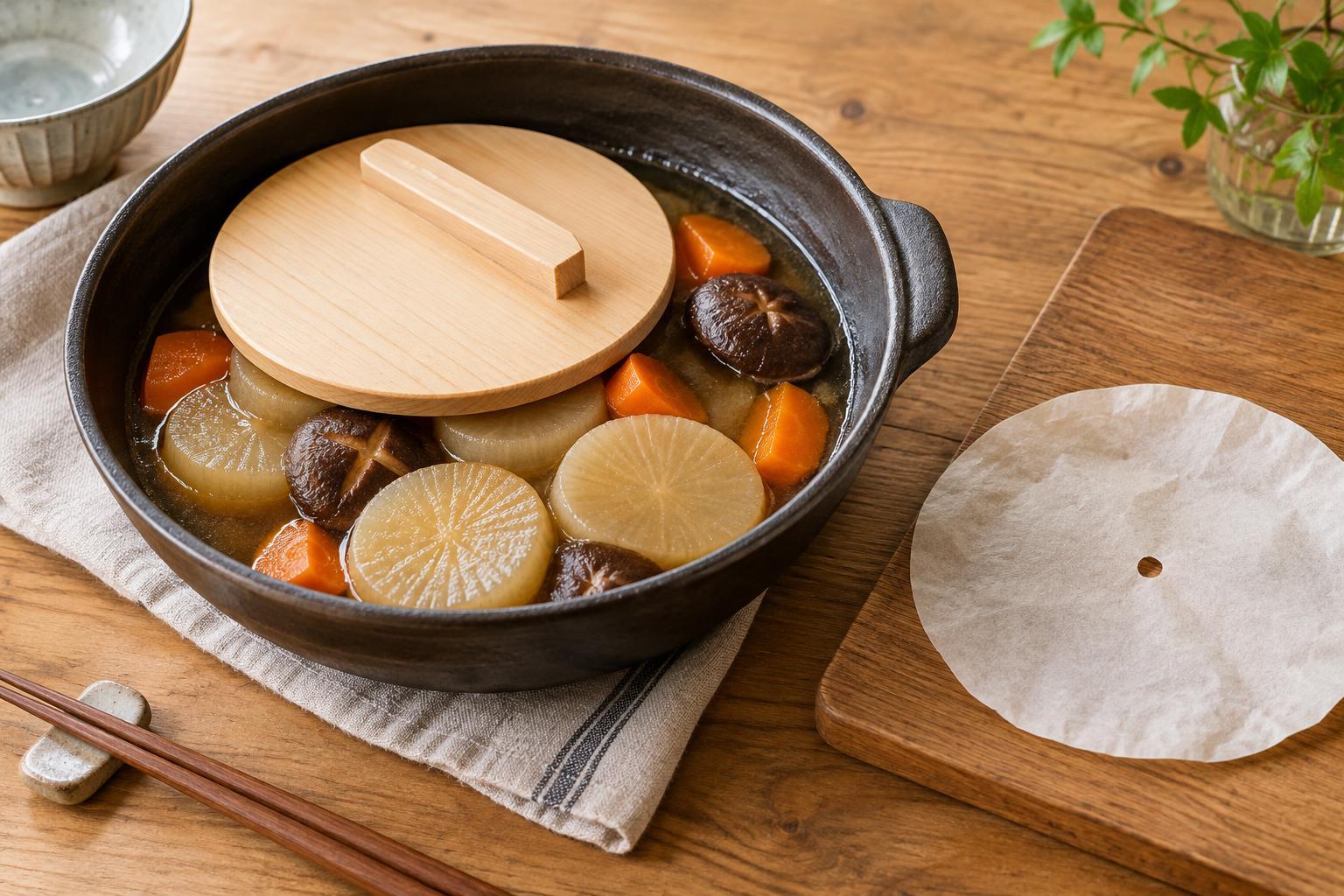
An otoshibuta is a drop lid: a cover placed directly on top of food as it simmers. Unlike a standard pot lid, it sits inside the pot, usually with a small gap around its edge. It is often used for nimono, a broad term for Japanese simmered dishes, including vegetables, tofu, and fish cooked in seasoned liquid.
Traditional drop lids are often wooden, but metal and silicone versions are also available. A circle of parchment paper makes a useful temporary substitute. The material matters less than the fit: the lid should cover most of the food’s surface without wedging against the sides of the pot.
Why put a lid on the food?
A drop lid helps a modest amount of simmering liquid reach ingredients near the surface. As the liquid bubbles, it moves around the lid and over the food instead of leaving the top pieces exposed. This is helpful when you want to cook a pot of daikon, potatoes, or other chunky ingredients without adding enough liquid to submerge everything.
The lid also gently holds ingredients in place. With less room to tumble, delicate pieces are less likely to break apart during a steady simmer. That does not mean they cannot break: vigorous boiling, a crowded pot, or frequent stirring can still damage them. A drop lid works best alongside moderate heat and a pot wide enough to hold the ingredients comfortably.
Because a drop lid does not seal the pot, steam can escape and the liquid may reduce as it cooks. A conventional lid placed on the pot rim retains more moisture. You can use both when a recipe calls for it, but they serve different purposes: the drop lid manages contact with the simmering food, while the outer lid limits evaporation.
How to use one in a simmered dish
Arrange the ingredients in a saucepan and add the liquid specified by your recipe. Bring it to a simmer and skim any foam if needed. Then lower the drop lid onto the food, keeping it roughly level. It should rest lightly on the ingredients or liquid, not press them down. If a rigid lid catches on the pot walls, use a smaller one.
Adjust the heat until you see gentle movement around the lid’s edge. An occasional, steady bubble is more useful than a hard boil. Check the pot periodically: some liquid should remain beneath the ingredients, and the lid should not be stuck to the bottom as the sauce reduces. Add a little water or other cooking liquid if the pot is becoming dry before the food is tender.
Lift the lid carefully, tilting it away from you to avoid steam. Test the food itself for doneness rather than relying only on a cooking time. If you want a more concentrated sauce, you can remove the drop lid near the end and simmer briefly, watching closely so the seasoning does not become too strong or burn.
Choosing a lid—or making one from parchment
A wooden otoshibuta has enough weight to sit steadily on the food. Wet it briefly before use so it is less likely to absorb strongly flavored cooking liquid, then wash and dry it thoroughly afterward. Follow the maker’s care instructions for any wooden, metal, or silicone lid; not every material belongs in a dishwasher.
For a simple disposable version, cut a circle of parchment paper slightly smaller than the inside of your pot. Fold the circle and snip a small opening at its center so steam can escape. Set it directly on the simmering ingredients. Parchment is light, so bubbling liquid may lift it, but it still helps distribute liquid across the surface. Use heat-safe cooking parchment, not wax paper or plastic wrap.
Whichever version you choose, size it for the pot rather than seeking an exact measurement. A lid that is too small leaves much of the food uncovered; one that is too large cannot settle into the pot. If you cook simmered dishes in several saucepans, a parchment lid is an easy way to get the right fit each time.
When it is worth reaching for
Try a drop lid when simmering sturdy vegetables in a shallow seasoned broth, or when cooking pieces of fish that you would rather not stir. It is especially useful when the recipe aims to season the food with a relatively small amount of liquid. For a soup with ingredients fully submerged, a drop lid may offer little benefit.
Think of the otoshibuta as a way to make gentle simmering easier, not as a requirement for Japanese home cooking. Start with the pot and recipe you already use, try a parchment version, and notice how often you need to turn or stir the ingredients. That small comparison will tell you where a drop lid earns its place in your kitchen.