What makes a Japanese fish grill different?
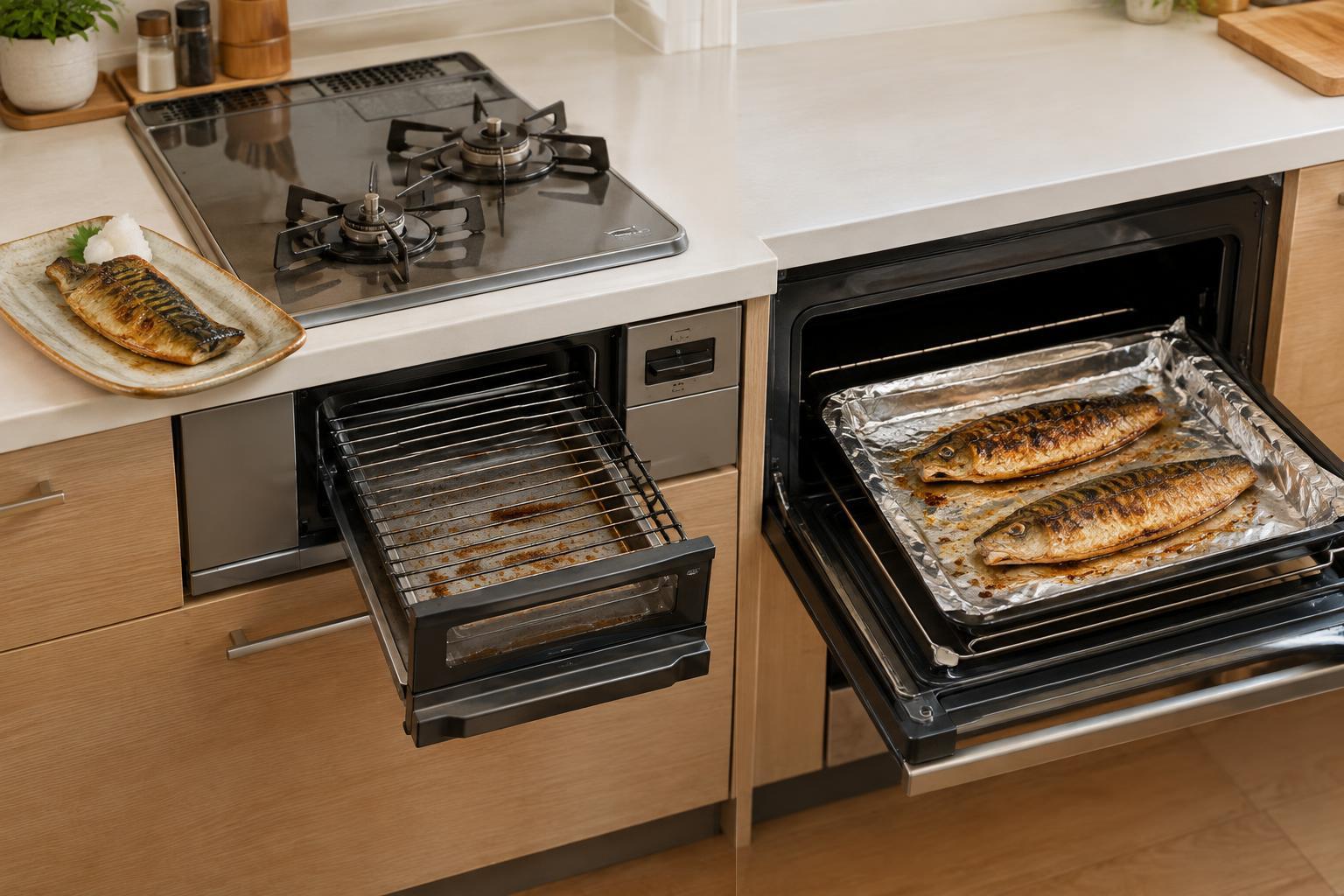
In many Japanese kitchens, a compact fish grill is built into the stovetop below the burners. Often called a grill drawer, it holds fish close to a heat source in a shallow compartment. Designs vary: some heat from above, while others heat from both above and below. A model that heats from both sides may need less turning, but the appliance manual is the best guide to how a particular grill works.
An oven broiler also cooks with strong heat from above, usually in the oven cavity. It offers more room and accepts a range of pans, but the fish generally sits farther from the heat unless the rack is raised. Neither tool guarantees better fish. Size, heat position and how closely you watch the food matter more than the name of the appliance.
Choosing by portion size and cooking style
The compact Japanese grill suits a small number of portions, such as a split salted mackerel or a few fillets. Its short distance from the heat can help the skin brown quickly. That same closeness leaves little margin for a sugary glaze or an especially thick piece: the surface may darken before the center is ready. Check early, and move or turn the fish as your grill requires.
An oven broiler is often easier when you need to spread several portions apart or use a larger tray. It can also accommodate vegetables beside the fish, provided everything has similar cooking needs. For skin-on fish, place pieces so air and heat can reach them rather than crowding the pan. If browning is uneven, rotate the pan or adjust its position, taking care around the hot rack and door.
For either method, patting the fish dry helps it brown instead of steam. Lightly oil a rack or suitable pan if sticking is a concern. Fish thickness and appliance settings vary too much for one reliable cooking time, so check the thickest part for doneness rather than relying only on a timer.
Smoke, drips and the equipment underneath
Fish fat can drip and produce smoke in either appliance. A Japanese grill may have a removable rack and drip tray; some designs specify water in the tray, while others require it to stay dry. Follow the instructions for your model rather than assuming the tray works the same way as another household’s. Keep vents clear, use kitchen ventilation and avoid leaving intensely heated fish unattended.
Under an oven broiler, a broiler-safe pan or tray catches drips and gives you a larger surface to manage. Check that any rack, pan or liner is approved for broiler use: high heat can damage materials that are fine for ordinary baking. Keep the fish and pan at the distance from the heating element recommended for your oven. If the surface browns too fast, lowering the rack is usually more useful than repeatedly opening the door.
The cleanup trade-off
A grill drawer concentrates splatter in a small space, which can make routine washing straightforward if the rack and tray lift out. On the other hand, grease left on those parts or inside the compartment can become stubborn with repeated heating. Once everything has cooled, remove the washable parts, soak them if needed and wipe accessible interior surfaces according to the manual. Do not pour water into the grill compartment unless its instructions specifically call for it.
An oven broiler gives you a larger pan to wash and may leave splatter on the oven interior. A suitable drip-catching pan can limit the mess, but it should not block the heat or ventilation the appliance needs. Wash the pan after it cools, and address visible oven splashes before they are heated again. With either setup, cleaning sooner rather than after several uses makes fish odors and baked-on grease easier to manage.
Which one fits your kitchen?
Choose the Japanese grill when you regularly cook modest portions and value a dedicated space for quick browning. Choose the oven broiler when you need more pan area or do not have a built-in grill. If you have both, the decision can be as simple as matching the fish to the space: a small salted fillet in the grill drawer, or several portions on a broiler-safe pan.
Before cooking, make sure you know which parts are removable and how your appliance handles drips. That small bit of preparation does more for an easy fish dinner than any special accessory: you can focus on watching the browning, then clean the surfaces that caught the fat.