Two pairs for two jobs
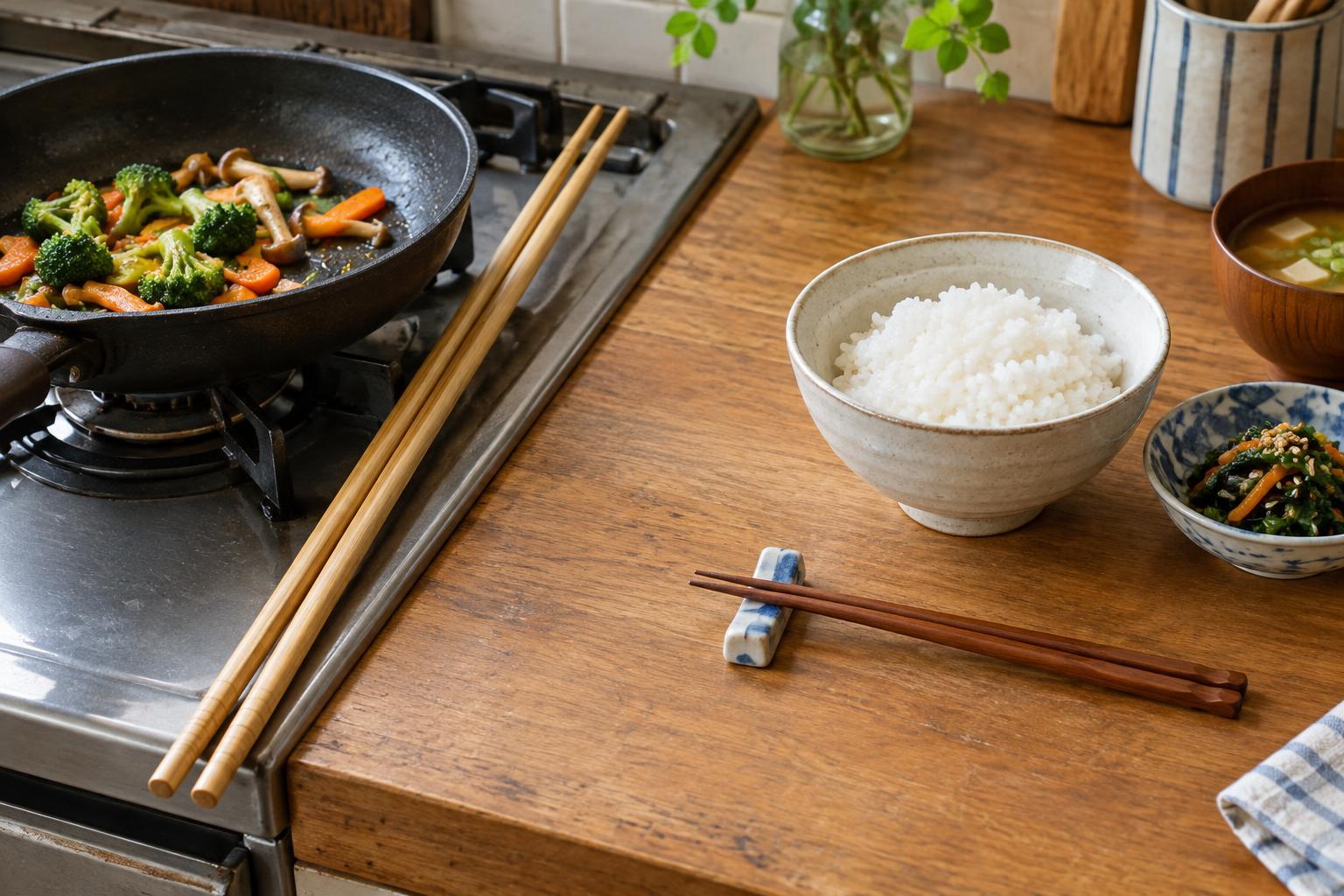
In a Japanese home kitchen, chopsticks can be both a cooking tool and a table utensil. Eating chopsticks, or hashi, are sized for comfortable handling at a meal. Cooking chopsticks, often called saibashi, give the cook extra reach for turning, lifting, and arranging food. You do not need a specialized pair to make every Japanese dish, but understanding the distinction makes it easier to choose the right tool.
The clearest difference is where your hand sits in relation to the food. At the table, control and comfort matter most. At the stove, a longer pair helps keep your fingers farther from a hot pan, bubbling liquid, or steam. Neither type is a substitute for tongs or a spatula in every situation: a large or heavy piece of food may be easier and safer to move with a sturdier tool.
Length and tip shape
Eating chopsticks are generally short enough to balance easily in one hand over a bowl or plate. Cooking chopsticks are noticeably longer, though exact lengths vary by maker and user preference. Extra length is useful for reaching across a frying pan, stirring noodles, or moving small ingredients without leaning over the heat. It can also feel awkward at first, especially when you are trying to pick up something delicate.
Look at the tips as well as the overall length. Fine tips can help with precise tasks, such as turning a small piece of food or arranging a garnish. A little texture may improve grip on slippery ingredients. Thicker or smoother tips may be less precise but easier to clean. When trying a pair, see whether you can bring the tips together neatly without straining your hand. Good control is more valuable than choosing the longest pair available.
Materials and heat
Wood and bamboo are common choices for cooking chopsticks. They are lightweight, often provide a secure grip, and do not feel as hot in the hand as metal can. Their surfaces and finishes differ, so check the maker’s care guidance before leaving them in water or putting them in a dishwasher. Replace a pair if the tips splinter or become difficult to clean.
Eating chopsticks may be made from wood, bamboo, metal, or other materials, sometimes with decorative coatings. A table pair is not automatically suitable for stirring a hot pan: heat can damage some finishes or adhesives. Metal cooking chopsticks are durable and easy to wash, but they can become hot and may be slippery with oily food. Whatever the material, avoid resting chopsticks against a hot pan edge or leaving them unattended in a pot. If you cook with a nonstick pan, choose utensils that its maker says are safe for the surface.
Where cooking chopsticks help most
Saibashi are handy when a task calls for a light touch. You can use them to loosen noodles, turn thin slices of food, lift vegetables from simmering liquid, or position small pieces neatly before serving. They can also help with egg dishes: stirring beaten egg or gently moving a soft portion in a pan gives you more precision than a broad utensil. For deep-frying, use tools suited to the amount of hot oil and the size of the food; long chopsticks provide reach, but they do not remove the risk of splashing.
Keep food safety in mind as you work. Chopsticks that have touched raw meat, poultry, or seafood should be washed before they touch cooked food or ready-to-eat garnishes. Keeping a separate clean pair for plating makes that distinction simple. At the table, use your eating chopsticks for your own meal rather than reaching into shared dishes with them; a serving pair or another serving utensil is a practical option.
Choosing a useful pair
If you are buying your first cooking chopsticks, start with a lightweight pair that feels steady in your hand and is easy to clean. Check that the two sticks are straight, the tips meet, and the surface is comfortable to hold when your hands are damp. A simple pair is enough for many everyday jobs; features such as textured tips or a connecting ring are matters of preference, not requirements.
Store cooking and eating chopsticks where you can tell them apart, and let washed wooden or bamboo pairs dry thoroughly before putting them away. With a little practice, switching between the two feels natural: the longer pair helps you prepare and serve, while the shorter pair makes the finished meal comfortable to eat.