What an oroshigane does
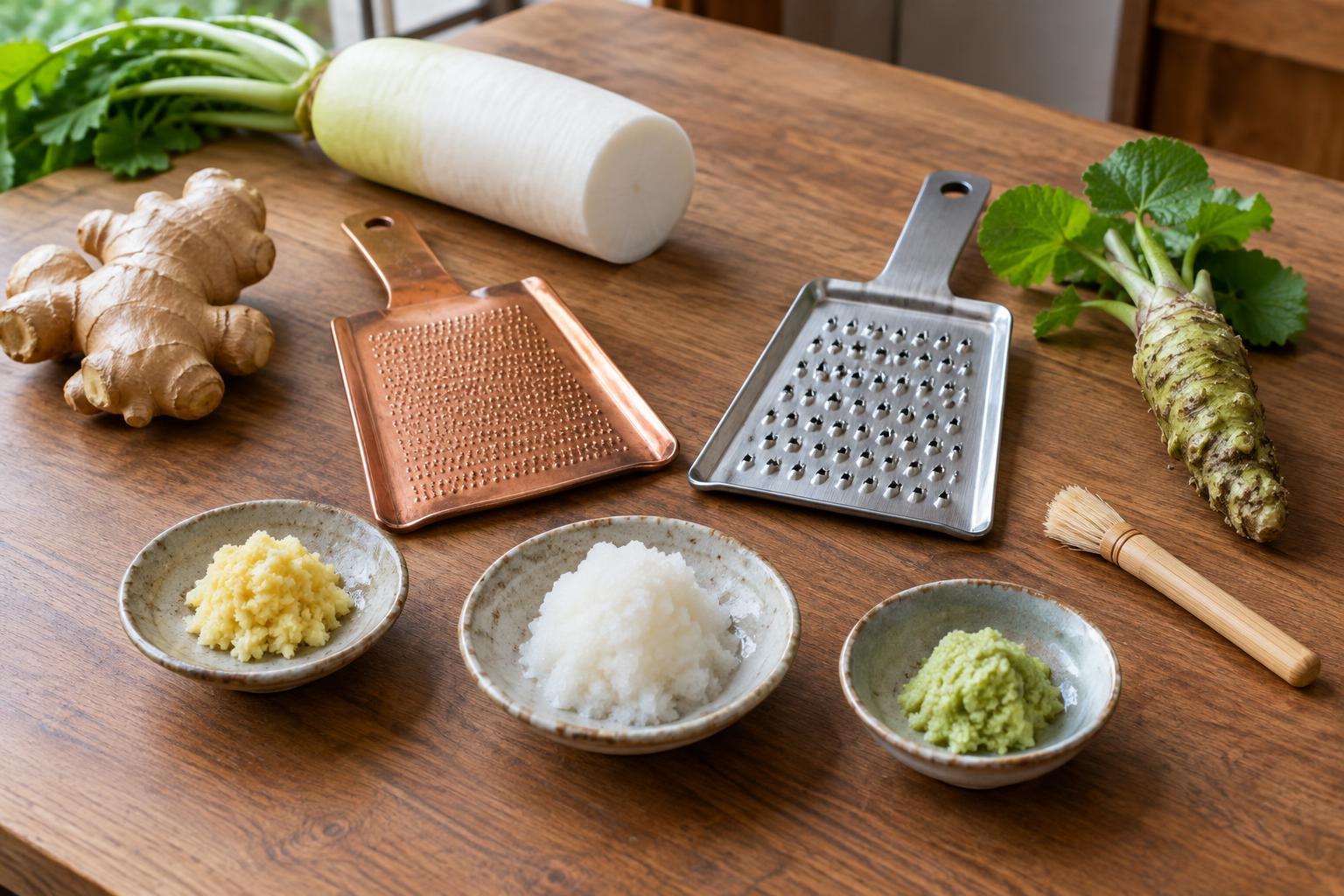
An oroshigane is a Japanese grater, commonly made of metal, with raised cutting points rather than the large slicing holes found on many box graters. It breaks an ingredient into small pieces that collect as a moist mound or paste. That texture matters: grated ginger blends readily into a dressing, while grated daikon can be served beside grilled fish or stirred into a dipping sauce.
Not every Japanese grating tool has the same surface. Metal graters range from fine to coarse; ceramic plates have raised nubs; and sharkskin boards are traditionally associated with grating fresh wasabi. Shops may group these tools under similar names, so look at the working surface and the food you plan to grate rather than relying on a label alone.
Match the surface to the ingredient
For ginger, a fine-to-medium surface is a versatile choice. It produces small pieces that can be mixed into sauces, soups, or marinades. Ginger is fibrous, so some strands may remain on the grater. A surface with points you can reach easily is helpful if ginger is a frequent ingredient in your kitchen. A small ceramic grater can also work well for modest amounts, though it may require more rubbing than a sharp metal one.
For daikon, think about the amount you usually prepare. A broader metal grater gives you room to move a cut piece of daikon and is more comfortable when making a generous serving of daikon oroshi. A finer surface generally gives a softer, more paste-like result; a coarser one leaves more discernible bits. Daikon releases plenty of liquid, so a grater that sits securely over a bowl, tray, or container makes the job neater.
Fresh wasabi is often grated very finely to make a smooth paste. A sharkskin grating board is one option for that particular task, but a suitably fine metal or ceramic grater can be useful for a home cook who wants a multipurpose tool. If you normally use prepared wasabi rather than a fresh rhizome, there is little reason to buy a dedicated wasabi grater.
What to check before buying
Start with size and stability. A compact grater is easy to store and suits a little ginger at a time. A larger one is easier to use with daikon. Check whether it rests firmly on a bowl or cutting board, and whether its handle or rim gives you a comfortable place to hold it. Some graters come with a collecting tray, which can be convenient but is not essential.
Next, examine the surface. Sharp metal points grate efficiently but demand careful handling. Ceramic nubs will not rust, although a ceramic plate can chip if dropped. With either style, consider how easily you can retrieve the grated food. A little brush or spatula may be more useful than trying to scrape every bit off with your fingers. If you want one tool for all three ingredients, choose a medium-sized grater with a fine surface and accept that preparing a large amount of daikon may take longer.
Grate for texture, not just speed
Set the grater on a stable surface before you begin. Cut daikon into a piece you can grip comfortably, and peel it if you prefer a uniform appearance. Move it across the surface with steady pressure, then stop while there is still enough left to hold safely. Daikon oroshi may be served with some of its liquid or gently drained, depending on how wet you want the finished dish.
For ginger, use a piece large enough to hold securely; whether to peel it is a matter of preference and the condition of its skin. Short strokes can give you control as the piece gets smaller. For fresh wasabi, grate only the amount you intend to use soon, since its freshly grated character is best appreciated promptly. Whatever the ingredient, avoid pressing a tiny remaining piece into sharp teeth with bare fingertips.
Clean the grater without fighting it
Rinse the grater soon after use so ginger fibers and daikon residue do not dry onto the surface. A soft brush can lift food caught between raised points; brush away from your hand and follow the tool maker’s care directions. Dry metal graters thoroughly, especially around seams or handles where water can linger. Ceramic graters should also be dried and stored where they will not knock against heavier tools.
The most useful oroshigane is the one that fits what you actually cook. If ginger appears in your meals every week, prioritize an easy-to-clean fine grater. If you often serve daikon oroshi, give yourself a larger work surface. A specialized wasabi board can wait until fresh wasabi is something you prepare regularly.