A small tool with several jobs
In a Japanese home kitchen, a mesh skimmer is useful wherever food and liquid need to be separated without emptying the pot. It can collect foam from a simmering broth, lift blanched vegetables from water, or retrieve a piece of fried food from oil. A strainer serves a related purpose, but usually holds food while liquid is poured through it. Knowing which motion you need—scooping from a pot or pouring out of one—makes the choice simpler.
Names can overlap, so look at the tool rather than relying on its label. A fine-mesh skimmer has a shallow, closely woven basket that catches small particles. A wire spider has wider openings and a deeper, open basket suited to lifting larger pieces quickly. A handheld sieve can strain a small quantity of liquid or sift dry ingredients, while a colander is better for draining a full batch of noodles or washed produce.
Removing foam from a simmering pot
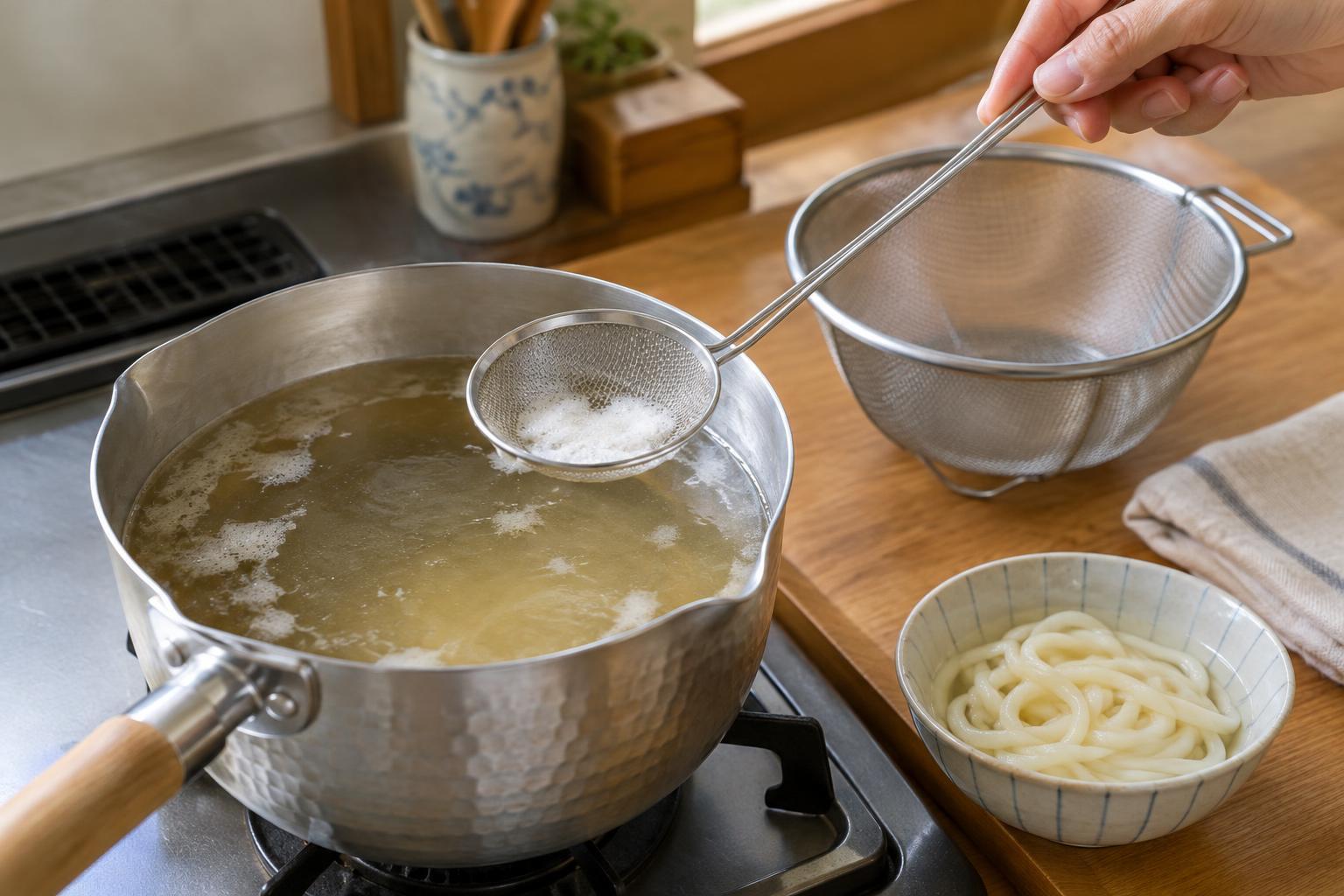
When meat, fish, or other ingredients begin to simmer, foam and small particles may rise to the surface. In Japanese cooking, the material skimmed from a pot is often called aku. Removing it can give a broth a cleaner appearance and, depending on the ingredients, a cleaner taste. Skimming is most useful near the beginning of cooking, when the foam is easy to see and gather.
Keep the liquid at a gentle simmer rather than a rolling boil. Draw the skimmer lightly across the surface, letting the liquid flow back through the mesh, then rinse the collected foam into a bowl of water or under the tap. Avoid stirring the pot just before skimming, since that disperses the particles. You do not need to chase every tiny speck: skim what gathers readily, then continue cooking. If you want to strain the finished broth, pour it through a sieve separately; surface skimming and final straining do different jobs.
Lifting food without draining the whole pot
A skimmer is especially handy when several ingredients share one pot of water. For example, you can blanch a small batch of greens, lift them out, and use the water for another batch. Let excess water drain over the pot for a moment before moving the greens to a bowl. A wide, open spider works well for larger pieces, while fine mesh holds smaller items that might slip through the wires.
For noodles, match the tool to the portion. A deep noodle strainer or sturdy spider can lift a single serving while the cooking water stays in the pot. A colander is often easier for draining the entire batch. When transferring food from boiling water, keep your hand clear of steam and move slowly so water does not splash. If a skimmer is crowded, make two trips rather than balancing an unstable heap over the stove.
Using a skimmer around hot oil
A wire spider can lift tempura or other fried pieces from oil while allowing much of the oil to drain back into the pot. Hold the food just above the surface briefly, then transfer it to a rack or other draining surface. A fine-mesh skimmer is useful for gathering small loose crumbs from the oil between batches, but its close weave can hold more oil than an open spider.
Use a tool with a handle long enough to keep your hand comfortably away from the heat. Lower food gently, and do not drop it from the skimmer into the oil. Keep wet strainers away from hot oil: water trapped in the mesh can cause splattering. If the tool has a plastic or wooden part, check that it is suitable for the heat and that the handle remains secure.
Choosing, cleaning, and storing the right one
For an all-purpose first purchase, consider what you cook most often. A small fine-mesh skimmer suits frequent broth making and removing stray particles. A sturdy, wider spider is more versatile for lifting vegetables, noodles, and fried food. Check that the basket fits inside your usual pots and that the handle feels balanced when the basket is full. Fine mesh is helpful for tiny solids but takes more effort to clean.
Rinse the tool promptly after use, especially if starch, foam, or batter has caught in the mesh. A soft brush can dislodge food at the rim where mesh meets the frame. Wash thoroughly, then let it dry completely before storing it so moisture does not linger in the joints. With the right size and mesh for the task, these simple tools make everyday pot work tidier and easier to control.