Get to know daikon
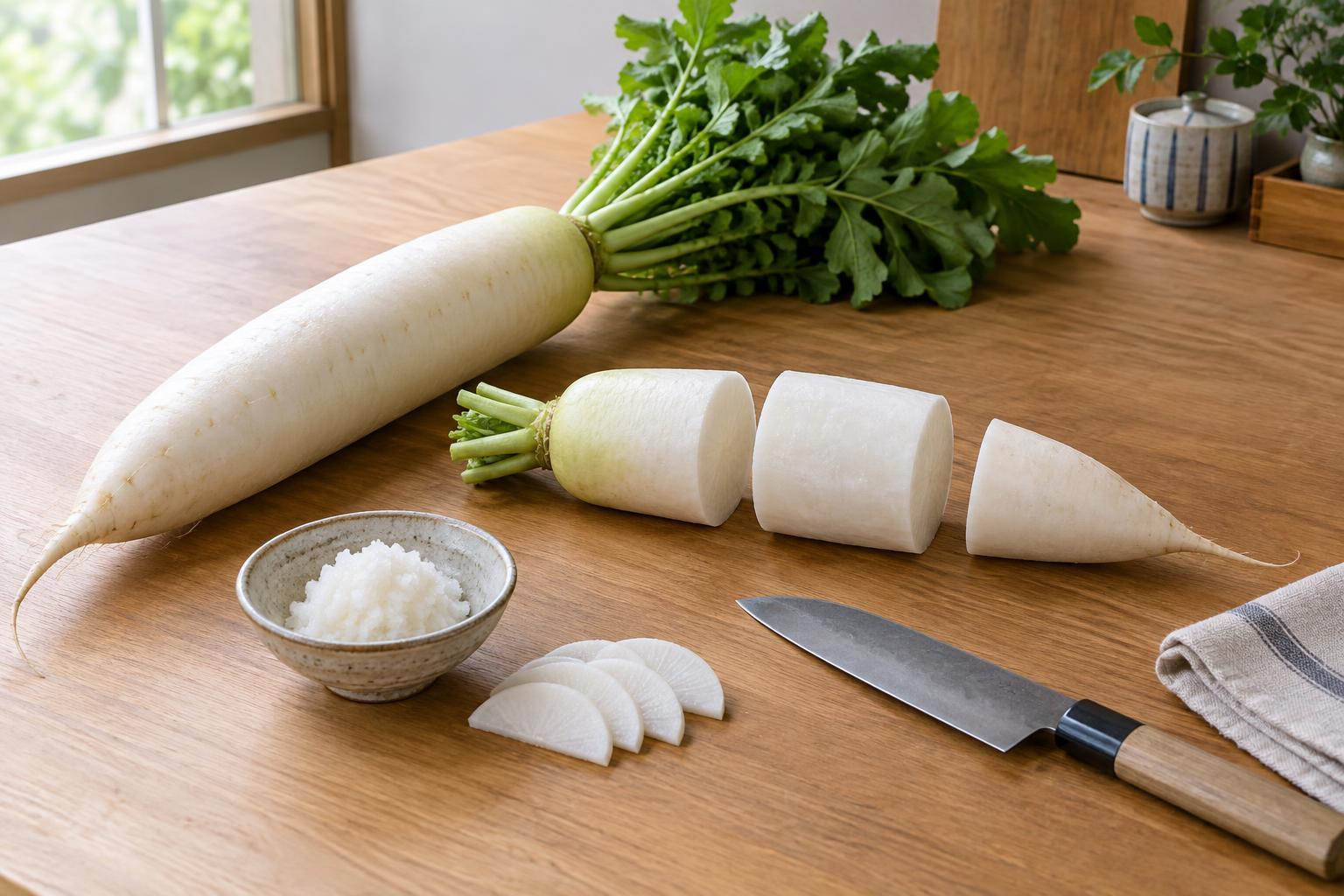
Daikon is a large white radish used in many Japanese home dishes. Its name means “big root,” but its appeal is more than size: it can be juicy and crisp when raw, or soft and mild after simmering. You might encounter it grated beside grilled fish, cut into strips for a salad, or served in thick rounds that have absorbed the flavor of a broth.
A whole daikon offers several textures and flavors along its length. The shoulder near the leaves is often relatively sweet and juicy, while the narrow tip may taste sharper. The middle is a versatile choice for most preparations. These are useful tendencies, not strict rules; the flavor of any particular root can vary.
How to choose a good root
Look for a daikon that feels firm and substantial, with skin that appears smooth for its variety. Small scuffs are usually less important than soft spots, deep cracks, or areas that feel spongy. If the leaves are attached, fresh-looking greens are a helpful sign, though daikon sold without leaves can be just as useful. A cut piece should have a moist-looking, solid interior rather than one that looks dry or hollow.
Choose a size that fits your plans and refrigerator. A large root can serve several meals, but a smaller piece may be easier to finish while it is at its best. If you buy a cut section, notice which end it comes from: a broad shoulder piece is handy for raw dishes, while a middle piece gives you plenty of options.
Store the root and leaves separately
If your daikon has leaves, remove them before storing it. Left attached, the greens can draw moisture from the root. Wrap the root or place it in a bag in the refrigerator’s vegetable drawer; keep cut surfaces covered so they do not dry out. For a large root, cut it into manageable sections only when needed if your refrigerator space allows.
Wash the leaves well, dry them as thoroughly as you can, and refrigerate them separately. They tend to wilt faster than the root, so plan to use them first. Chopped leaves can be quickly sautéed, added to soup, or mixed into rice. If the root becomes a little less crisp, it may still be well suited to cooking; discard it if it develops mold, an unpleasant smell, or extensive soft, slimy areas.
Match each section to a dish
The upper section, closest to the leaves, is a good place to start for raw preparations. Slice it thinly for a salad, cut it into sticks for a crunchy side dish, or grate it into daikon oroshi. Grated daikon is often served in a small mound with rich or savory foods: its moisture and gentle bite provide contrast. If it tastes stronger than you expected, try a different section next time or pair it with a well-seasoned dish.
The middle section is especially convenient for simmering. Cut it into thick rounds for a broth-based dish, or into smaller pieces for soup. Even-sized cuts help the pieces cook at a similar rate. Peeling is optional for thin raw slices, but a thicker peel can be worthwhile when simmering large pieces, since the layer just beneath the skin may stay fibrous. Rather than throwing those peelings away, cut them into thin strips and cook them until tender.
The tapered tip can have more peppery bite, making it useful when you want a livelier grated condiment. It also works in a stir-fry or a strongly flavored soup, where cooking softens its sharpness. Taste a little before deciding: if the tip is mild, use it as you would the middle. The point of dividing daikon into sections is to make cooking choices easier, not to limit what you can make.
Prepare only what the dish needs
Scrub daikon before cutting it, especially if you plan to leave the skin on. For raw dishes, slice or grate it close to serving time for the freshest texture. Grated daikon releases liquid as it sits; you can include some of that juice or drain it lightly, depending on how moist you want the finished plate.
For cooked dishes, adjust the cut to the time you have. Thin slices and small cubes soften sooner, while thick rounds need a longer, gentle simmer to become tender throughout. Daikon is adaptable enough to use across a week of meals: raw from the shoulder, simmered from the middle, and sautéed or grated from the tip. Keeping those simple possibilities in mind makes a whole root feel less like a commitment and more like an ingredient ready for several dinners.